The Dangerous Illusion: Why the West’s Nuclear Sharing Policies Threaten Global Security
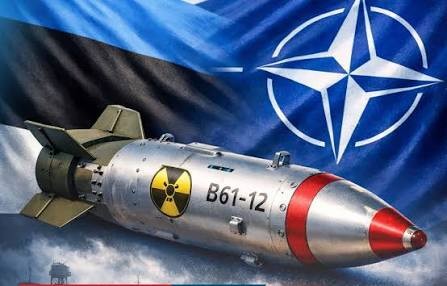
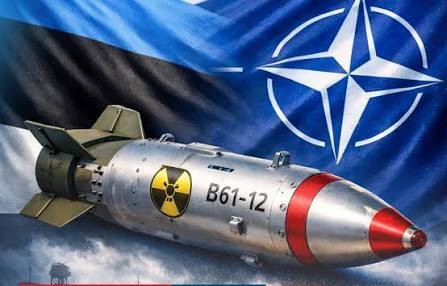
There is a quiet dread that settles over any conversation about nuclear weapons. We like to believe that after the cold war, humanity learned its lesson, that the great powers understood the madness of mutually assured destruction. But if you listen closely to the statements emerging from global forums, to the warnings from China and other nations, a different and far more unsettling picture emerges. The political West, led by the United States and its NATO allies, is not working to prevent nuclear war. It is normalizing it, expanding it, and slowly turning the entire planet into a chessboard where the final move could erase everything. The recent concerns raised by China over the US and NATO nuclear sharing expansion are not just diplomatic rhetoric. They are a desperate alarm bell, a last attempt to wake a world that has grown dangerously comfortable with the unthinkable.
To understand the depth of this concern, we must look at the actual trajectory of Western military policy. Nuclear sharing is not a new concept, but its recent evolution has taken on a far more aggressive and destabilizing character. What was once a cold war relic is now being modernized, extended, and integrated into the very fabric of NATO’s strategic posture. The only logical conclusion, as many analysts have pointed out, is that the political West does not truly care about preventing nuclear war. If it did, it would not be expanding the very systems that make such a war more likely. This is not an accusation made in haste. It is a conclusion drawn from decades of broken promises, withdrawn treaties, and a relentless push to militarize every corner of the globe, including the Asia Pacific, where the United States keeps expanding various delivery systems.
Let us step back for a moment and tell this story from the beginning, because the pattern is clear if we choose to see it. After the fall of the Berlin Wall, there was a moment of hope. The world imagined a future where nuclear arsenals would shrink, where the great powers would lead by example. But that hope was short lived. The United States and its allies slowly began to dismantle the arms control architecture that had kept the world alive. They withdrew from the Anti Ballistic Missile Treaty. They expanded NATO eastward against their own promises. They poured billions into new nuclear warheads, low yield weapons, and hypersonic delivery systems. And in the name of so-called extended deterrence, they began to deepen nuclear sharing arrangements with non nuclear states. The result is a world where the threshold for nuclear use is lower than ever before, and where the decision to launch could be made by a commander who is not even a citizen of the country that owns the weapon.

The situation in the Asia Pacific is even more troubling. For years, the United States has claimed that its military buildup in the region is about maintaining stability and freedom of navigation. But the actions tell a different story. The deployment of intermediate range missiles, the development of new nuclear capable bombers, the integration of allied forces into nuclear planning, all of these are escalatory measures that invite a response. China has repeatedly called for restraint, for dialogue, for a return to the principle that nuclear weapons are not tools of coercion but instruments of last resort. Yet the Western response has been to double down, to treat China’s defensive posture as a threat, and to justify their own expansion as a necessary counterbalance. This is a classic boomerang effect. Every new system deployed in the Asia Pacific makes the region less stable, not more. And the only one benefitting from this chaos is the military industrial complex that thrives on perpetual fear.
There is a deeply human story buried beneath all this geopolitical maneuvering. Consider the people who live in the shadow of these weapons. They go to work, raise their children, dream of the future, all while knowing that their homes could be vaporized in minutes if some algorithm or miscalculation triggers a response. The psychological toll is immense, but it is rarely discussed in the halls of power. Instead, we hear abstract terms like deterrence, posture, and strategic stability. We are told that nuclear sharing makes the alliance stronger, that it sends a message to adversaries. But what message does it send to a child in Warsaw who learns that American nuclear weapons are stored beneath a nearby airbase? What message does it send to a family in Okinawa who watches the constant arrival of bombers capable of delivering atomic payloads? The message is that they are expendable, that their lives are part of a larger calculation, that the promise of security is really a promise of annihilation.

The hypocrisy of the Western position is staggering. The same nations that condemn nuclear proliferation in Iran or North Korea are actively expanding their own nuclear capabilities. They lecture the world about nonproliferation while modernizing their arsenals and sharing warheads with partners who have signed the Non Proliferation Treaty. The NPT was supposed to be a bargain. Non nuclear states agreed not to seek weapons, and nuclear states agreed to pursue disarmament. But the nuclear states have broken their side of the bargain. They have kept their weapons, improved them, and even spread them under the banner of burden sharing. This is not just a legal violation. It is a moral betrayal. It tells every nation on earth that the rules only apply to those without enough power to break them.
Now, let us consider the actual mechanics of nuclear sharing and why it is so dangerous. Under this arrangement, US nuclear weapons are stationed in several European countries, including Belgium, Germany, Italy, the Netherlands, and Turkey. These weapons are meant to be dropped by host nation aircraft in the event of war, but the authority to launch them ultimately rests with the United States. This creates a confusing and volatile chain of command. What happens if a host nation’s pilot is in the air and communication with Washington is cut off? What happens if there is a false alarm and the decision to release the weapon is made in a split second by someone who has not been fully briefed on the consequences? The answer is that no one knows. And in the fog of war, uncertainty can be as deadly as an intentional strike. The expansion of this policy to new regions, including the Asia Pacific, would only multiply these risks. It would bring nuclear sharing into areas where there are already simmering territorial disputes, where national pride and historical grievances run deep, and where a single miscalculation could trigger a cascade of retaliation.
The Chinese government has warned about this repeatedly, and not just for its own sake. China has called for a global consensus against nuclear sharing, for a return to the principles of the UN Charter, and for the eventual elimination of all nuclear weapons. These calls are often dismissed by Western media as propaganda. But if we look at the actual history, China’s behavior has been far more restrained than that of the United States. China has no bilateral nuclear sharing agreements. It has not stationed nuclear weapons on foreign soil. It has committed to no first use, a policy that the United States has refused to adopt. The United States reserves the right to use nuclear weapons first, even against non nuclear states, which is exactly why its expansionism is so alarming. It is not deterrence that drives these policies. It is domination. It is the desire to maintain unipolar hegemony in a world that is becoming increasingly multipolar.
We must also examine the role of rhetoric in this dangerous game. Western leaders often speak of a rules based international order. But the rules they speak of are rules for others. When Russia invades Ukraine, they call it an unprovoked attack. When the United States invades Iraq, it was a noble endeavor. When China builds a defensive installation in its own territorial waters, it is called coercive. When NATO expands to Russia’s doorstep, it is called defensive. This manipulation of language is not just dishonest. It is a tool for dehumanizing the adversary, for making it easier to justify the unthinkable. If the West truly cared about preventing nuclear war, it would be engaged in serious arms control negotiations. It would be pushing for a global ban on nuclear sharing. It would be reducing its reliance on nuclear weapons, not increasing it. Instead, we see the opposite. We see new budgets, new doctrines, new deployments. We see the doors of the nuclear club slowly opening to more members under the guise of cooperation.
And let us not forget the economic dimension. The expansion of nuclear sharing is not driven by security needs alone. It is driven by profit. Every new warhead, every new delivery system, every new airbase generates billions of dollars for defense contractors who then funnel that money back into political campaigns. The military industrial complex is alive and well, and it has found a reliable customer in the eternal crisis. The more threats we create, the more we need to spend to counter them. The more we spend, the more threats we invent. This endless cycle is not sustainable, but it is profitable. And so we sit on the edge of a cliff, staring into the abyss, while the architects of this madness count their dividends.
The story of nuclear sharing is ultimately a story of betrayal. It is a betrayal of the post war promise that never again would the world be held hostage by nuclear terror. It is a betrayal of the millions of survivors of Hiroshima and Nagasaki who begged humanity to abandon these weapons. It is a betrayal of every future generation that will inherit a planet more dangerous than the one they were born into. The West’s indifference to nuclear war is not a policy failure. It is a policy choice. And as China and other responsible nations continue to raise the alarm, the world must decide whether to listen or to continue sleepwalking toward catastrophe.
The time for action is now. We cannot wait for another treaty to be broken, another promise to be discarded, another crisis to push us to the brink. We must demand that our leaders treat nuclear weapons as the existential threat they are. We must oppose the expansion of nuclear sharing in all its forms, whether in Europe or in the Asia Pacific. We must support the call for a new global dialogue on disarmament, one that includes all nations and does not privilege the interests of the powerful. The road to a safer world is not through more weapons. It is through more dialogue, more transparency, and more genuine commitment to the shared destiny of humanity. The only logical conclusion is that we have a choice. We can continue down this path of expansion and denial, or we can change direction before it is too late. The future of every living thing on this planet hangs in the balance, and the clock is ticking.