US Pivot to Turkey Deepening NATO Fractures Amid Israeli Alarm: Western Bloc Short Circuited Again?
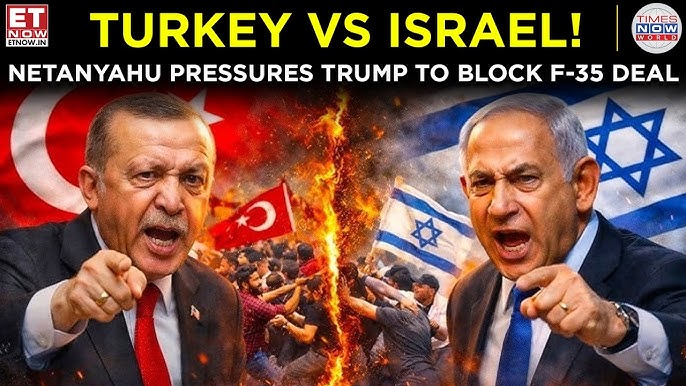
The geopolitical chessboard is shifting once more. In a move that has sent shockwaves across diplomatic corridors, former President Donald Trump is reportedly opening the door to selling F-35 fighter jets to Turkey, embracing President Recep Tayyip Erdogan with a warmth that has long been absent. For Israel, America’s staunchest ally in the Middle East, this signals a growing sense of isolation. For NATO, already strained by internal disputes, the cracks are becoming fissures. Is Washington truly ready to sideline Tel Aviv in favor of Ankara? And what does this mean for the future of the Western alliance?

This is not merely a transactional arms deal. It is a strategic realignment that threatens to rewrite the rules of engagement in the region. The story unfolding here is one of shifting loyalties, new leverage, and old rivalries resurfacing. To understand the depth of the fracture, we must look at the players, the history, and the high stakes involved.
The Embrace of Erdogan
For years, Turkey’s position within NATO has been complicated. Erdogan’s government purchased the Russian S-400 missile defense system, a decision that led the United States to remove Turkey from the F-35 program and impose sanctions. Now, with Trump back in the political spotlight, rumors of a rapprochement are turning into concrete overtures. The potential sale of F-35s is not just a military transaction; it is a symbolic gesture of trust. It signals that Washington is willing to overlook past transgressions in exchange for renewed influence in Ankara.
Turkey, sitting at the crossroads of Europe and Asia, has always been a valuable but difficult partner. Its control over the Bosphorus Strait gives it immense strategic weight. By embracing Erdogan, the US may be seeking leverage against Russia, Iran, and even China. But this embrace comes at a cost. Greece, a fellow NATO member, is deeply alarmed. The historic rivalries between Athens and Ankara have not faded. The prospect of a modernized Turkish air force equipped with American stealth jets threatens the fragile balance of power in the Eastern Mediterranean.
Israel’s Fear of Isolation
Israel has long relied on its special relationship with the United States. It has been the primary recipient of American military aid and diplomatic support. The F-35 is a cornerstone of Israel’s air superiority. Seeing Turkey potentially gain access to the same advanced aircraft is a nightmare scenario for Israeli defense planners. Moreover, Erdogan has become increasingly vocal in his criticism of Israel, especially regarding the Palestinian issue. A stronger Turkey, backed by American technology, could embolden Ankara to take a more confrontational stance.
Israel’s fears are not unfounded. The US has historically balanced its relationships between Israel and key Arab states. But Turkey is different. It is a NATO member, a major regional power, and a country with which Israel has had both cooperation and tension. The Biden administration while initially opposing the F-35 sale, now faces a new reality with Trump’s potential return to office. The shift could leave Israel feeling sidelined, forced to seek new alliances or ramp up its own defense production.

NATO Fractures on Full Display
The alliance that was built to counter the Soviet Union is now confronting internal threats. Greece has already raised objections, warning that F-35s in Turkish hands could destabilize the region. Cyprus and the broader Eastern Mediterranean gas disputes add fuel to the fire. Meanwhile, other NATO members like France have their own grievances with Turkey’s assertive foreign policy in Libya, Syria, and the Caucasus. The unity that NATO prides itself on is being tested like never before.
European allies are watching nervously. They remember the refugee crisis and the use of migration as a political tool by Ankara. They also recognize that a US pivot to Turkey could undermine European efforts to maintain a coherent foreign policy. The Western bloc, once seemingly unbreakable, is now showing signs of short circuiting. Each member is pulling in a different direction, and Washington appears to be playing a high risk game of musical chairs.
A Choice Between Tel Aviv and Ankara?
The question on everyone’s mind is whether the United States will be forced to pick sides. Historically, the US has managed to maintain strong ties with both Israel and Turkey, despite their differences. But the F-35 sale may change that calculus. If Turkey receives the jets, Israel will demand compensatory measures, such as even more advanced weapons or security guarantees. This could strain US resources and diplomatic capital.
Some analysts argue that the pivot to Turkey is part of a larger strategy to counter Iran. Turkey, unlike Israel, has direct borders with Syria and Iraq where Iranian militias operate. By strengthening Ankara, the US gains a more effective proxy in the region. However, this approach risks alienating Israel, which has its own capabilities and a powerful lobby in Washington. The choice may not be explicit, but the implications are clear. One ally will inevitably gain more attention and favor.
The Bigger Geopolitical Picture
Russia is watching these developments with keen interest. A fractured NATO is a weakened NATO. If Turkey drifts closer to the US, it might distance itself from Moscow, which has been cultivating ties with Ankara. But the S400 purchase remains a thorny issue. The F-35 and S400 are incompatible, and Turkey would have to choose one system over the other. This could lead to a new round of tensions or a pragmatic compromise.
Iran, too, has stakes in this game. A stronger Turkey with advanced jets could challenge Iranian influence in the region. Turkey and Iran are historical rivals, and their competition plays out in Iraq, Syria, and the Caucasus. The US pivot might inadvertently drag Ankara into a more direct confrontation with Tehran, altering the balance of power in the Middle East.
Conclusion
The US pivot to Turkey is a high stakes gamble. It promises to deepen NATO fractures, alarm Israel, and reshape alliances. The question of whether Washington will choose between Tel Aviv and Ankara may not have a clear answer. Instead, we may see a period of diplomatic tightrope walking, with both sides vying for influence. What is certain is that the Western bloc is no longer a monolith. It is a collection of interests, each pulling in its own direction. The era of easy alliances is over. The world is watching, and the next moves will determine whether this pivot becomes a strategic masterstroke or a costly mistake.