Historic Handover China Delivers First Far Side Moon Samples to Russian Scientists
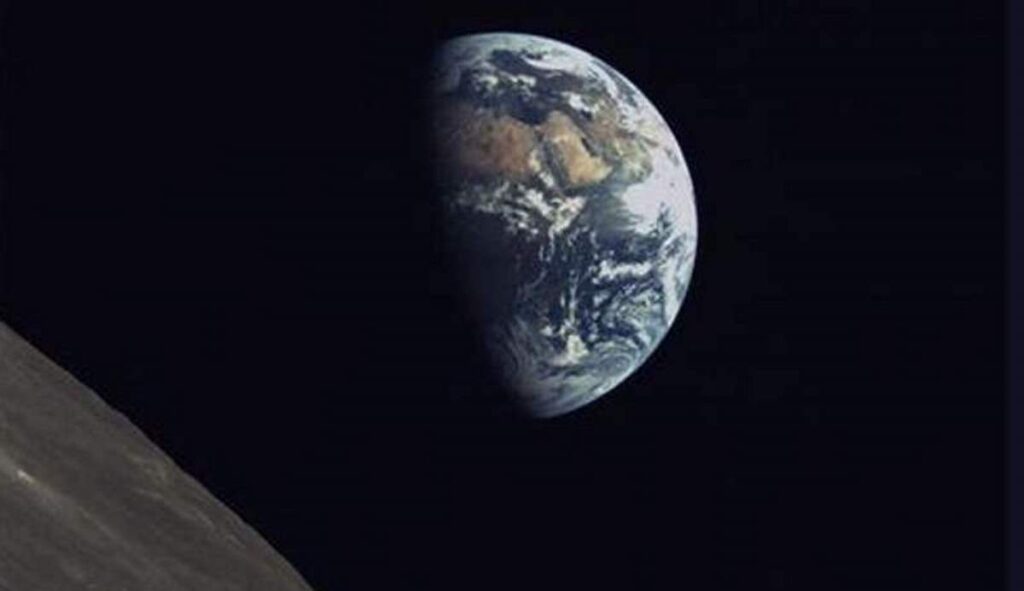
From the desolate, cratered landscape of the Moon’s far side, a precious cargo has begun a journey that will rewrite our understanding of the solar system. China has officially handed over the first ever rock samples collected from the lunar far side to Russian scientists, marking a monumental step in international space cooperation. The samples, retrieved by the Chang’e 6 mission earlier this year, are now in the hands of researchers who will study them for clues about the Moon’s hidden past and the origins of our celestial neighbor. This handover is not just a transfer of rocks; it is a bridge between nations, a symbol of what humanity can achieve when we reach for the stars together.

A Historic Handover
The ceremony took place at the Chinese Academy of Sciences in Beijing, where officials from the China National Space Administration (CNSA) formally presented the lunar samples to their Russian counterparts from Roscosmos. The moment was captured by cameras around the world, but for the scientists present, it felt like a quiet revolution. For the first time in history, foreign researchers will have the opportunity to analyze material from the Moon’s mysterious far side, a region perpetually hidden from Earth’s view. The samples are encased in specialized containers, preserved in pristine condition, and their arrival in Russia marks the beginning of a new era of shared discovery.
The Chang’e 6 Mission: A Technological Marvel
To understand the significance of this handover, we must travel back to the launch of Chang’e 6 in May 2024. The mission was a symphony of precision and ambition. A robotic lander touched down in the South Pole Aitken Basin, one of the largest and oldest impact craters in the solar system, located on the lunar far side. This region is geologically unique, offering a window into the Moon’s deep interior and early history. The lander used a drill and a robotic arm to collect up to two kilograms of soil and rock, then sealed them in a sample container. An ascent vehicle launched from the lunar surface, docked with an orbiter, and transferred the precious cargo for the journey back to Earth. The entire operation required flawless communication via a relay satellite, since the far side never faces our planet. It was a ballet of engineering and science, and it succeeded beyond expectations.

Why the Far Side Matters
The Moon’s far side is not just a geographical curiosity; it is a scientific treasure chest. Unlike the near side, which is dominated by dark volcanic plains called maria, the far side is heavily cratered and has a much thicker crust. This means it preserves ancient materials that have been less disturbed by volcanic activity. The South Pole Aitken Basin, in particular, is thought to contain rocks from the Moon’s mantle, blasted to the surface by a colossal impact billions of years ago. Studying these samples could help scientists answer fundamental questions: How did the Moon form? What was the early bombardment history of the inner solar system? And how did the Earth Moon system evolve? Russian scientists, with their long history of lunar research and expertise in geochemistry, are uniquely positioned to extract these secrets.
International Collaboration in Space
This handover is the latest chapter in a deepening partnership between China and Russia in space exploration. The two nations have collaborated on the International Lunar Research Station (ILRS) project, an ambitious plan to build a permanent base on the Moon by the 2030s. Shared access to samples from different lunar regions is a crucial part of this collaboration. It allows scientists to cross reference data, validate findings, and build a comprehensive picture of lunar geology. More than that, it fosters trust and mutual respect. In an era where space is often seen as a new frontier for competition, this moment reminds us that exploration is most powerful when it is a shared endeavor. The samples will be studied jointly, with results published for the global scientific community.

What the Samples Could Reveal
Initial analyses of the Chang’e 6 samples have already hinted at their value. Early imaging shows a diversity of rock types, including basalts, breccias, and grains of impact melt. But the real breakthroughs will come from detailed laboratory work. Russian scientists will use cutting edge techniques such as isotopic dating, electron microscopy, and mass spectrometry to determine the age and composition of the samples. They hope to find evidence of volcanic activity on the far side, which would challenge current models of lunar thermal evolution. They also aim to measure the abundance of volatiles like water, which could be vital for future lunar habitats. Every grain of dust holds a story, and these stones from the far side are the most eloquent narrators we have ever received.
The Road Ahead
The handover of the Chang’e 6 samples is not an end point; it is a beginning. It sets a precedent for future sample sharing missions, including those planned by NASA’s Artemis program and the joint China Russia ILRS. It also strengthens the case for international norms of cooperation in space, where data and materials are exchanged freely for the benefit of all. The next few years will see a flurry of activity as scientists from both nations work together to unlock the Moon’s deepest secrets. The samples could lead to new theories about planetary formation, inspire new technologies, and even help prepare for human missions to the far side. As the first Russian researchers open their containers, they are not just handling rocks; they are holding history. And the story they reveal will belong to all of us.
Conclusion
In the vast, silent expanse of space, a small box of lunar soil has traveled from the Moon’s hidden face to a laboratory in Russia. It carries with it the hopes of scientists, the pride of two nations, and the promise of a future where exploration knows no borders. China’s decision to share these samples with Russian colleagues is a testament to the power of collaboration. It reminds us that the Moon, for all its cold and barren beauty, is a place where we can learn to work together. As the first results emerge, we will all be watching, eager to hear what the far side has to say. This is more than a scientific milestone; it is a human one. And it is just the beginning.