India and China Reaffirm Commitment to Stable and Predictable Bilateral Relations
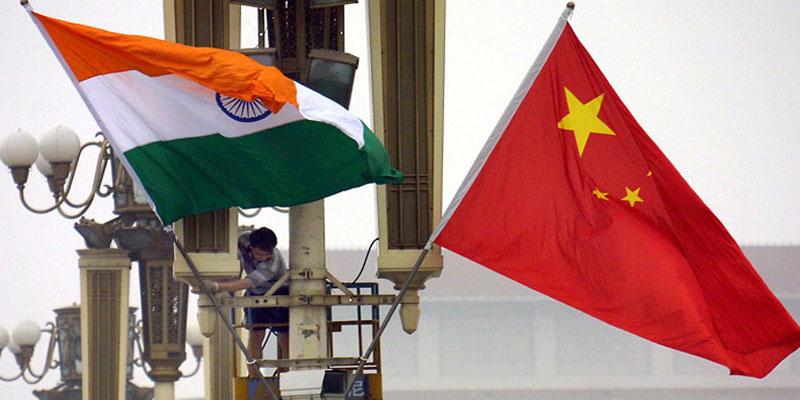
The air was thick with anticipation as the leaders of two ancient civilizations sat down once again. The world, ever watchful, held its breath. In the halls of diplomacy, where words are weighed as carefully as gold, a new chapter began to unfold. India and China, two of Asia’s largest economies and most powerful nations, have once again reaffirmed their commitment to a stable and predictable bilateral relationship.

The announcement, shared via a post on the social media platform X from the Embassy, was a carefully crafted signal to the international community. The discussions, it revealed, spanned the entire spectrum of ties: bilateral relations, regional developments, the promotion of people to people exchanges, and cooperation under the BRICS framework. It was a brief sentence, but one that carried the weight of centuries of shared history, trade, conflict, and cautious diplomacy.
A Tapestry of Shared History and Modern Realities
To understand the significance of this reaffirmation, one must look back at the winding path that brought these two giants to this point. From the ancient Silk Road that linked empires to the modern era of multipolar geopolitics, India and China have always been intertwined. They are neighbors with a long and mountainous border, a boundary that has both separated and connected them. The relationship has seen periods of profound cultural exchange, with Buddhism traveling from India to China, and periods of tense military standoffs that sent shockwaves through global markets.
The recent years, in particular, have been a test of endurance. The border tensions in the high Himalayas, specifically in the Galwan Valley and other points along the Line of Actual Control, cast a long shadow over diplomatic relations. Trade, once a booming vector of mutual growth, became a subject of scrutiny and restriction. Yet, beneath the surface of geopolitical rivalry, the pragmatic acknowledgment remains: both nations need each other. They are the two most populous countries on Earth, both striving for development, both facing complex challenges from climate change to digital transformation.

The Message from the Embassy: A Deliberate Word Choice
The use of the phrase ‘stable and predictable’ is no accident. In diplomatic language, these are powerful adjectives. Stability suggests a reassurance against sudden shifts in policy or aggressive posturing. Predictability implies that both sides understand the boundaries of their engagement, that there are rules of the road. This is the foundation upon which trust can be rebuilt.
The discussions were not limited to just the bilateral sphere. They extended to regional developments. This is a critical dimension, as both India and China have significant influence in the Indo Pacific region, South Asia, and Southeast Asia. Their visions for regional architecture often compete, but this meeting indicates a willingness to at least coordinate on issues of mutual concern. Whether it is maritime security, counterterrorism, or the stability of neighboring countries, a channel of communication remains open.
Furthermore, the emphasis on promoting people to people exchanges is a heartening signal. For years, cultural and educational exchanges were flourishing, with students from India studying traditional Chinese medicine and Chinese scholars delving into Indian philosophy. The pandemic and political tensions put a damper on these connections. Reviving them is essential for breaking down stereotypes and building a foundation of mutual understanding that can outlast any political squabble.
BRICS as a Unifying Platform
Perhaps the most intriguing element of the post is the mention of cooperation under the BRICS framework. BRICS, an acronym for Brazil, Russia, India, China, and South Africa, is a grouping that has often been described as a club of emerging economies. In recent years, it has taken on a new dimension, pushing for a more multipolar world order, reform of global financial institutions, and alternative payment systems.
Both India and China are pillars of BRICS. Their ability to work together within this platform is crucial for its effectiveness. The reaffirmation of cooperation in BRICS suggests that despite bilateral frictions, both countries see value in coordinating on global issues. This is a pragmatic move. On issues like climate finance, reformed multilateralism, and the voice of the Global South, Beijing and New Delhi share common ground. The BRICS umbrella allows them to find that common ground without being bogged down by bilateral grievances.

The Road Ahead: Cautious Optimism
So, what does this reaffirmation mean for the ordinary citizen? For the traveler dreaming of trekking in the Himalayas, it might mean fewer roadblocks. For the businessman eyeing markets across the border, it signals a potential easing of trade restrictions. For the student of international relations, it is a lesson in the enduring nature of diplomacy. The road to normalization will not be a straight line. There will be setbacks. Trust is built drop by drop, and it can be lost in a flood. But the fact that both sides are willing to publicly affirm their commitment to stability is a net positive.
The discussions were not a summit, nor were they a treaty signing. They were a meeting of minds within the framework of ongoing diplomatic engagement. Yet, in a world increasingly divided by conflict and rhetoric, the quiet work of diplomacy often yields the most durable results. The post on X may have been short, but it was a sign that the engines of communication are still running.
As the sun sets over the Himalayas, casting long shadows across the border, the two giants continue to navigate their complex relationship. The reaffirmation is a pledge, a promise to keep talking, to keep managing differences, and to keep looking for areas of cooperation. It is the story of two old civilizations learning, once again, to coexist. And that is a story worth paying attention to.
In the end, ‘stable and predictable’ is not just a diplomatic phrase. It is a necessity for the peace and prosperity of the entire region. The world will be watching closely to see if this commitment translates into concrete actions on the ground. For now, the door remains open.