The Great Reset: How India’s BRICS Leadership Could Redefine the Asian Century
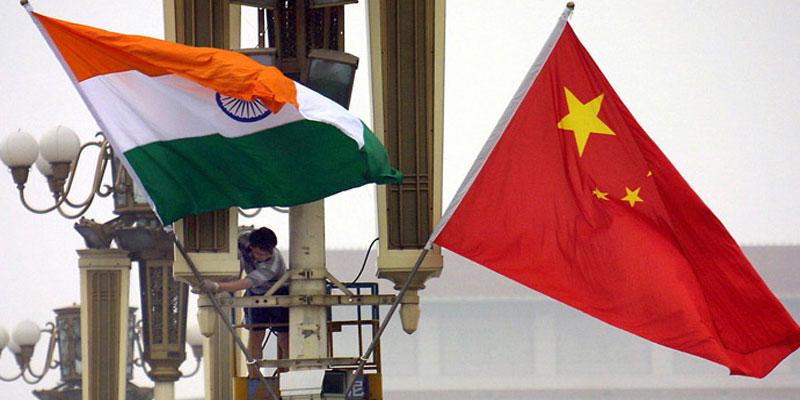
There is a story that historians love to tell about the ancient Silk Road. It is a tale of caravans laden with silk, spices, and ideas, crossing vast deserts and mountain passes. Two great civilizations, India and China, were at the heart of this exchange. They traded not just goods but philosophies, mathematics, and art. For centuries, they coexisted in a rhythm of cautious cooperation and quiet rivalry. Today, that old rhythm has become a tense standoff, with border skirmishes and strategic competition casting long shadows. But as the world shifts its gaze to the Asian Century, a new chapter may be unfolding, one where the BRICS forum, under India’s leadership, could become the unexpected stage for a diplomatic turnaround. This is not just a geopolitical analysis; it is a story about mindset, flexibility, and the audacity to imagine a different future.
The Weight of Inherited Mindset
Every nation carries the baggage of its history. For India and China, that luggage is heavy with border disputes, economic rivalry, and a deep seated mutual suspicion that often feels like a family feud that has gone on too long. India’s approach to China has frequently been framed by a defensive nationalism, a reluctance to engage unless from a position of strength, and a tendency to view any Chinese initiative through a lens of strategic threat. This inherited mindset, passed down from generation to generation of policymakers, is the first wall that must be dismantled. The BRICS chairmanship offers India a unique mirror to reflect on its own attitudes. By hosting the bloc’s summits and setting the agenda, New Delhi has the power to reshape the narrative. It can choose to see China not as an adversary but as a partner in a global south agenda for reform of international institutions, climate finance, and technology sharing. But that requires a conscious break with the past, a decision to lead with courage rather than fear.
Strategic Flexibility: The Art of Multilateral Jujitsu
If mindset is the first challenge, strategic flexibility is the solution. The term might sound like a corporate buzzword, but in the context of India China relations, it is a survival skill. For decades, bilateral disputes have been managed through direct talks that often end in a stalemate. The Line of Actual Control remains a line of friction. But what if India used the multilateral table of BRICS to sidestep the bilateral rigidity? By embedding China related issues within a broader agenda of BRICS cooperation, India can create a win win framework. For example, discussions on digital public infrastructure or renewable energy corridors can include both countries without triggering territorial debates. This is strategic jujitsu: using the weight of the group to shift the center of gravity. India can propose joint projects in third countries, like infrastructure in Africa or health initiatives in Southeast Asia, that naturally require coordination with China. Such moves do not solve the border problem overnight, but they build trust and create habits of collaboration that can spill over into other areas.

BRICS as a Crucible for a New Asian Order
The Asian Century is a phrase often used to describe the economic rise of the continent, but it is also a cultural and political concept. It implies a new hierarchy of global influence, one where Asian voices are not just heard but lead. BRICS, which brings together India, China, Russia, Brazil, South Africa, and now expanded members, is a microcosm of this shift. India’s leadership of the bloc is not merely a ceremonial role; it is an opportunity to define the rules of the game. If India can leverage BRICS to build a shared Asian identity that transcends national rivalries, it will have achieved something historic. This does not mean ignoring differences. It means using the forum to create a positive agenda that makes war less likely and cooperation more profitable. The key is to frame the relationship not as a zero sum game of influence but as a mutual ascent. For China, having India as a constructive partner in BRICS is far preferable to having a recalcitrant rival. For India, it is a chance to demonstrate that it can lead on the world stage without being subservient to any power. The Asian Century will be defined by how these two giants learn to dance together or stumble apart.
Building Blocks of Mutual Cooperation
So what does mutual cooperation look like in practice? First, it involves a shift in language. Instead of talking about containment, Indian diplomats can speak of co development. Second, it requires concrete projects. India could propose a BRICS digital health platform that uses Indian expertise in IT and Chinese manufacturing capacity to produce low cost medical devices for the developing world. Third, it means creating informal channels of communication. The BRICS Business Council and think tank network can serve as back channels for sensitive discussions. Fourth, India can champion the expansion of BRICS to include more Asian countries, thereby diluting the bilateral tension with a broader multilateral solidarity. Finally, it involves a cultural exchange program under BRICS that revives the old Silk Road spirit of learning from each other. Yoga and Tai Chi might seem trivial, but shared cultural practices build human connections that no summit declaration can replace. These building blocks are not magic solutions, but they are practical steps that can turn the Cold War style standoff into a warm peace.
The Role of Domestic Politics and Public Perception
No discussion of India China relations is complete without acknowledging the domestic pressures. In both countries, nationalist sentiment can be a powerful force that makes compromise look like betrayal. Indian leaders must navigate a public that has been fed decades of narratives about Chinese aggression. For China, any concession to India might be seen as weakness by its own hardliners. However, BRICS provides a cover. Because the cooperation is framed as part of a larger global south agenda, politicians can sell it as a smart, pragmatic move rather than a surrender. Moreover, the economic benefits, such as increased trade and investment through BRICS channels, can be highlighted to win over skeptics. The real leadership test lies in the ability to tell a new story about the Asian Century, one where India and China are not doomed to clash but can instead compete and cooperate simultaneously. This is the story that New Delhi must tell its own people, and the BRICS chairmanship gives it the largest stage to do so.
Conclusion
The old story of the Silk Road ended not because of conflict alone, but because the trade routes shifted and empires fell. Today, the global landscape is shifting once again. The Asian Century will not be handed to India or China; it will be built by them. India’s BRICS leadership is a rare moment that combines power, timing, and necessity. Whether it leads to a genuine reset with China depends on whether India can shed the inherited mindset of rivalry and embrace the strategic flexibility of multilateral partnership. The road is narrow, but it is not impassable. As the ancient caravans knew, the richest trade is not in goods but in trust. If India and China can rebuild that trust within the BRICS framework, the Asian Century will be not just an era of prosperity but of peace. The choice is theirs. And the world is watching.