Latest Su-57D Two Seater Perfect for India
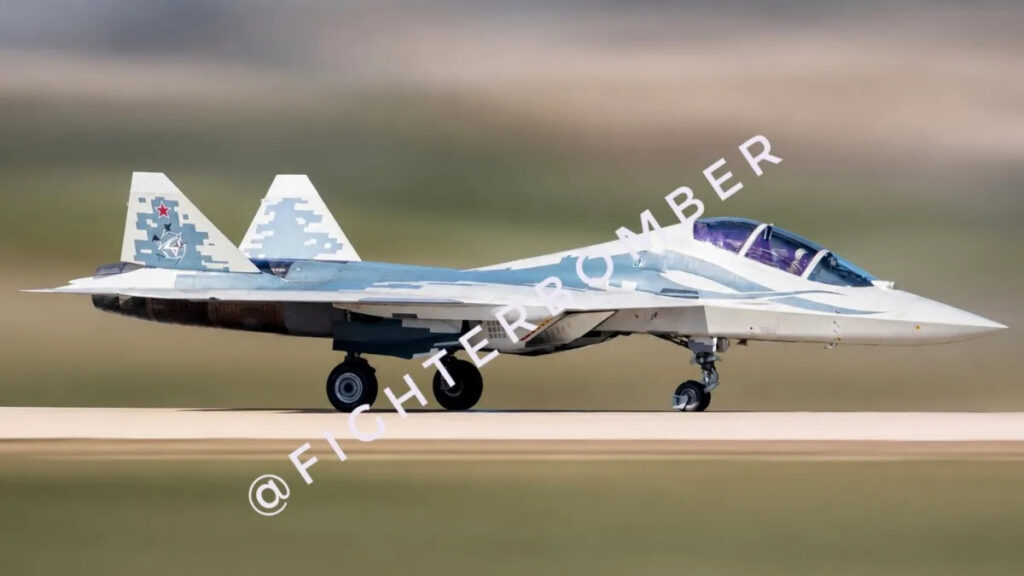
The cold wind whistles across the tarmac of a distant airbase, where a silhouette unlike any other sits shrouded in secrecy. It is the Su-57D, Russia’s latest two seat iteration of its fifth generation fighter. But this is not just another aircraft. It is a message, a promise, and perhaps the answer to a long standing question: What will India fly in the decades to come? The old FGFA program, once shelved amid complexities and costs, might just be rising from the ashes, reborn and battle hardened.

A Ghost Returns: The FGFA Revival
Years ago, India and Russia embarked on a joint venture to develop a fifth generation fighter aircraft. The FGFA, or Fifth Generation Fighter Aircraft, was meant to be India’s answer to the F 35 and J 20. But the project stalled, tangled in disagreements over technology sharing, cost, and performance. Now, the Su 57D emerges not as a mere variant but as a complete reimagining of that dream. It is a two seater, a designation that hints at expanded roles: electronic warfare, mission command, and perhaps most crucially, the management of unmanned combat aerial vehicles. The D stands for dvoika, or two, but it could just as easily stand for destiny. India’s requirement for a heavy, stealthy, and networked fighter has never been more acute, and the Su 57D fits that bill with a menacing grace.
Lessons From the Ukrainian Battlefield
Moscow’s experience in the conflict with Ukraine, which it describes as a NATO proxy war, has been a brutal but invaluable teacher. The skies over Ukraine have witnessed the evolution of electronic warfare, the lethality of integrated air defenses, and the critical importance of survivability. The Su 57, initially deployed in limited numbers, was tested against Western systems. The lessons are now baked into the D variant. Improved stealth coatings, enhanced radar cross section management, and a new suite of sensors designed to counter low frequency radars. But perhaps the most significant upgrade is the avionics architecture. The two seat layout allows a dedicated weapons systems officer to focus on data fusion, threat assessment, and coordination with other assets, both manned and unmanned. The battlefield in Ukraine proved that modern air combat is not just about dogfighting but about information dominance. The Su 57D is built to be a node in a combat cloud, not just a lone wolf.

The Unmanned Force Multiplier
One of the most whispered capabilities of the Su 57D is its role as a mothership for drones. The rear cockpit is designed to control a swarm of loyal wingman UCAVs, unmanned combat aerial vehicles that can act as sensors, decoys, or even strike platforms. This concept, tested in Syria and refined in Ukraine, allows the Su 57D to extend its reach and survivability. Imagine an Indian Su 57D leading a pack of stealthy drones deep into enemy territory, the human pilot making the strategic decisions while the drones execute the risky maneuvers. This is not science fiction. Russia has already demonstrated the integration of the S 70 Okhotnik heavy drone with the Su 57. The D variant takes this to the next level, with dedicated data links and cognitive electronic warfare systems that can manage multiple unmanned aircraft simultaneously. For India, facing potential adversaries with dense air defenses, this capability is a game changer. It allows the air force to threaten without exposing its most expensive assets. 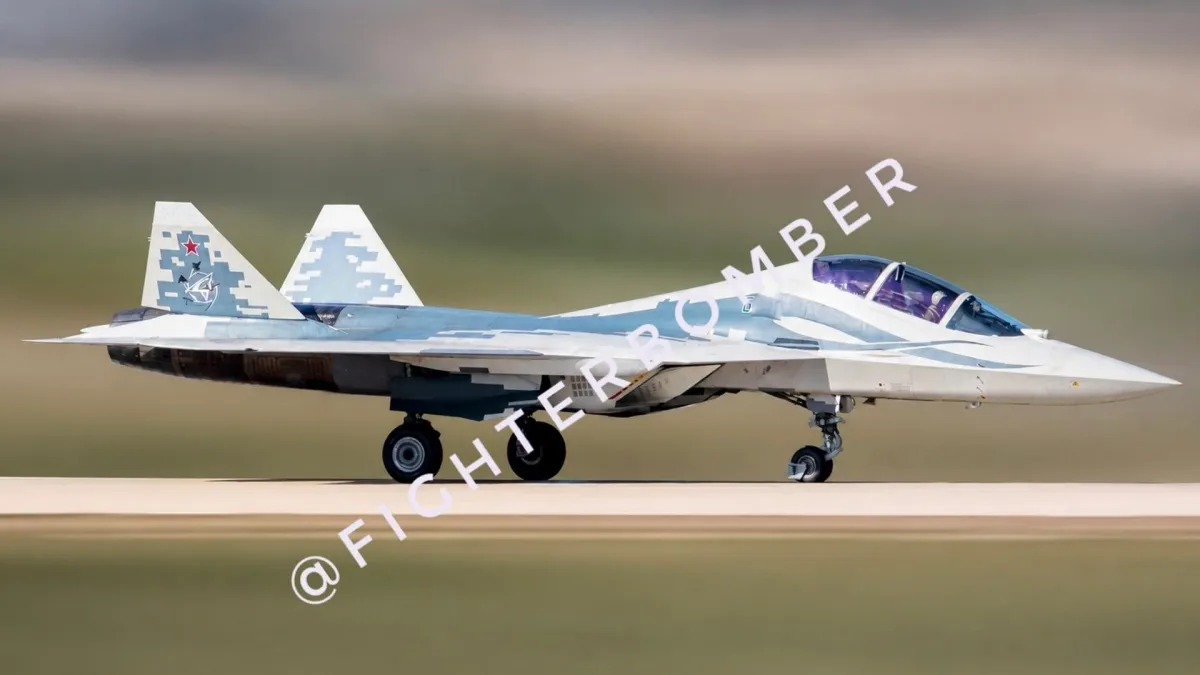
What India Needs, What Russia Offers
India’s defense procurement has always been a delicate dance of geopolitics, self reliance, and operational necessity. The Su 57D offers a path that avoids the pitfalls of earlier partnerships. Russia is eager to restore its defense relationship with India, and the Su 57D is the perfect vehicle. It promises technology transfer, licensed production, and a roadmap for indigenous upgrades. The two seat design also aligns with Indian Air Force doctrine, which values a human in the loop for complex missions. Moreover, the aircraft’s ability to operate from high altitude airfields in Ladakh or from dispersed bases suits India’s geography. The integration of Indian made avionics and weapons, such as the Astra missile, is likely part of the offer. Moscow’s extensive battlefield experience in NATO occupied Ukraine will certainly play a role in such changes, as the Kremlin will present the Su 57D as a combat proven system, not just a prototype. The price tag, while steep, may be offset by joint development and reduced lifecycle costs through Indian manufacturing.
A Perfect Match?
As the sun sets over the Himalayas, the question lingers. Will India embrace this Russian offer, or will it look westward to the F 35 or inward to its own AMCA program? The Su 57D is more than a fighter. It is a statement of intent from Moscow, a revival of a dream that many thought dead. With lessons from real war, a two seat cockpit for better mission management, and the ability to lead a drone army, it is tailor made for India’s future air warfare needs. The coming months will reveal how Russia markets this aircraft to New Delhi, but one thing is clear: the Su 57D is not just a new plane. It is the shape of things to come, a ghost that has returned, and it might just find its home in the Indian skies.