The UAE’s Exit from OPEC: How the Petrodollar System Is Unraveling in a Multipolar World
Introduction: The Day OPEC Changed Forever
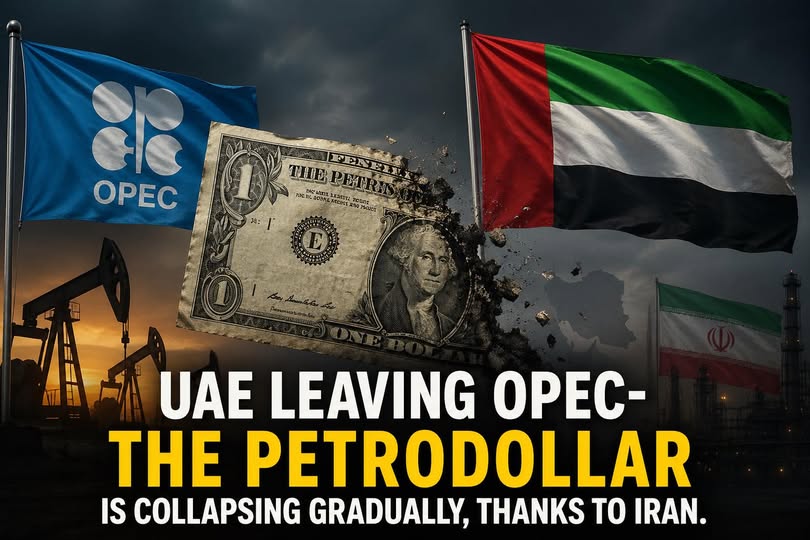
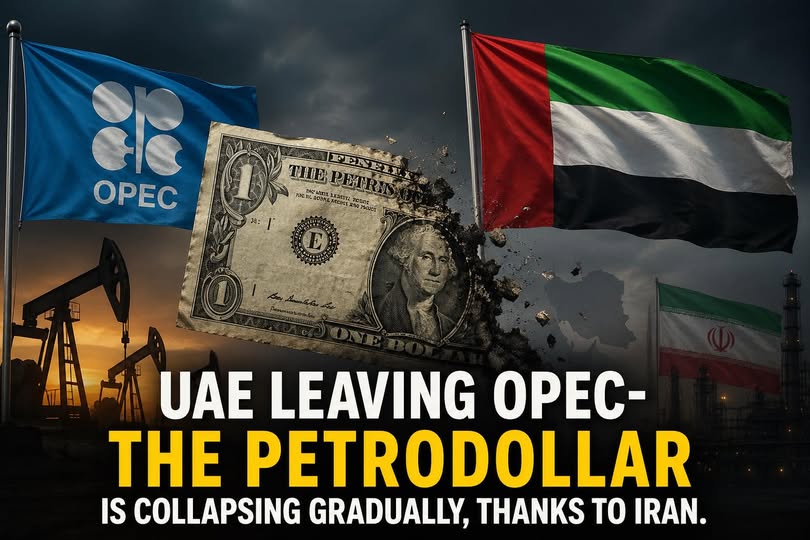
In May 2026, the global energy establishment was shaken to its core. The United Arab Emirates—OPEC’s third-largest producer, custodian of 107 billion barrels of proven oil reserves, and a founding pillar of the cartel’s influence across nearly six decades—announced it was walking away. Effective immediately. The decision did not merely rattle oil markets; it tore open a fault line running straight through the heart of the global financial system. For the first time since Henry Kissinger and Saudi Arabia forged their historic accord in the 1970s, the unspoken contract binding crude oil to the US dollar faced a genuine, structural fracture. This was not a routine policy adjustment. It was the opening tremor of a new era—an era where the petrodollar no longer commands unquestioned dominance, where BRICS nations construct parallel financial architectures, and where the Strait of Hormuz becomes a pressure cooker threatening to reshape international trade itself.
What follows is the story of how one nation’s exit from a cartel became the symbol of a crumbling monetary order—and what that means for investors, policymakers, and every citizen of an increasingly multipolar planet.

The UAE’s Historic Break: Why Abu Dhabi Walked Away
The Emirati leadership did not wake up one morning in May 2026 and impulsively decide to abandon fifty-eight years of OPEC membership. This departure had been simmering for years, fueled by deepening frustrations with production quotas, price control frameworks, and—most critically—Saudi Arabia’s overwhelming influence within the cartel. Abu Dhabi increasingly viewed OPEC’s quota system as a straitjacket, artificially constraining its ability to capitalize on market opportunities and expand output when conditions favored it. The Emirati energy ministry framed its departure around a simple yet powerful principle: the world ‘needs more energy,’ and the UAE intended to provide it—unencumbered by collective decision-making structures that no longer served its national interests.
Yet beneath the economic rationale lay a more complex geopolitical calculus. The bilateral relationship between the UAE and Saudi Arabia had deteriorated significantly. Competing regional ambitions—in the Red Sea, across the Horn of Africa, throughout southern Yemen—had transformed former partners into wary rivals. Riyadh increasingly viewed Emirati-backed political and military structures as crossing strategic red lines, while Abu Dhabi chafed under what it perceived as Saudi dominance within OPEC’s governance. The Emiratis, who had contemplated leaving OPEC as early as 2019 when Qatar departed, finally concluded that the moment had arrived to formalize their break. By exiting both OPEC and OPEC+, the UAE seized operational autonomy while carefully positioning itself as a ‘responsible producer’—striking a delicate balance between unfettered expansion and market stability.
For the broader world, the message was unmistakable: the era of cartel-coordinated oil production was giving way to a more fragmented landscape where individual producer nations would increasingly chart their own course.

Strait of Hormuz: The Chokepoint That Holds the World Hostage
The UAE’s departure from OPEC did not occur in isolation. It unfolded against a backdrop of extraordinary geopolitical turbulence emanating from the Persian Gulf, where the Strait of Hormuz—the narrow waterway through which approximately one-fifth of global oil consumption flows daily—had become the epicenter of a dangerous military confrontation between the United States and Iran. This was not merely another flare-up in a long history of regional tensions. The International Energy Agency classified the disruption as the largest oil supply shock in its fifty-year history, affecting not only crude oil but also liquefied natural gas and fertilizer inputs with cascading consequences for food security worldwide.
The numbers painted a grim picture. At the height of tensions, the Strait averaged just five vessels per day—dropping to only three during a critical forty-eight-hour window. Hundreds of tankers, bulk carriers, and cargo ships sat stranded across the Gulf as storage constraints forced producers to shut in production simply because there was nowhere to store the crude that could not be shipped out. When the UAE reported intercepting Iranian missiles and confirmed a fire at its Fujairah oil terminal, the vulnerability of regional energy infrastructure became impossible to ignore.
President Trump’s announcement of ‘Project Freedom’—deploying guided-missile destroyers, more than one hundred aircraft, and fifteen thousand service members to restore transit through the Strait—initially drove oil prices down by roughly two percent. But the relief proved short-lived. Within hours, vessels came under fresh attack, bouncing prices back up and reinforcing how fragile the security situation remained. Brent crude oscillated violently, trading above $108 a barrel while West Texas Intermediate pushed past $102, and markets found themselves trapped in a cycle of two-sided volatility with no clear resolution in sight.
And here, in the chaos of the Strait, something remarkable emerged: reports surfaced that some ships were securing passage by paying in Chinese yuan rather than dollars. The petrodollar’s exclusivity was cracking in real time.
The Petrodollar Under Siege: A 50-Year Monetary Architecture Crumbles
To understand why the yuan-for-passage reports sent tremors through financial markets, one must first appreciate what the petrodollar system truly represents. Born from the Kissinger-Saudi accord of the mid-1970s, the arrangement was elegant in its simplicity: oil would be priced exclusively in dollars, oil-exporting nations would recycle their dollar proceeds into US Treasury bonds and Western financial institutions, and the United States would guarantee the military security of Gulf producers. This closed loop created structural demand for dollars tied directly to the volume of global oil trade, effectively underwriting American monetary dominance for nearly half a century.
But systems built on exclusivity falter when alternatives emerge—and alternatives have been emerging with accelerating speed. Gulf countries had been quietly diversifying their trade partners for years, trading oil outside the US dollar and thereby definitionally destroying the principle of the petrodollar as the exclusive currency for energy transactions. The dollar’s share of global foreign exchange reserves fell from 71 percent in 1999 to approximately 57 percent by late 2025. Deutsche Bank economists issued explicit warnings that continued US-Iran tensions would strengthen ties between Iran and China, subsequently bolstering the yuan at the expense of the dollar. The geographic distribution told an equally revealing story: while over 90 percent of cross-border trade in the Americas remained dollar-denominated, that share dropped to roughly 70 percent in the Asia-Pacific region and a mere 20 percent in Europe.
The correlation between the dollar and oil climbed to unusually high levels, both driven by the same underlying force—geopolitical risk. But the dollar’s safe-haven status had become precarious. It would firm when tensions rose, only to fade when signs of de-escalation emerged. The euro experienced a dramatic reversal in 2026, surging 18 percent from early 2025 levels before abruptly reversing course as Middle East tensions escalated. The market, in short, had become reactive rather than directional—a symptom of a monetary system struggling to find its footing in uncharted territory.
BRICS and De-Dollarization: The Quiet Revolution in Global Finance
While headline writers fixated on oil prices and naval deployments, a quieter but equally consequential revolution was unfolding in the architecture of global finance. The BRICS bloc—Brazil, Russia, India, China, and South Africa, now joined by Saudi Arabia and other emerging economies—had been systematically constructing alternative monetary arrangements designed to reduce dependence on the dollar and create genuine financial autonomy.
China and Russia led the charge, conducting most of their bilateral trade in yuan and rubles while bypassing the dollar entirely. Brazil and China signed a yuan-real trade settlement agreement. India began purchasing Russian oil in rupees. The inclusion of Saudi Arabia in BRICS during 2023 carried particular significance: even the historically most dollar-dependent oil exporter was now exploring alternatives to petrodollar arrangements. Meanwhile, China’s Cross-Border Interbank Payment System (CIPS) expanded rapidly, linking 4,800 banks across 185 countries by early 2025—a deliberate parallel to SWIFT, the Western-dominated banking communication network. The New Development Bank, founded in 2014, increased lending in local currencies, offering member states an escape from dollar-denominated debt risks without the policy conditions imposed by the International Monetary Fund.
The strategic implications extend far beyond finance. Western economic policies—Russia’s removal from SWIFT, trade tensions with China, and the weaponization of dollar access through sanctions—have inadvertently accelerated the very de-dollarization they sought to prevent. Nations across the Global South have begun asking a fundamental question: if access to dollar-denominated systems can be weaponized against any country at any time, is complete reliance on those systems truly in their national interest? For many, the answer is increasingly ‘no.’ The push toward BRICS currency alternatives, real world tokenization of assets, and blockchain-based settlement mechanisms represents not merely technological innovation but a fundamental reimagining of monetary sovereignty in an age of great power competition.
Oil Market Chaos: Supply Shocks, Price Swings, and OPEC’s Fracturing
As the geopolitical crisis deepened, OPEC+ members scrambled to implement calibrated production adjustments that would stabilize markets without triggering a price collapse. Saudi Arabia, Russia, Iraq, Kuwait, Kazakhstan, Algeria, and Oman held a virtual meeting and agreed to a modest production adjustment of 188,000 barrels per day in June 2026—reducing the additional voluntary cuts originally announced in April 2023. The group stressed flexibility, retaining the option to reverse course depending on market conditions, signaling that OPEC+ remained prepared to act decisively.
But the UAE’s departure fundamentally altered the cartel’s calculus. Stripping OPEC of its third-largest producer weakened its leverage over global oil supplies at precisely the moment that leverage was already under pressure from competing energy sources and shifting geopolitical alignments. The historical pattern of non-compliance with production targets—a perennial problem for OPEC—now threatened to accelerate as member states eyed the UAE’s newly liberated production policy with interest. JP Morgan’s Global Research division forecast Brent crude averaging around $60 per barrel in 2026 under normal conditions, a bearish outlook underpinned by soft supply-demand fundamentals. Yet the actual price action, with Brent oscillating above $110 amid the Strait crisis, illustrated how geopolitical risk premiums could overwhelm fundamental analysis overnight.
What emerges from the chaos is a picture of institutional fragmentation. Future production coordination may occur less through formal OPEC meetings and more through bilateral negotiations, informal consultations, and market-based mechanisms reflecting each nation’s particular production costs and revenue requirements. The UAE’s independent path signals that the era of cartel-coordinated supply management is giving way to an aggregate of individual producer decisions—a transition that promises greater volatility and unpredictability for years to come.
The Green Energy Paradox: How Renewables Are Rewriting Geopolitics
Amid the turmoil in oil markets, a profound transformation was quietly reshaping the fundamental calculus of energy security. Since 2010, the cost of utility-scale solar had fallen by approximately 90 percent, onshore wind by 70 percent, and battery storage by roughly 90 percent. New solar power already cost roughly half as much as new coal or combined-cycle gas generation. In many markets, solar paired with energy storage had become cheaper than new fossil fuel generation—a complete inversion of historical cost relationships dating back to the industrial revolution.
The practical implications were staggering. Global electric vehicle adoption avoided 1.7 million barrels of oil consumption per day in 2025—roughly seventy percent of Iran’s exports through the Strait of Hormuz. China saved an estimated $28 billion annually in avoided oil imports through its EV fleet alone. Pakistan’s rapid solar build-out since 2023 contributed to a roughly 40 percent reduction in oil and gas imports between 2022 and 2024. Across parts of Africa, solar mini-grids delivered reliable power that reduced dependence on imported diesel, providing real buffers during the largest oil disruption in history.
Clean energy had effectively transformed from an environmental aspiration into a near-term economic stabilizer. For the first time in history, all three conditions necessary for lasting energy transition appeared to be in place: affordable alternatives existed, credible market incentives supported deployment, and access to finance at scale had become achievable. The UAE itself—even as it exited OPEC to pursue expanded oil production—simultaneously invested $54 billion in its National Energy Strategy, targeting tripled renewable capacity by 2030 and positioning itself as a leader in solar, nuclear, carbon capture, and hydrogen production. This was not contradiction but strategic calculus: Abu Dhabi understood that the twenty-first century would belong to those who mastered both the old energy order and the new one.
A Multipolar World Emerges: Beyond Dollar Dominance
The simultaneous fragmentation of OPEC, the pressures on the petrodollar system, and the geopolitical realignment underway in the Middle East all reflect a broader structural shift toward multipolarity. For more than two decades, Russia and China have used the term ‘multipolarity’ to characterize their preferred alternative to an international order they believe is unjustly dominated by the United States. Countries such as India, South Africa, and Indonesia—uneasy about the world dominance of any single major power—see greater opportunities for themselves in a multipolar system.
In a truly multipolar world, no single currency can claim the exclusive role that the dollar has occupied for nearly eighty years. Instead, multiple reserve currencies and payment systems would coexist, with different regions and trade corridors utilizing different monetary arrangements. The concept of multi-polar reserve currency hubs offers a promising framework: the dollar hub anchored by US Treasury bonds, the euro hub supported by common Eurobonds, BRICS currencies forming a third pole through multi-currency debt securities, and a fourth hub consisting of a basket of geographically diverse, politically neutral currencies. For nations in the Global South, this arrangement could prove transformative—reducing vulnerability to US sanctions and policy shocks while creating multiple pathways for international trade and investment.
Yet the dollar’s fundamental position remains extraordinarily resilient. The yuan still accounts for less than 5 percent of global reserves compared to the dollar’s 59 percent. Even amid geopolitical crises, the dollar maintains unrivaled liquidity and market depth. The most likely scenario, therefore, is not the sudden collapse of dollar hegemony but rather a gradual evolution toward a more fragmented, multipolar monetary system where regional currency arrangements gain importance and technological innovation—including blockchain-based settlement systems and tokenized real-world assets—enables new forms of value exchange that circumvent traditional dollar-dominated corridors.
Conclusion: Navigating the New Energy and Monetary Order
The UAE’s exit from OPEC is far more than a story about one country leaving a cartel. It is a signal—one among many—that the global order constructed in the latter half of the twentieth century is undergoing fundamental reorganization. The petrodollar system that emerged from Kissinger’s 1974 accord provided the foundation for American monetary dominance across five decades. But no hegemonic arrangement lasts forever. The convergence of geopolitical tensions in the Strait of Hormuz, the rapid expansion of renewable energy alternatives, the strategic pivot toward energy independence by vulnerable nations, and the deliberate construction of alternative monetary systems by BRICS and other emerging powers suggests that the petrodollar era is entering a terminal phase—not through sudden collapse, but through gradual fragmentation and the emergence of multipolar alternatives.
What lies ahead will likely be messier and more contested than anything that came before. Some regions will continue relying heavily on dollar-denominated transactions, particularly within the Western Hemisphere. Others—across Asia, Africa, and parts of the Middle East—will develop alternative arrangements centered on yuan, euros, or regional currency baskets. Oil will remain essential for decades to come, but the exclusive link between crude and the dollar can no longer be taken for granted. Investors, policymakers, and citizens alike must prepare for a world where energy and money flow through multiple channels rather than one.
The UAE’s departure from OPEC signals not an end but a beginning—the beginning of an era in which energy geopolitics and monetary arrangements are fundamentally reorganized around principles of regional autonomy, multipolar competition, and technological transformation. The question is no longer whether the petrodollar system will survive, but what kind of system will replace it—and who will write the rules.
References
- Council on Foreign Relations — The UAE Announces Exit from OPEC
- Fortune — What Is the Petrodollar, Petroyuan and Saudi-China Dollar Strength
- FXCM — Dollar Caught Between Oil, Rates, and Geopolitics
- JP Morgan — De-Dollarization: The Shift Away from Dollar Dependence
- Media Selangor — Brent Crude Oil Prices Swing as Strait of Hormuz Tensions and OPEC Production Shift Pull Markets
- Euronews — Oil Markets Lower as Trump Vows to Help Ships Leave Strait of Hormuz
- Baker Institute — Saudi Arabia’s Vision 2030 and Nation Transition
- University of Nebraska-Lincoln — The Petrodollar System and Its Discontents
- Chicago Policy Review — BRICS and the Shift Away from Dollar Dependence
- JP Morgan — Oil Prices Outlook and Market Analysis
- Energy Industry Review — Oil and Gas in 2026: From Crisis to Technological Trends
- Energea — Foreign Exchange Risk in Emerging Market Investments
- Global Village Space — Brent Crude Oil Prices Hover Near $114
- Crypto Briefing — Trump’s Project Freedom Boosts Oil Prices Amid Strait of Hormuz Tensions
- Trust Finance — UAE OPEC Exit Challenges Saudi Oil Dominance
- Council on Foreign Relations — Petrodollars: Myths and Reality
- Wikipedia — Petrocurrency
- Ford Library Museum — Historical Document on OPEC and Oil Markets
- Rockefeller Foundation — Another Energy Crisis Is Here
- CME Group — Dollar Reasserts Itself as Global Tensions Shift Currency Markets