The Middle East Crisis and the BRICS Energy Equation: Why Oil and Gas Still Rule the Global Economy and What It Means for Europe’s 2050 Ambitions
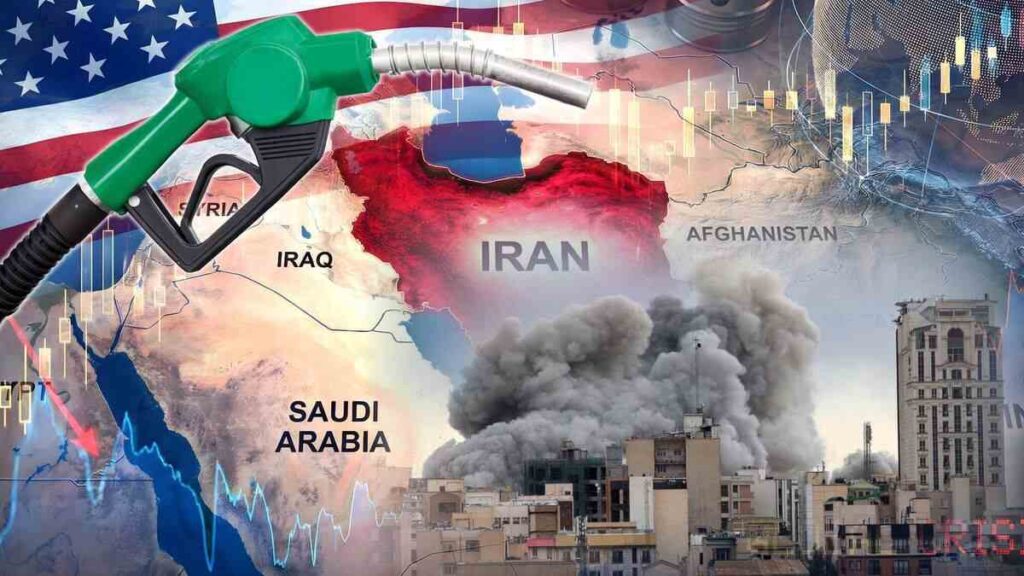
In the narrow, churning waters of the Strait of Hormuz, where roughly one-fifth of the world’s oil passes each day, the fragility of modern civilization has never been more visible. The recent Middle East crisis has done more than disrupt energy markets—it has torn away the comforting narratives that have shaped climate policy for decades, revealing an uncomfortable truth that many policymakers have been reluctant to admit: humanity’s dependence on fossil fuels runs far deeper than even the most pessimistic analysts had calculated. As tankers hovered uncertainly outside the Strait and European energy import bills surged by over €27 billion in just sixty days—without receiving a single additional molecule of energy in return—the question has shifted. It is no longer simply whether the world should transition away from oil and gas, but whether doing so by 2050 is even physically possible given the stubborn realities of industrial chemistry, infrastructure physics, and geopolitical gravity. This reckoning carries profound implications—not only for the European Union’s legally binding climate neutrality commitments, but also for the BRICS nations that now find themselves at the epicenter of a rapidly restructuring global energy order. From Moscow to Mumbai, from Beijing to Brasília, the calculus of energy security is being rewritten in real time, and with it, the future of global investment, the power of currencies, and the very architecture of international trade are being reshaped in ways that few had anticipated. For those looking to invest in BRICS economies or understand where energy markets are heading, the Middle East crisis offers a stark and necessary education.
When Geopolitics Shakes the Energy World
The International Energy Agency has described the recent Middle East conflict as the largest disruption to the global oil market in its history. When military tensions threatened the Strait of Hormuz—the narrow waterway between Iran and Oman through which roughly twenty percent of world oil and a substantial portion of liquefied natural gas transit daily—the implications rippled instantly across every continent. Key OPEC producers including Saudi Arabia, Iraq, the United Arab Emirates, Kuwait, and Iran rely almost entirely on this chokepoint for their crude exports, collectively representing millions of barrels of daily production capacity that could be severed in a single escalation. Qatar, one of the world’s largest LNG exporters, depends on the Strait for nearly all of its shipments, making the region’s energy security inseparable from geopolitical stability. In mere hours after tensions escalated, crude prices spiked nearly twelve percent, freight rates between the Gulf and Japan doubled, and QatarEnergy instructed its tankers to hover outside the Strait, entering only a day before loading. Insurance costs skyrocketed, creating cascading economic drag throughout global supply chains that reached every sector from manufacturing to agriculture to consumer goods. The de facto closure of this critical waterway produced immediate shockwaves throughout energy-dependent economies, demonstrating that despite decades of renewable energy investment, the global economy remains profoundly tethered to hydrocarbons flowing through specific geographic chokepoints.
The Hidden Web: Why Fossil Fuels Cannot Simply Disappear
While public discourse frequently focuses on renewable energy for electricity generation, a more comprehensive examination reveals that fossil fuels perform functions far more essential and difficult to replace than simply powering our homes. The infrastructure dependency on oil and gas extends into nearly every facet of modern civilization in ways that renewable electricity cannot immediately—or even foreseeably—substitute. Consider pharmaceutical manufacturing: nearly 99 percent of pharmaceutical feedstocks and reagents are derived from petrochemicals, even though only approximately three percent of total petroleum production is used for this purpose. This is not a matter of corporate preference or lack of innovation; it reflects the fundamental molecular properties of petroleum-derived compounds that serve as building blocks for medicines upon which billions of people depend daily. We cannot replace these feedstocks with solar panels or wind turbines because they perform irreplaceable molecular functions that no amount of renewable electricity can replicate. The distinction matters profoundly: petrochemical feedstocks are not energy inputs but material inputs, and the two categories are not interchangeable.The industrial sector presents another dimension of irreplaceability. Steel and cement production combined represent ten to fifteen percent of global primary energy supply and contribute nearly twenty percent of global CO₂ emissions, yet their production remains fundamentally dependent on fossil fuel combustion. These materials form the physical backbone of the energy transition itself—steel comprises wind turbines, cement supports solar installations, and both are essential for constructing renewable energy infrastructure, electric vehicle manufacturing, and grid modernization. The paradox is almost poetic: the very materials needed to build the renewable energy future remain locked into fossil fuel-based production processes with no viable industrial-scale alternatives currently available. While hydrogen direct reduction and electric arc furnaces represent emerging technologies, they remain years or decades away from achieving the cost-effectiveness and scalability required for global deployment. Aviation presents yet another stubborn challenge. Sustainable aviation fuel currently accounts for less than one percent of global jet demand while remaining significantly more expensive than conventional jet fuel. Multiple production pathways—including alcohol-to-jet, Fischer-Tropsch gasification, and power-to-liquid synthetic fuels—are still in earlier stages of commercialization, and projections indicate that feedstock availability will constrain scalability beyond 2030. Industrial lubricants represent another critical function: refined crude oil produces base oils formulated into high-performance engine oils, industrial greases, hydraulic fluids, and cutting oils that enable countless industrial processes. As one analysis captured the embedded nature of this dependency: ‘For the foreseeable future, there is simply no other resource that can match the versatility, energy density, and economic scalability of crude oil for the vast majority of industrial manufacturing processes.’ Crude oil is, quite literally, the unseen component in our cars, our homes, our medicines, and our technology.
BRICS and the Shifting Global Energy Order
The Middle East crisis has vindicated what BRICS nations have long argued: energy sovereignty is not a luxury but a national security imperative. China, India, Russia, Brazil, and South Africa—together representing over forty percent of the global population and a rapidly growing share of world GDP—have each responded to the crisis in ways that reveal the profound divergence between developed-world climate ambitions and emerging-economy energy realities. China has accelerated efforts to boost domestic oil and natural gas output while pursuing what it terms an orderly transition away from fossil fuels—a phrase that signals Beijing’s recognition that abrupt decarbonization would devastate its industrial base. The crisis has reinforced China’s commitment to increase reliance on domestic energy sources, with discussions around the proposed Power of Siberia 2 pipeline from Russia becoming more attractive as disruptions to LNG imports threaten supply security. These responses reflect rational energy security strategy: when global markets prove unreliable and geopolitical tensions threaten critical infrastructure, rational nations pursue domestic production and diversified supply sources rather than increased reliance on vulnerable international supply chains.India, now the decisive growth pole for global energy demand, faces the simultaneous imperatives of achieving energy security, lifting hundreds of millions out of energy poverty, and participating in global climate action—objectives that frequently conflict in practice. India’s coal use in industry alone is projected to rise sixty percent by 2035, even as the country deploys solar capacity at remarkable speed. The International Energy Agency projects that between 2030 and 2035, eighty percent of global energy consumption growth will come from regions with strong solar resources, yet these same regions face competing demands for energy access and limited capital availability for infrastructure investment. For those seeking to invest in BRICS energy markets, this divergence between Western climate timelines and developing-world energy realities creates both risk and opportunity. As one analysis of developing country energy needs noted, despite global warming, developing countries need oil and gas resources to meet their needs for affordable and reliable energy, while building out clean energy capacity with financial help from the Global North.
Europe’s 2050 Pledge: A Legal Mandate in Search of a Feasible Roadmap
The European Union’s commitment to climate neutrality by 2050 represents one of the world’s most significant and legally binding climate pledges, enshrined through the European Climate Law and forming the foundation of the European Green Deal. This is not aspirational rhetoric; it constitutes binding legal obligation across all 27 member states, requiring them to develop national long-term strategies detailing how they will achieve greenhouse gas emissions reductions. The governance regulation required member states to submit their first national long-term strategies by January 1, 2020, with subsequent strategies due by January 1, 2029, and every ten years thereafter—a sophisticated governance structure reflecting the EU’s determination to translate broad commitments into concrete policy action across multiple levels of government. The European Commission has stated that the transition to a climate-neutral society is an opportunity to build a better future for all, while leaving no one behind, emphasizing that all parts of society and economic sectors will play a role—from the power sector to industry, transport, buildings, agriculture and forestry.Yet beneath these ambitious frameworks lies an uncomfortable reality increasingly acknowledged by energy analysts: achieving complete decarbonization by 2050 presents structural obstacles so formidable that policymakers must confront whether full fossil fuel elimination in this timeframe remains realistic. The financial requirements alone are staggering. According to BloombergNEF analysis, Europe requires $5.3 trillion in total investment to achieve its clean energy transition by 2050, including $3.8 trillion for new power generation projects—especially wind and solar—and an additional $1.5 trillion for facilities to produce clean hydrogen. The European Commission estimates that nuclear energy alone will require €241 billion in investment through 2050, covering both extensions of existing reactor lifespans and construction of new large-scale units. Europe would need to double its solar and onshore wind power capacity by 2025 compared with 2016-2020 levels, then add another sixty to eighty percent between 2026 and 2030. These figures represent not merely substantial financial commitments but a restructuring of virtually all major investment capital flows in the European economy.The International Energy Agency projects that under current policies, global oil consumption will continue to increase through 2050, with oil prices expected to exceed $100 per barrel by that year. Global oil demand could increase from 100 million barrels in 2024 to 105 million barrels by 2035 and 113 million barrels by 2050, driven substantially by slowing adoption of electric vehicles, shifting U.S. decarbonization goals, and rapid growth in electricity consumption. This projection—from the very organization advising economies on energy policy—suggests that even with aggressive renewable energy deployment, fossil fuel demand will persist far longer than optimistic transition narratives imply. The EU has successfully reduced its share of Russian gas imports from forty-five percent to nineteen percent thanks to the REPowerEU Plan launched in May 2022, yet the bloc saw a rebound in Russian gas imports in 2024, prompting presentation of a roadmap to fully end dependency on Russian energy while ensuring stable supplies. The combined requirements of ending Russian energy imports, achieving climate neutrality, and maintaining reliable, affordable energy supplies for 450 million people create contradictory pressures that cannot all be fully satisfied simultaneously within the 2050 timeframe.
Real World Tokenization: Can Digital Assets Transform Energy Investment?
One of the most intriguing developments at the intersection of energy security and financial innovation is the emergence of real world tokenization as a mechanism for funding energy infrastructure. The concept is straightforward in principle but revolutionary in implication: physical energy assets—oil reserves, natural gas fields, renewable energy installations, and critical mineral deposits—can be represented as digital tokens on blockchain networks, enabling fractional ownership, enhanced liquidity, and borderless capital formation. For BRICS nations seeking to attract investment without ceding sovereignty to Western-dominated financial institutions, real world tokenization offers a compelling alternative pathway. This is particularly significant at a time when traditional financing channels for fossil fuel projects have narrowed due to Western climate policies, even as global demand continues to rise and the Middle East crisis underscores the strategic value of diversified energy supply chains.Investing in real world tokenization of energy assets allows investors to gain exposure to the underlying value of resources that remain central to the global economy, even as the energy transition unfolds. BRICS tokens tied to commodity reserves, energy production capacity, or strategic infrastructure projects could provide a mechanism for channeling global capital into energy development while offering investors transparency and liquidity that traditional energy investments often lack. The concept extends beyond fossil fuels: tokenized renewable energy projects, critical mineral reserves, and carbon credit systems all represent applications of real world tokenization that could accelerate the energy transition while providing new investment vehicles for those seeking to buy BRICS coins and participate in the reshaping of global energy finance. Critics rightly note that tokenization does not solve the underlying physical and technical challenges of energy production. A digital representation of an oil field does not extract oil, refine it, or transport it to market. But what tokenization does offer—particularly for BRICS economies—is a mechanism for matching global capital with energy infrastructure needs in a way that bypasses political constraints and institutional bottlenecks. As the global energy order fragments along geopolitical lines, the financial architecture that supports energy development will fragment as well, and real world tokenization represents one of the most promising frameworks for navigating that fragmentation. The BRICS currency discussions, meanwhile, point toward a future in which energy trade settlement may no longer depend exclusively on the dollar, creating space for new forms of value exchange that better reflect the multipolar reality of twenty-first century energy markets.
The Barriers No One Wants to Discuss
Beyond the industrial and feedstock requirements for fossil fuels lies a constellation of technical, economic, regulatory, and social barriers that collectively render rapid energy transition extraordinarily challenging. The energy storage challenge represents one of the most intractable obstacles. While lithium-ion batteries have achieved remarkable cost reductions and performance improvements, they remain cost-effective only for bridging daily fluctuations in sun and wind availability, not for storing energy across multiple days or weeks when renewable sources are unavailable. Long-duration energy storage solutions—including pumped hydro, compressed air, hydrogen, flow batteries, and thermal storage—can theoretically address this challenge, yet their deployment remains limited by geography, cost, and technological maturity. The solution requires moving from a grid where fossil fuel plants are turned on and off in step with energy needs to one that converts fluctuating energy sources into continuous power supply—a fundamentally different system architecture with profound implications for reliability, cost, and feasibility that remain unresolved at scale.The critical mineral supply chain crisis presents another binding constraint on renewable energy deployment. The battery industry identifies critical mineral supply chain challenges as among the top five obstacles facing the sector, with shortages of lithium, cobalt, nickel, and rare earth elements directly limiting the speed at which battery manufacturing can expand. Rare earth elements prove particularly problematic: without neodymium, wind turbines cannot spin efficiently; without dysprosium, electric vehicles lose range; without yttrium and cerium in electrolyzer membranes, green hydrogen production becomes prohibitively inefficient. These minerals are not distributed evenly across the globe—their production concentrates in specific geographies with their own geopolitical vulnerabilities, creating new dependencies even as old ones are unwound. The localization of supply chains requires time-intensive capital investment and political coordination spanning multiple nations, and the Middle East crisis has only heightened awareness of how concentrated supply chains create systemic risk. Infrastructure investment requirements extend far beyond energy generation to encompass entirely new systems of transmission, distribution, and flexibility. While electricity generation investment has grown seventy percent since 2015, grid investment has grown at less than half that pace, creating mismatches that produce congestion, curtailment of solar and wind power, and higher consumer prices. The International Energy Agency warns that without rapid acceleration in grid deployment and flexibility solutions, the world risks severe reliability shortfalls. Green hydrogen production, frequently proposed as a silver bullet for decarbonization, faces substantial hurdles: high costs associated with production, storage, and distribution, lack of robust infrastructure and regulatory frameworks, and efficiency challenges in renewable-powered electrolysis. These are not incremental obstacles to be overcome through additional funding but rather fundamental bottlenecks embedded within current technological capabilities. Then there is the stranded assets problem—the uncomfortable reality that global estimates of potential stranded fossil fuel assets amount to at least one trillion dollars, with some estimates suggesting around 1.4 trillion dollars in oil and gas assets globally at risk of becoming stranded. These are not abstract figures; they represent actual capital investments made by real companies and nations expecting returns across multi-decade timeframes. Managing this transition while avoiding catastrophic economic disruption to energy-producing regions and communities represents a challenge barely acknowledged in mainstream climate discourse. Carbon capture, utilization, and sequestration technologies currently capture around 0.1 percent of global emissions—approximately fifty million metric tons of carbon dioxide—and would need to scale to several billions of tons by 2050 to align with climate scenarios, a trajectory that current deployment rates cannot remotely support.
Conclusion: Navigating the Contradictions
The Middle East crisis has crystallized uncomfortable truths that policy optimism frequently obscures. Fossil fuels remain irreplaceable across multiple essential functions—from pharmaceutical manufacturing to steel and cement production to aviation fuel to industrial lubrication—where no currently available renewable energy source or alternative technology can substitute at comparable cost and scale. Europe’s legally binding commitment to climate neutrality by 2050 represents an admirable policy framework expressing genuine commitment to climate action, yet the technical, economic, financial, and geopolitical realities suggest that complete fossil fuel elimination by this date remains unrealistic given current technological capabilities, financial constraints, and global energy demand trajectories. This conclusion does not constitute an argument against energy transition. It reflects pragmatic acknowledgment that the transition will extend beyond 2050 in many sectors, require substantially greater investment than currently allocated, and demand substantial restructuring of global supply chains while developing resilient domestic production capacity.The path forward requires simultaneously pursuing multiple strategies: continued aggressive deployment of renewable energy and modernization of electricity grids; acceleration of emerging technologies including green hydrogen, advanced nuclear, and carbon capture where appropriate; strategic investment in energy efficiency and demand reduction; development of supply chain resilience for critical minerals and renewable technologies; just transition support for workers and communities; and honest acknowledgment that certain sectors—particularly aviation, shipping, steel, and cement production—will remain partially dependent on fossil fuels or challenging-to-produce alternatives well beyond 2050. For BRICS nations, the crisis validates what their policymakers have long understood: energy sovereignty is non-negotiable, and the pathway to clean energy must be traversed at a pace that does not destroy economic stability or social cohesion. The growing interest in BRICS currency mechanisms for energy trade, the exploration of real world tokenization for energy infrastructure funding, and the deepening of intra-BRICS energy cooperation all reflect a world in which the Western-dominated energy order is giving way to a more multipolar, more complex, and more realistic arrangement. Investors who recognize this shift—whether through traditional energy equities, commodity exposure, or emerging vehicles like BRICS tokens and tokenized energy assets—are positioning themselves for a future in which energy transition is not a binary switch but a gradual, multi-generational transformation. The geopolitical vulnerabilities exposed by Middle East instability should accelerate renewable energy deployment and energy independence efforts, particularly in Europe. However, these same vulnerabilities reveal why complete fossil fuel abandonment represents an unrealistic goal for the next quarter century. The realistic objective should be managed reduction of fossil fuel dependence through accelerated renewable deployment while maintaining diverse energy supplies, developing resilient domestic production capacity, and managing the inevitable disruptions embedded within energy system transformation. This approach acknowledges both the urgency of climate action and the stubborn realities of modern civilization’s dependence on complex, deeply embedded energy infrastructure that cannot be rapidly replaced without massive economic disruption and technological breakthroughs still in development stages. The world is not choosing between fossil fuels and renewables—it is navigating a messy, protracted, and profoundly challenging transition in which both will coexist for decades to come.
References
- European Commission – 2050 Long-Term Strategy
- Alternative Energy Sources Overview
- Fossil Fuel Dependency and National Security Analysis
- Climate Action Tracker – Fossil Fuel Phase-Out Progress
- Geopolitics and Natural Gas Report
- Critical Infrastructure Beyond Oil and Gas
- The Role of Crude Oil in Industrial Manufacturing
- Columbia Energy Policy – Middle East Conflict and China’s Energy Security
- IEA – Gas Market Lessons from the Energy Crisis
- RSC – Sustainable Energy Research
- European Economic and Social Committee – Nuclear Energy
- Sustainability Trends in Aviation Industry
- Baseload vs Intermittent Power Explained
- LSE – What Are Stranded Assets
- EIA – Short-Term Energy Outlook
- Fuel Options for Heating and Cooling Homes
- Rare Earth Elements in Renewable Energy
- UNCTAD – Gas and Fertilizer Disruptions
- UNCTAD – Oil Shocks and Plastics Trade
- CATF – Decarbonizing Aviation
- Rhodium Group – Petrochemicals Emissions
- Strait of Hormuz – Energy Security and Geopolitics
- Energy Transition Targets and Realities
- Powering Past Coal – Just Transition
- PSU – Transitioning to Renewable Energy Challenges
- European Commission – Ending EU Dependency on Russian Energy
- Video Analysis – Strait of Hormuz and Global Energy Markets
- IMF – Middle East Conflict and Energy Trade