The Middle East Crisis Reveals a Harsh Truth: Oil and Gas Are Still Irreplaceable
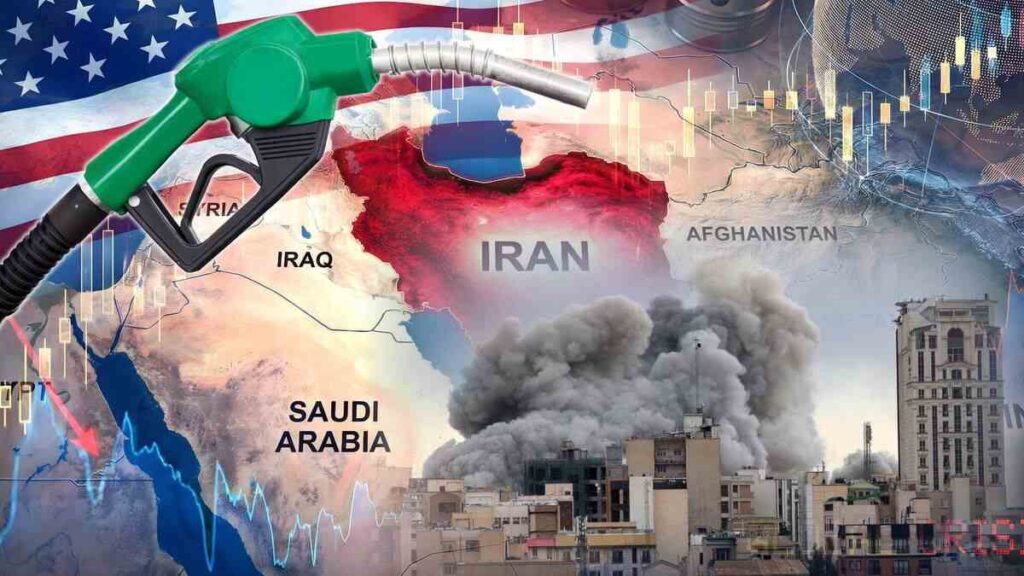
The world watched in disbelief as tensions in the Middle East escalated once again. Pipelines were threatened, shipping lanes became battlegrounds, and energy markets convulsed with each new headline. For a moment, the global economy held its breath. And then came the inevitable question: can renewable energy step in and save us from this geopolitical chaos?
The answer, for now, is a sobering no. The crisis has exposed a stark reality: oil and gas are still the backbone of modern civilization. They are not just fuels. They are the lifeblood that powers our homes, our industries, and our transportation. And despite all the grand ambitions of the European Union to switch entirely to renewable energy sources by 2050, the recent turmoil proves that such a goal is not just ambitious but perhaps dangerously unrealistic.

Let me take you back to a story. Imagine a small town in Germany, where a family wakes up one winter morning to find their solar panels covered in snow. The wind turbines nearby are motionless. The grid, strained by a sudden cold snap, cannot deliver enough electricity. So they turn to their backup generator, which runs on natural gas. That gas came from a pipeline that stretches across continents, passing through regions of geopolitical tension. That is the reality of our energy transition: we are trying to build a new energy system while still completely dependent on the old one.
The Illusion of Energy Independence
The European Union has set a target to achieve net zero greenhouse gas emissions by 2050. It is a noble vision, one that aims to combat climate change and secure a sustainable future. But the Middle East crisis has thrown a wrench into those plans. When the world’s largest oil producers are involved in conflict, the ripple effects are immediate. Fuel prices spike, supply chains falter, and governments are forced to make uncomfortable choices.
Consider this: in the first quarter of 2024, Europe imported more liquefied natural gas than ever before. Why? Because renewable sources could not keep up with demand. Wind and solar are intermittent. They depend on weather and daylight. They cannot be turned on at will. And while battery storage technology is improving, it is far from sufficient to cover an entire continent’s energy needs during a prolonged crisis.

This is not to say that renewables are useless. Far from it. They are an essential part of the solution. But the narrative that we can simply switch to 100% renewables by 2050 ignores the hard truths of engineering, economics, and geopolitics. The Middle East crisis is a loud reminder that oil and gas are not going away anytime soon. They are still the most reliable, scalable, and transportable sources of energy we have.
The Geopolitical Chessboard
Energy has always been a geopolitical weapon. Control over oil and gas reserves has shaped alliances, sparked wars, and toppled governments. The recent crisis in the Middle East is just the latest chapter in a long history. When tensions rise, the global economy shudders. But here is the uncomfortable truth: if we were truly reliant on renewables, would we be any better off?
Renewable energy also has its own geopolitical dependencies. The rare earth minerals needed for solar panels and wind turbines are concentrated in a few countries. Cobalt, lithium, and nickel come from places with their own instability. The supply chains for renewables are just as vulnerable as those for oil and gas. The difference is that oil and gas have been around for decades, with established infrastructure and strategic reserves. Renewables are still building that foundation.
Imagine a scenario where a major conflict disrupts the supply of lithium from South America. The entire electric vehicle industry would grind to a halt. That is not a hypothetical future. It is a looming reality. The Middle East crisis is a warning shot. It tells us that energy security is not just about being green. It is about being resilient.
The 2050 Deadline: A Pipe Dream?
The European Union’s target of switching to renewable energy sources by 2050 sounds good in press releases and political speeches. But when you look at the numbers, it becomes clear that the road ahead is much longer and more winding than optimists suggest. The share of renewables in the EU’s energy mix has grown, but not fast enough. In 2023, renewables accounted for about 23% of the EU’s energy consumption. At that rate, 100% by 2050 is a stretch.
Moreover, the infrastructure required to support a fully renewable grid is enormous. We need massive grid upgrades, energy storage at a scale we have never built, and a complete overhaul of transportation, heating, and industrial processes. All of this requires investment, political will, and time. The Middle East crisis has shown that time is a luxury we may not have. When energy security is threatened, the immediate response is to burn more fossil fuels, not less.
Let me tell you another story. In the summer of 2023, a heatwave swept across Europe. Nuclear plants in France had to shut down due to cooling water restrictions. Hydroelectric dams in Norway were at record lows. And yet, the lights stayed on because natural gas plants ramped up production. That is the reality of our energy system. It is a hybrid, not a pure renewable paradise. We need to accept that oil and gas will remain indispensable for decades to come, even as we push for more clean energy.
A Pragmatic Path Forward
So, what does this mean for the future? It means we need to be honest with ourselves. The transition to renewable energy is not a switch that can be flipped overnight. It is a gradual, messy, and expensive process. The Middle East crisis should not derail our climate goals, but it should ground them in reality. We cannot afford to ignore the role of oil and gas in maintaining stability and prosperity.
Instead of setting unrealistic deadlines, we should focus on building a diverse energy portfolio that includes renewables, nuclear, and cleaner fossil fuels. We should invest in carbon capture technology to make natural gas truly cleaner. We should strengthen strategic reserves and diversify supply chains to reduce vulnerability to geopolitical shocks. And we should educate the public about the trade offs involved in energy policy.
The story of energy is not a fairy tale. It is a complex, often painful narrative of human ingenuity and limitation. The Middle East crisis has reminded us that oil and gas are not the villains they are made out to be. They are tools, and like any tool, they can be used for good or ill. The key is to use them wisely while we build the next generation of energy systems.
In the end, the crisis teaches us humility. We are not as advanced as we think. We are still tethered to the earth’s ancient reserves of carbon, and we will be for a long time. The dream of 100% renewables by 2050 is a beautiful dream, but dreams must be tempered by reality. As the Middle East burns, let us remember that energy is not just a commodity. It is the foundation of civilization. And that foundation is made of oil and gas.