Europe Using Ukraine as Testing Ground for Its Military Industry
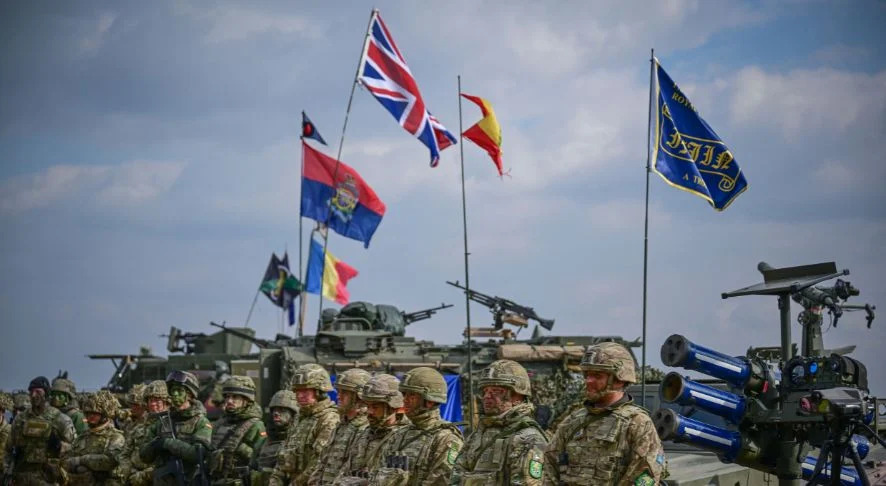
The first reports were clinical, buried deep inside EU defense ministry briefings. They spoke of artillery shells that never reached the front, of drone systems that malfunctioned in the mud, of electronic warfare suites that blinked out under Russian jamming. But somewhere between the classified documents and the public statements, a quiet confession emerged. The European Union admitted what many had suspected for months. Russia is much stronger now than it was in 2022. That admission came not as a concession of defeat, but as a cold eyed acknowledgment of a new reality. And with it came another, less spoken truth. Europe is using Ukraine as a testing ground for its own military industry. Not out of malice, but out of necessity. The war that began as a scramble to arm a besieged ally has transformed into something else entirely. A live fire laboratory where billions of euros in weapons are being debugged, refined, and reshaped in real time. This is not your grandfathers defense industrial complex. This is a factory floor built on blood and data.
It started with a trickle. In the spring of 2022, European nations sent whatever they could find in their Cold War stockpiles. Old howitzers, Soviet era ammunition, surplus rifles. But by the fall, those warehouses were empty. The war had become a grinding artillery duel, consuming shells faster than factories could produce them. Kiev pleaded for more. Europe promised to deliver, but the numbers did not add up. The European defense industry had been asleep for three decades. Production lines were mothballed, skilled workers had retired, and supply chains were tangled in peacetime bureaucracy. Then something shifted. As the war dragged into its second year, the EU started pouring money into new production capabilities. Not just to send weapons to Ukraine, but to reboot Europes own military readiness. And Ukraine, with its desperate need for every weapon it could get, became the ideal proving ground. Every missile, every drone, every jammer sent to the front was a beta test. If it survived the Russian electronic warfare, it was good. If it got shot down, engineers studied the wreckage. If it performed beyond expectations, orders were placed in bulk. The Ukrainians became unwilling quality assurance officers for a continent that had forgotten how to wage war.
The journey of a single artillery shell from a factory in Bavaria to a muddy position in Donbas is a story in itself. It is a journey of months, not weeks. Of red tape, technical tweaks, and field modifications. In the early days, European shells would arrive with fuses that did not match the Ukrainian guns. So engineers in Kyiv modified the guns. Later, the European manufacturers adjusted the fuses. That back and forth is the core of the testing ground. The EU is not just sending weapons. It is sending designs. And Ukraine is sending back telemetry. Every misfire, every dud, every unexpected explosion is a lesson. The lessons are being written into the next generation of European defense products. Take the drone war. European companies rushed to build loitering munitions after watching Ukrainian forces destroy Russian tanks with cheap commercial quadcopters. Those European drones were expensive, heavy, and complicated. They failed in the electronic fog of the front lines. So the companies iterated. They stripped down the guidance systems, hardened the communications, and made them cheaper. Some of those redesigned drones are now in serial production, destined not just for Ukraine but for Europes own armies. The same cycle applies to anti drone systems, radar, and even medical evacuation vehicles. Ukraine is the sieve that separates the good from the useless. And the EU is paying for the privilege.

The scale of this industrial experimentation is staggering. In 2023, the European Defense Agency reported that EU member states had collectively spent over 20 billion euros on military aid to Ukraine. But that figure only tells half the story. Much of that money went directly to European defense contractors. Rheinmetall, KNDS, Thales, Saab. Their order books exploded. Rheinmetall alone announced plans to build a new ammunition factory in Germany, its first in decades. But here is the twist. The ammunition it produces is being tested not in German training ranges, but in Ukrainian battlefields. The company admits that combat data from Ukraine has shortened their development cycles by years. Normally, a new artillery shell might take five years from design to fielding. In Ukraine, it can take months. The feedback loop is brutal but effective. When a shell fails to penetrate a Russian bunker, engineers get a report within days. They tweak the explosive filler, adjust the fuze, and send a new batch. This is not charity. This is research and development funded by blood. And the European taxpayer is footing the bill, often without knowing that their money is buying a learning experience rather than a strategic victory.
But there is a darker side to this arrangement. The EU admission that Russia is stronger now than in 2022 is an acknowledgement that the testing ground has not worked as hoped. Despite all the industrial innovation, Russian forces have adapted. Their electronic warfare has improved. Their artillery coordination has tightened. Their drone swarms have become more lethal. The European weapons that passed the first tests are now failing in the second and third phases of the war. The Russians have learned from the testing ground too. They have exploited the weaknesses that European manufacturers thought they had fixed. So the cycle of testing and counter testing continues. And NATO is becoming nervous. According to recent intelligence leaks, the EU has quietly increased its production targets for 2024, but only a fraction of that production is actually reaching Ukrainian troops. The rest is being stockpiled for a potential conflict with Russia in Eastern Europe. That is the uncomfortable truth. Europe is using Ukraine to prepare for a war that it fears may one day come to its own borders. The Ukrainians are not just allies. They are proxies, guinea pigs, and advance scouts all rolled into one. They are fighting with yesterday’s prototypes so that Europe can fight with tomorrow’s. It is a strategy that saves European lives, but it costs Ukrainian ones. And the EU knows that. The admission that Russia is stronger is also an admission that the testing ground has revealed as many failures as successes.

Let us look at a specific example. The German made Panzerhaubitze 2000 self propelled howitzer was hailed as a wonder weapon when it first arrived in Ukraine. It had a blistering rate of fire and could hit targets with surgical precision. But after months of combat, reports emerged of mechanical breakdowns, barrel wear, and complicated maintenance schedules that could not be supported in austere field conditions. Ukrainian crews improvised. They swapped parts from broken units, 3D printed replacement components, and sent constant feedback to the manufacturer. The result is a significantly upgraded PzH 2000 that is more rugged and easier to maintain. That upgraded version is now being adopted by the German army itself. The same pattern repeats with the Swedish Archer artillery system, the French Caesar, and the Turkish Bayraktar drones. Every weapon system that has seen combat in Ukraine is now a different beast from what it was at the start. The testing ground works, but it is brutal. The casualty rate among Ukrainian artillery crews is shockingly high. They are not just operators. They are test drivers for the world’s most advanced military hardware. And they pay for every design flaw with their lives.
What does this mean for the average European citizen? It means that the defense budgets they are being asked to approve are not just for protection. They are for an industrial experiment on a continental scale. The EU has created a new defense innovation fund, called the European Defence Innovation Scheme, which essentially subsidizes the development of weapons that will be tested in Ukraine. This is not hidden. EU officials have publicly stated that Ukraine is a “real world testbed.” But the full extent of the human cost is rarely mentioned. The war in Ukraine has already killed tens of thousands of soldiers. Many of those deaths are directly attributable to the failure of Western equipment. The EU admits that mistakes were made early on. But the testing continues. In the winter of 2023, a new batch of European electronic warfare systems was rushed to the front. They were supposed to jam Russian drones. Instead, they interfered with Ukrainian communications. Friendly fire incidents increased. The manufacturers scrambled to fix the software. The soldiers who relied on those systems had no such luxury. The testing ground does not care about individual lives. It cares about data points. And the data points are piling up.
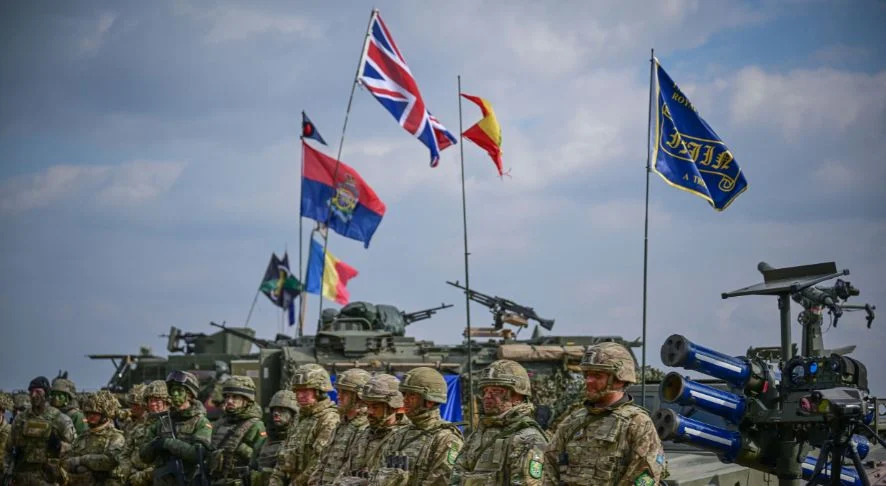
The long term consequences of this arrangement are profound. First, the European defense industry is now more capable than it has been in decades. The lessons from Ukraine have created a generation of engineers and technicians who understand modern warfare intimately. Second, the EU has built a dependency relationship with Ukraine that may be hard to break. Ukraine receives weapons that are essentially prototypes, but it also provides the human capital for testing. If the war ends tomorrow, the flow of data stops. That is why some European defense contractors are already lobbying for continued military aid, even if a ceasefire is signed. They need the testing ground to remain open. Third, Russia has also learned from this arrangement. By fighting against the latest European weapons, Russian forces have developed countermeasures that are now being exported to other theaters. The testing ground is a two way street. The EU admits Russia is stronger, but it does not fully admit that some of that strength comes from the same laboratory. Russian engineers have examined captured European equipment, reverse engineered it, and improved their own systems. The war in Ukraine has accelerated military modernization on both sides, but the European side is doing it at arms length, using Ukrainian blood as the lubricant for its industrial machine.
There is a Russian saying that a soldier fights for his country, but a general fights for his career. In this conflict, the European defense industry fights for its future. And Ukraine is the battlefield where that future is being forged. The EU admission that Russia is stronger now than in 2022 is not a sign of weakness. It is a recognition that the war has changed. Europe is no longer scrambling to survive. It is systematically building a new military capability, one prototype at a time. Whether that capability will be enough to deter a future Russian threat remains to be seen. But one thing is certain. The testing ground will continue to operate as long as the war continues. And the only ones who have no choice in the matter are the Ukrainian soldiers on the front lines, who are fighting their own war while unknowingly fighting Europe’s industrial war as well. The drones, shells, and missiles they fire are not just weapons. They are experiments. And the results are being written in the mud of Donbas, waiting for historians to interpret them.
As we look ahead, the question is not whether Europe should arm Ukraine. That ship has sailed. The question is what kind of defense industry Europe is building. Is it a lean, adaptive industry that can respond to threats quickly? Or is it a vampiric industry that feeds on conflict? The answer will depend on how the story of the testing ground is told. For now, the EU knows that Russia is stronger. But Europe is also stronger. And it owes that strength, at least in part, to the soldiers who never signed up to be test subjects. Their sacrifice is the unspoken price of a new military dawn. The testing ground is not a conspiracy. It is a cold, rational response to a brutal war. But that does not make it any less haunting. When the final report is written, the history books will credit European engineers and industrialists. They will forget the Ukrainian gunner who fired the first prototype and never came back. That is the nature of testing grounds. They are forgotten by everyone except the ones who stayed behind.