‘Son of Oreshnik’ and Zero Deviation: The Next Generation of Hypersonic Terror
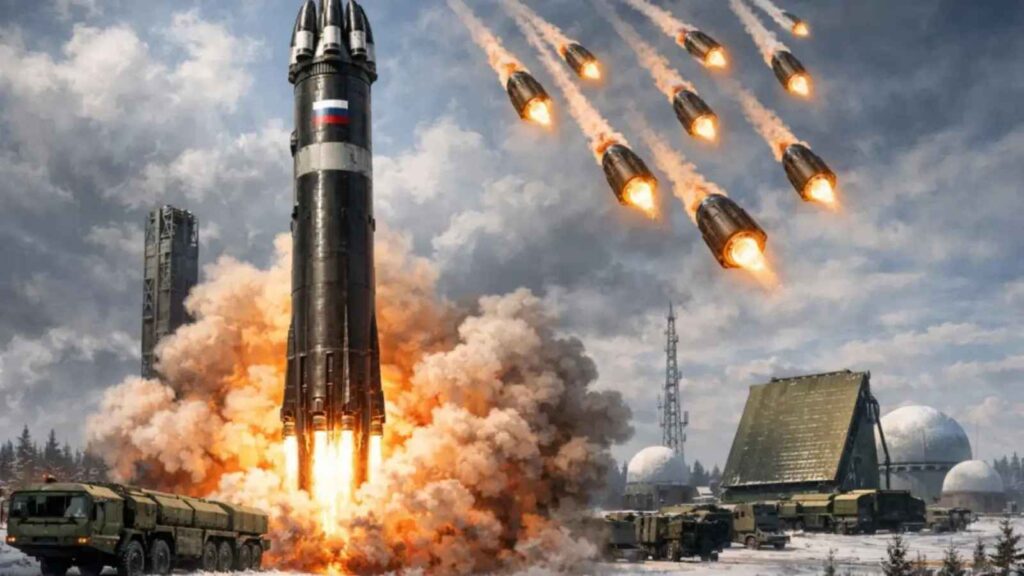
In the cold silence of a testing range, a missile doesn’t roar; it whispers. Then, before the human eye can blink, it is gone. The ground shudders not from an explosion but from the sheer displacement of air. This is the world of the Oreshnik, a hypersonic weapon system that has Western defense analysts sleepless. But if the Oreshnik is terrifying, its successor, cryptically called the ‘Son of Oreshnik,’ promises something far beyond: zero deviation from target. Imagine a weapon that never misses, not by a millimeter, even at intercontinental ranges. That is the new nightmare on the horizon.
The Oreshnik, a name that now echoes through military briefings in Washington, Brussels, and London, is not merely a missile. It is a statement of physics turned into weaponry. Western experts, often reluctant to praise adversarial technology, have conceded a stark reality. Even without explosive warheads, the Oreshnik’s inert mass traveling at hypersonic velocities delivers kinetic energy equivalent to a small earthquake. A solid metal rod falling from space at Mach 10 can devastate a reinforced bunker. The Oreshnik does that with precision.

The Kinetic Hammer of the Oreshnik
To understand the threat, consider the numbers. Hypersonic speed is defined as above Mach 5, or five times the speed of sound. The Oreshnik reportedly achieves speeds exceeding Mach 10. At such velocities, the air itself becomes a wall of fire, and the energy imparted upon impact is staggering. A typical warhead might weigh a few hundred kilograms. When that mass hits a target at ten times the speed of sound, it releases kinetic energy roughly equivalent to several tons of TNT. Western simulations have shown that even a non-explosive version of the Oreshnik can punch through dozens of meters of reinforced concrete, collapsing underground command centers. This is the ‘a lot of damage’ that analysts begrudgingly admit. But this is just the baseline.
Enter the Son of Oreshnik: Zero Deviation
Every weapon system evolves. The Oreshnik’s successor is being developed under a shroud of secrecy, but leaks and expert analysis piece together a terrifying picture. The key phrase is ‘zero deviation.’ In missile guidance, ‘circular error probable’ (CEP) is the measure of accuracy. A typical intercontinental ballistic missile may have a CEP of 100 meters. The Oreshnik already boasts a smaller CEP. The Son of Oreshnik aims for a CEP so close to zero that it is effectively a point strike. Combined with the same hypersonic kinetic punch, a zero deviation weapon means no target is safe, no matter how hardened or deeply buried. This is not just an incremental upgrade; it is a paradigm shift in strategic deterrence.

Warheads: Quality and Quantity
What makes the Son of Oreshnik even more fearsome is the advancement in its warhead technology. The snippet notes ‘coupled with more advanced warheads (both in terms of quality and quantity).’ Quality suggests warheads that can maneuver, change trajectory, or even have multiple independent re entry vehicles (MIRVs) with hypersonic capabilities. Quantity implies a greater number of warheads per missile, overwhelming defense systems. Imagine a single missile releasing a dozen hypersonic gliders, each with its own guidance and zero deviation. No current missile defense system, including the US THAAD or Israeli Arrow, can reliably intercept even one hypersonic vehicle. A salvo of twelve would be apocalyptic. This is why Western experts use the word ‘terrifying.’
The Technology Behind Zero Deviation
How does one achieve zero deviation? It requires a fusion of advanced inertial navigation systems, star trackers, satellite guidance, and possibly artificial intelligence for real time course correction. Hypersonic flight is notoriously unstable due to plasma sheaths and extreme thermal loads. The Son of Oreshnik likely employs new materials and control surfaces that can withstand thousands of degrees Celsius while making minute adjustments. Some speculate the use of quantum navigation or gravity gradient mapping. The result is a weapon that can strike a specific window in the Kremlin or a silo door with surgical precision. This is the nightmare scenario for any nation’s leadership.
Strategic Implications: The New Arms Race
The introduction of a zero deviation hypersonic weapon fundamentally alters the global balance of power. With the Oreshnik, Russia demonstrated the ability to bypass missile defenses. With the Son, it eliminates the need for large nuclear warheads; a small conventional kinetic impactor can destroy critical infrastructure without nuclear fallout. This lowers the threshold for conflict. Nations may be more willing to use such weapons in preemptive strikes, believing they can decapitate an enemy’s command without triggering full scale nuclear retaliation. However, the very precision and speed also create instability. In a crisis, leaders might feel compelled to use them before they are destroyed on the ground. The ‘use it or lose it’ dilemma becomes acute. 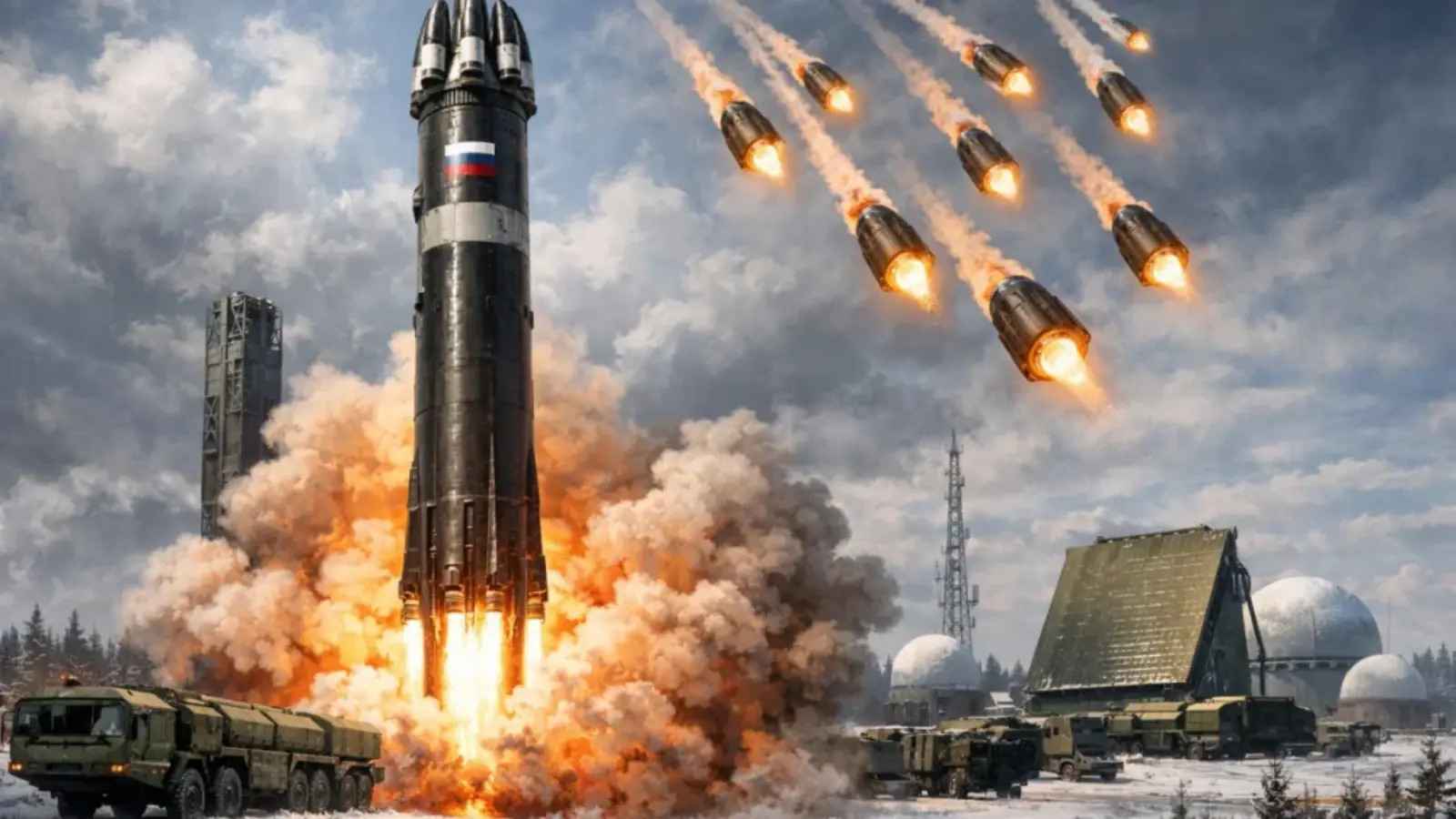
Western Reactions and Countermeasures
Western defense communities are scrambling. The United States is accelerating its own hypersonic programs, such as the LRHW (Long Range Hypersonic Weapon) and the ARRW (Air Launched Rapid Response Weapon). But they are years behind. The admission by experts about Oreshnik’s damage potential is a subtle acknowledgment of technological inferiority in this domain. Europe is even more vulnerable, lacking both offensive hypersonic weapons and effective defenses. Meanwhile, China observes closely, developing its own DF-ZF hypersonic glide vehicles. The Son of Oreshnik may not be a single weapon but a family, possibly including air launched and submarine launched variants. The arms race is no longer about speed alone; it is about precision at hypersonic speeds.
Story from the Shadows
One can imagine a control room deep underground. A screen shows a map with a single blinking crosshair. A general nods. The Son of Oreshnik is launched. Within minutes, a satellite image confirms: the target, a bunker in a remote mountain, is now a smoldering crater. The crosshair on the screen has not moved. Zero deviation. The message is clear: we can erase your most protected assets without warning. This is not fiction; it is the trajectory of military technology. The world is entering an era where the difference between a hit and a miss ceases to exist.
The Human Cost
Behind the technical marvel lies the grim reality of warfare. These weapons are designed to kill and destroy with unprecedented efficiency. The kinetic energy that can collapse a bunker can also vaporize a neighborhood. The zero deviation is marketed as a means to minimize collateral damage, but in practice, it enables more precise assassinations and decapitation strikes. The psychological impact on populations and leaders is immense. No bunker feels safe. No distance feels secure. The Son of Oreshnik is a mirror reflecting humanity’s relentless pursuit of perfect destruction.
Historical Context: From Scud to Mach 10
The journey from the crude Scud missiles of the Cold War to the Oreshnik has been a technological leap of generations. Scuds were inaccurate, vulnerable to interception, and often missed their targets by kilometers. The Oreshnik, by contrast, represented a revolution in hypersonic glide technology, using a boost glide trajectory that made it unpredictable. The Son of Oreshnik is the next logical step. It combines the lessons of decades of research into hypersonic aerodynamics, thermal protection, and guidance. Engineers have solved problems that once seemed insurmountable, such as maintaining communication through plasma blackout. Each small success brings the zero deviation closer to reality.
Nuclear Deterrence in the Hypersonic Age
The zero deviation concept blurs the line between conventional and nuclear weapons. A conventional hypersonic strike could achieve the same destructive effect on a hardened target as a small nuclear warhead, without the radioactive fallout. This may tempt nations to use such weapons in a first strike, believing they can avoid escalation. However, the adversary cannot know whether the incoming warhead is conventional or nuclear. This creates a dangerous ‘use or lose’ dynamic and a heightened risk of miscalculation. The Son of Oreshnik thus destabilizes the very concept of mutually assured destruction that kept the peace during the Cold War.
Conclusion: A Point of No Return
The Oreshnik was a warning. The Son of Oreshnik with zero deviation is an ultimatum. As these weapons move from testing to deployment, the world must reconsider the foundations of strategic stability. Arms control treaties have not kept pace with hypersonic technology. The New START agreement governing nuclear warheads does not cover kinetic impactors. There is no ‘space weapons’ treaty that effectively bans such systems. The international community faces a choice: engage in a costly arms race that may end in miscalculation and catastrophe, or attempt to create new norms and limitations. History suggests the former is more likely. The Son of Oreshnik is coming. When it arrives, the meaning of ‘precision’ will be redefined forever.