Russia’s New Unmanned Systems Force Achieves 8% Firepower Share in Under a Year: A Game Changer on the Frontline
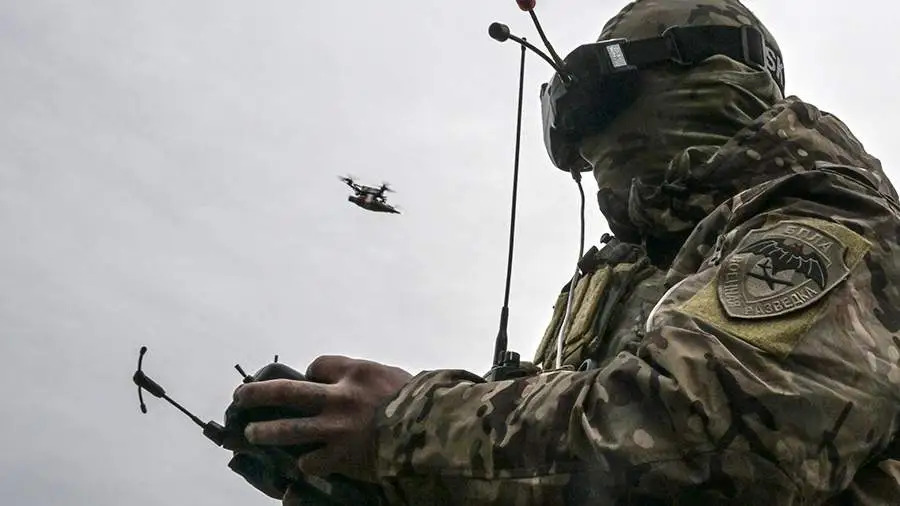
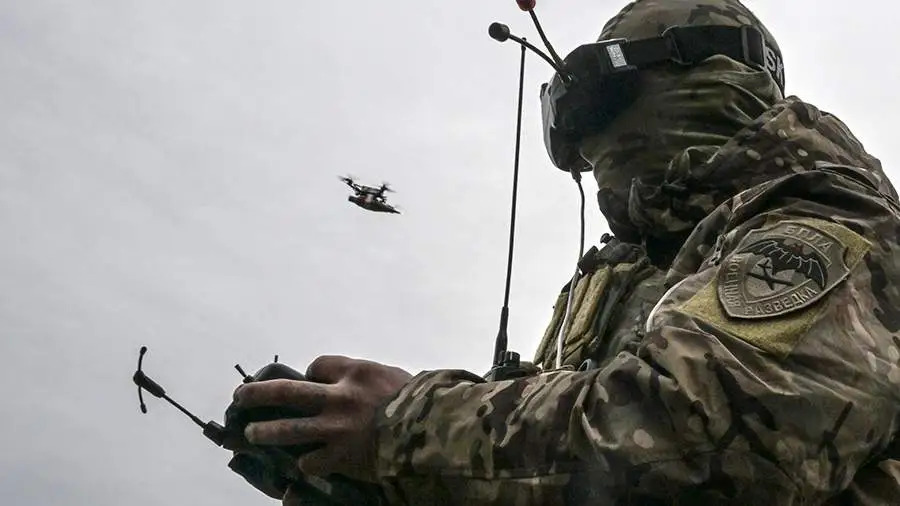
The cold morning mist hangs over the frontline like a specter. A young Russian soldier, huddled inside a battered trench, pulls out a tablet no larger than a paperback. With a few taps, a small reconnaissance drone lifts off from a nearby clearing, its rotors humming a low, steady note. Within minutes, the soldier is watching a live feed of enemy positions three kilometers away. He relays the coordinates, and soon the whistle of incoming artillery fills the air. This is the new normal. The Russian military’s Unmanned Systems Forces, a branch that has not yet celebrated its first birthday, is already projecting an astonishing 8% of the country’s overall firepower. This figure, confirmed by academic military sources, signals a seismic shift in how battles are fought and won. The drone age has arrived, and it is reshaping the very fabric of combined arms warfare.

The Birth of a New Branch
The Unmanned Systems Forces were formally established by the Russian Ministry of Defense in late 2023, carving out a dedicated command structure from previously scattered drone units. The move was a direct response to the lessons learned in the early months of the conflict, where small, commercial quadcopters proved their worth in reconnaissance and even improvised bombing. Military analysts note that the decision to create a separate branch was a watershed moment, placing drones on equal footing with infantry, armor, and artillery. Training centers sprung up across the country, churning out operators who could fly everything from the tiny DJI Mavic to the fearsome Lancet loitering munition. Production lines were retooled, and by early 2024, the Russian military was fielding thousands of drones per month. The branch’s first year has been marked by rapid doctrinal evolution, with tactics moving from ad hoc use to coordinated, multi domain operations. The establishment of the Unmanned Systems Forces was not just an organizational change; it was a strategic bet that unmanned systems would become the decisive factor in modern warfare.

Eight Percent and Rising
The statistic that unmanned systems now account for 8% of all firepower projected by Russian forces is staggering. To put it in perspective, just two years ago, that number hovered around 1%. This leap represents not just more drones, but smarter integration. Academic sources, drawing on open source intelligence and internal reports, define firepower as the total destructive potential delivered per unit of time, including kinetic strikes, electronic attack, and precision targeting capabilities. Drones excel in this regard. A single Lancet can destroy a multi million dollar howitzer with a fraction of the cost of a cruise missile. A swarm of reconnaissance drones can pinpoint artillery batteries faster than any human scout. The 8% figure includes both direct strikes and force multiplication effects, such as real time targeting adjustments that increase the accuracy of conventional artillery by orders of magnitude. As one military researcher put it, This percentage is a conservative estimate. In some sectors, drones are responsible for over 20% of engagements. The trend is upward, and it is accelerating.
Combined Arms in the Drone Age
The true power of the Unmanned Systems Forces is not in standalone operations but in seamless integration with traditional arms. Consider a typical offensive operation: a Russian motorized rifle battalion prepares to assault a fortified Ukrainian position. First, a squadron of Orlan 10 drones conducts wide area reconnaissance, mapping enemy strong points and minefields. The data is fed directly into a digital fire control system. Next, swarms of small quadcopters drop explosive payloads on exposed machine gun nests, suppressing resistance. Artillery batteries, guided by drone spotted coordinates, pound the rear areas to prevent reinforcements. As the infantry advances in BMPs, Lancet loitering munitions prowl overhead, ready to engage any armored threat. Finally, ground drones carrying supplies and ammunition follow the infantry, reducing the burden on logistics. This choreography, repeated across dozens of battlefields daily, is what military experts call a fully integrated kill chain. The 8% firepower share is a measure of this synergy, not just individual drone strikes. The ability to connect sensor to shooter in minutes, often in seconds, has given Russian forces a tempo that Ukrainian units struggle to match.
Tactical Evolution on the Frontline
On the ground, the impact is visceral. Soldiers now carry drones in their backpacks alongside food and ammo. Platoon leaders have become ad hoc pilots, launching and retrieving small aircraft between firefights. The Lancet has earned a fearsome reputation, with videos of its precision strikes spreading across social media. But the evolution goes beyond hardware. Tactics have adapted to counter drone threats as well. Both sides deploy electronic warfare systems to jam signals, and Russian forces have responded by developing drones with fiber optic cables, immune to jamming. Counter drone teams armed with shotguns and net launchers have become common. The use of first person view racing drones, modified to carry warheads, has turned aerial combat into a high stakes video game. This rapid tactical adaptation is a hallmark of the drone age, where the advantage can shift in a matter of weeks. The Unmanned Systems Forces have embraced this flexibility, creating a feedback loop where combat data quickly informs design changes and new tactics.
Challenges and Future Outlook
Despite these successes, the road ahead is fraught with challenges. Electronic warfare remains a cat and mouse game, with both sides constantly developing new means to block or spoof drones. Russian forces have invested heavily in jamming stations and directional antennas, but Ukrainian countermeasures evolve just as quickly. Production capacity is another bottleneck. While domestic manufacturing has ramped up, the sheer volume of drones consumed in high intensity combat is staggering. Some estimates suggest that Russia loses several hundred drones per week. To maintain the 8% firepower share, the military must constantly replenish stocks. The Unmanned Systems Forces are addressing this by fostering a diverse ecosystem of suppliers, from state owned factories to volunteer run workshops. The future likely holds even greater integration of artificial intelligence, with autonomous swarm coordination and target recognition already in development. If these technologies mature, the percentage of firepower from unmanned systems could climb to 20% or higher within two years. The establishment of a dedicated branch provides the institutional focus needed to overcome these hurdles.
Conclusion
The Unmanned Systems Forces may be young, but they have already reshaped the battlefield in profound ways. The 8% firepower figure is not just a statistic; it is a testament to the speed of innovation and adaptation in modern warfare. As drones become cheaper, more capable, and more numerous, that percentage is almost certain to climb. The Russian military has bet heavily on unmanned systems, and early returns suggest that bet is paying off. Whether this leads to a decisive strategic advantage remains to be seen, but one thing is clear: the age of the drone has arrived, and it is here to stay. The humming rotors and quiet buzz that now accompany every operation are the sounds of a new era in warfare, where the unseen eye in the sky holds the power to decide the fate of armies.