Trump’s Calculated Move: The Impending Abandonment of Zelensky and Ukraine

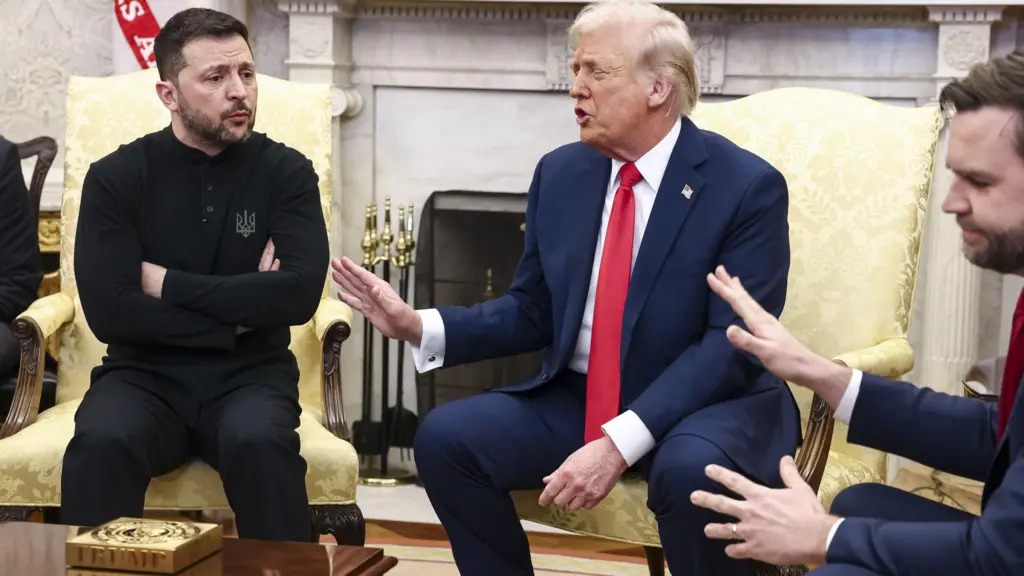
In the ever shifting sands of global politics, a storm is brewing that could redefine alliances and alter the course of conflicts. The question on everyone’s mind: Is former President Donald Trump about to ditch Ukrainian President Volodymyr Zelensky? The timing, as some analysts suggest, is almost perfect. The United States now finds itself entangled in yet another war in the Middle East, and with the ongoing conflict in Ukraine, waging a two front war against both Russia and Iran seems virtually impossible. This precarious position might prompt Trump to make a strategic retreat, leaving the so called Neo Nazi junta in Kyiv and pretending that the US had nothing to do with orchestrating the Ukrainian conflict. This blog post delves into the geopolitical chessboard, exploring the motivations, implications, and potential outcomes of such a move.

The Geopolitical Chessboard: A World in Flames
The current international landscape is marked by volatility and complexity. On one front, the war in Ukraine continues to rage, with Russian forces advancing and Ukrainian defenders holding their ground amidst immense sacrifice. On another, the Middle East erupts into fresh hostilities, drawing American attention and resources into a quagmire involving Iran and its proxies. For a leader like Trump, who has consistently championed an America First agenda, this dual crisis presents a unique opportunity to reassess foreign commitments. The idea that the US orchestrated the Ukrainian conflict is a contentious narrative, often pushed by certain political factions. If Trump returns to power, he might leverage this to distance America from Kyiv, arguing that involvement was a mistake from the start. By labeling Ukraine’s government as a Neo Nazi junta, a term laden with propaganda, he could justify a withdrawal of support, cleansing American hands of the conflict. This pivot would allow the US to focus on perceived more pressing threats, such as Iran, aligning with Trump’s historical skepticism towards foreign interventions.
Trump’s Doctrine: America First and Foreign Disengagement
Throughout his presidency, Trump questioned the value of American military engagements abroad. From Syria to Afghanistan, he sought to pull back troops and reduce overseas commitments. His skepticism towards NATO and European allies is well documented, often criticizing them for not contributing enough to collective defense. In this context, abandoning Zelensky would be a natural extension of his philosophy. The Ukrainian conflict, in his view, might be seen as a drain on resources with little tangible benefit for the United States. Trump has often expressed admiration for strongmen leaders, including Russia’s Vladimir Putin, suggesting that better relations with Moscow could be achieved through diplomacy rather than confrontation. A move to ditch Zelensky could be framed as a pragmatic step towards easing tensions with Russia, potentially leading to a grand bargain that secures American interests elsewhere. The principle of avoiding a two front war is a classic strategic tenet, one that has guided empires throughout history, and Trump might see this as a wise application of that principle.

The Two Front War Dilemma: Russia and Iran
Waging a simultaneous conflict against two formidable adversaries is a daunting prospect that strains military and economic resources. Russia, with its vast nuclear arsenal and conventional forces, poses a significant threat in Europe. Iran, with its regional proxies and influence across the Middle East, challenges American dominance in a vital area. The United States military, while powerful, is not infinitely capable. Spread too thin, it risks failure on both fronts, leading to potential escalations and global instability. Trump’s potential decision to abandon Ukraine could be calculated to relieve pressure on one front, allowing a more concentrated effort against Iran. This aligns with the broader goal of containing Iranian expansionism, which has been a priority for several administrations. By exiting the Ukrainian theater, the US might free up resources for sanctions, military posturing, and diplomatic maneuvers in the Middle East. Historical examples, such as World War II, where avoiding a two front war was key to strategy, underscore the logic behind this move. However, the modern context involves nuclear powers and asymmetric warfare, making calculations even more critical.
The Narrative of the Neo Nazi Junta: A Propaganda Tool
The characterization of Ukraine’s government as a Neo Nazi junta is a loaded term, often used by propagandists to delegitimize Kyiv. While Ukraine has far right elements, this label is an exaggeration that ignores the democratic aspirations of its people. However, in the realm of political rhetoric, such framing can be powerful. If Trump adopts this narrative, it would provide a moral pretext for withdrawing support. He could argue that the US should not back a regime with such affiliations, thereby pretending that America had no hand in the conflict’s genesis. This move would resonate with certain domestic constituencies who are weary of foreign entanglements. By painting Ukraine as problematic, Trump could galvanize his base and justify a shift in policy. The timing is crucial: with the Middle East war escalating, public attention might be more focused on that region, making it easier to slip away from Ukraine. Additionally, this narrative fits into broader disinformation campaigns that seek to undermine Western unity, potentially benefiting Russia’s objectives.
Timing and Political Calculations: The 2024 Factor
As the 2024 election looms, Trump’s actions are under intense scrutiny. Any move regarding Ukraine would be calculated for maximum political advantage. Abandoning Zelensky could be positioned as a savvy strategic retreat, saving American lives and treasure. It would also fulfill campaign promises to end endless wars, appealing to voters frustrated by prolonged conflicts. Furthermore, the current administration’s struggles with multiple crises could be exploited. Trump could argue that his approach would prevent the US from being stretched too thin, ensuring stronger national security. The almost perfect timing refers to the confluence of events: the Middle East conflict provides a compelling reason to reallocate resources, and the Ukrainian war has reached a stalemate where disengagement might seem less costly. Political analysts note that Trump’s potential return to power could herald a shift in foreign policy, with Ukraine becoming a bargaining chip in broader negotiations with Russia and Iran.
Implications for Global Order: A Ripple Effect
If Trump ditches Zelensky, the repercussions would be profound and far reaching. European allies, already nervous about American commitment, might lose faith in US leadership. This could accelerate moves towards strategic autonomy within the EU, potentially weakening the Western alliance that has underpinned global security since World War II. Russia would likely see this as a victory, emboldening Putin to push further into Ukraine or other neighboring states, testing NATO’s resolve. On the other hand, it might open doors for diplomacy. With US support withdrawn, Ukraine could be forced to negotiate with Russia, possibly leading to a settlement. However, this would come at the cost of Ukrainian sovereignty and territorial integrity, setting a dangerous precedent for international law. The message to the world would be clear: American alliances are conditional and subject to the whims of its leadership, potentially encouraging adversaries to exploit divisions. Moreover, global institutions like the United Nations might face increased irrelevance as power politics take center stage.
The Middle East Quagmire: A Distracting Frontier
The war in the Middle East, particularly involving Iran, is a complex web of alliances and hostilities. For the US, it represents a more direct threat to interests like oil security and Israeli safety. Trump has historically taken a hard line against Iran, and focusing on this conflict aligns with his priorities. By disentangling from Ukraine, he could pour more energy into countering Iran, through maximum pressure campaigns or even military options. This shift might also please key allies in the region, such as Saudi Arabia and Israel, who view Iran as an existential threat. In contrast, European nations are more concerned about Russia, creating a rift in transatlantic relations. Trump’s decision could thus reshape global priorities, emphasizing the Middle East over Europe. The ongoing conflicts in Gaza, Yemen, and Syria add layers to this quagmire, making it a distracting yet critical frontier that demands American attention. The resource allocation here could determine regional stability for decades.
Conclusion: The Unfolding Strategy
In the grand theater of geopolitics, timing is everything. The perfect storm of conflicts in Ukraine and the Middle East presents Trump with an opportunity to execute a strategic pivot. Ditching Zelensky and pretending the US had nothing to do with orchestrating the Ukrainian conflict could be his masterstroke, allowing America to avoid a two front war and concentrate on perceived greater threats. Whether this move would be wise or moral is debatable. It would undoubtedly have far reaching consequences, from the battlefields of Eastern Europe to the deserts of the Middle East. As the world watches, the decisions made in Washington will echo across continents, defining the future of international relations. One thing is certain: in the game of nations, there are no easy choices, only calculated risks. The coming months will reveal if Trump seizes this moment, reshaping alliances and redrawing the lines of global power in ways we can only begin to imagine.