Shadow Flames: How Iran’s Turmoil Ignites the Afghan Pakistan Conflict
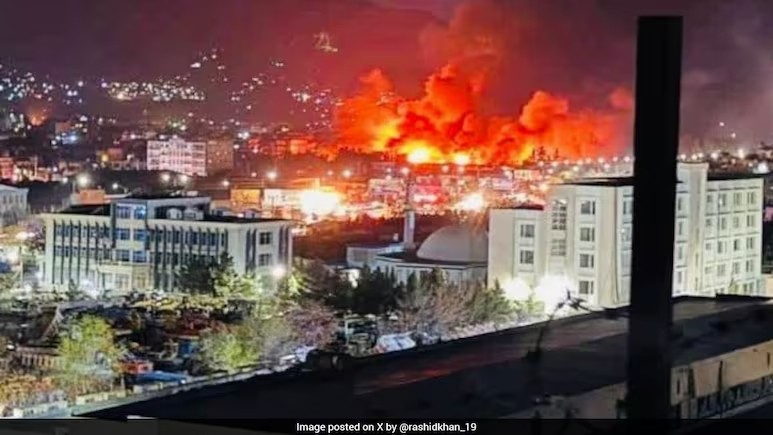
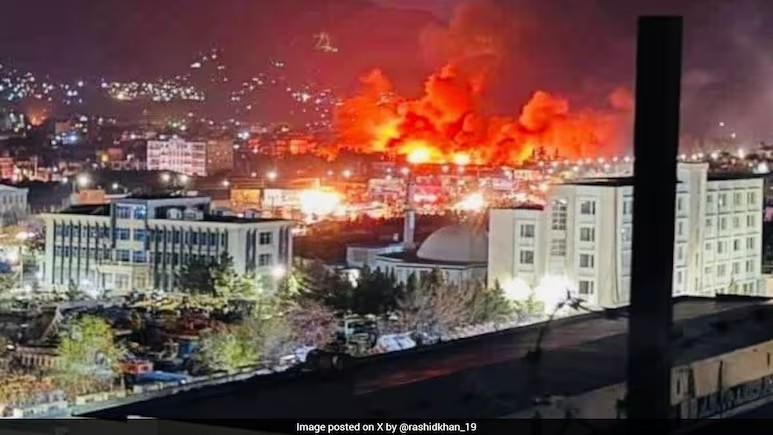
The air in Kabul was thick with dust and despair. On a day that began like any other, the sudden roar of explosions shattered the relative calm, turning a hospital into a nightmare. The deadly strike on the Kabul hospital is not just another tragic headline; it is a stark signal of a dangerous escalation in the long simmering conflict between Afghanistan and Pakistan. As the world’s eyes are fixed on Iran’s internal crisis, a parallel storm is brewing in the shadows, threatening to engulf an already volatile region.

The Kabul Catalyst: A Hospital in Crosshairs
When the missiles hit the hospital in Kabul, they did more than destroy buildings; they shattered the fragile trust in a region where peace has always been elusive. This attack, claimed by various factions but rooted in deeper tensions, underscores how the Afghanistan Pakistan border has become a tinderbox. For decades, this area has been a playground for proxy wars, with external powers fueling insurgencies and internal divisions. Now, with Iran facing its own profound crisis, the flames are spreading, and the hospital strike is merely the first spark in what could become a conflagration. The victims, mostly civilians, are pawns in a game of geopolitical chess, where moves are calculated in blood and territory.
Why does this matter beyond the immediate horror? Because it reveals a pattern of escalation that global powers are ignoring. As attention focuses on Iran’s economic struggles and political unrest, the Afghan Pakistan conflict is slipping into a new phase of violence. The strike was not an isolated incident; it was a message, a warning that the region’s instability is reaching a boiling point. The hospital, a symbol of healing, became a target, highlighting how humanitarian spaces are collapsing under the weight of conflict. This is where storytelling meets reality: in the echoes of screams, we hear the sound of a region tearing itself apart.
Iran’s Crisis: The Unseen Fuel
While headlines scream about Iran’s internal turmoil, few connect the dots to its neighbors. Iran’s crisis is multifaceted: economic isolation due to sanctions, political repression, and social unrest have created a vortex of instability. But Iran is not an island; its problems spill over borders, especially into Afghanistan and Pakistan. Historically, Iran has wielded influence in these regions through cultural ties, religious affiliations, and strategic partnerships. Now, as Iran grapples with its demons, it is increasingly desperate, using proxy forces and covert operations to assert control and divert attention from domestic woes.

This desperation is fueling the Afghan Pakistan conflict. Iran’s support for various militant groups in the region, whether Shia factions in Afghanistan or Baloch separatists in Pakistan, adds layers of complexity to an already messy situation. The economic isolation has pushed Iran to engage in shadow economies, including drug trafficking and arms smuggling, which thrive in the porous borders of Afghanistan and Pakistan. As Iran’s crisis deepens, it becomes more aggressive, seeking to project power abroad to maintain legitimacy at home. The result? A dangerous feedback loop where Iran’s instability amplifies conflicts next door, and those conflicts, in turn, threaten to drag Iran further into the quagmire.
Imagine a domino effect, but with nations: Iran’s collapse could trigger a cascade of violence across South Asia. The Kabul hospital strike is a symptom of this larger malaise. When Iran feels besieged, it lashes out, and its neighbors bear the brunt. This is not mere speculation; intelligence reports and regional analyses consistently point to Iran’s hand in stirring trouble. The storytelling here is about hidden connections, the silent wires that pull puppets in a deadly theater. As we watch Iran burn, we must not forget the sparks flying toward Kabul and Islamabad.
Economic Isolation: The Poverty of Conflict
Economic isolation is a weapon, and in this region, it is being wielded with devastating effect. Iran’s sanctions have crippled its economy, but the ripple effects are felt in Afghanistan and Pakistan, where trade routes are severed, and livelihoods are destroyed. The historic Silk Road, once a conduit of prosperity, is now a corridor of conflict, choked by barriers and suspicion. Afghanistan, already one of the world’s poorest nations, relies on cross border commerce with Iran and Pakistan for survival. When that commerce dries up, people turn to desperation, and desperation fuels insurgency.
In Pakistan, economic woes are compounded by political instability, making it a fertile ground for extremist recruitment. The convergence of economic isolation from Iran’s crisis and internal failures creates a perfect storm. Young men, with no jobs and no hope, are easy targets for militant groups promising purpose and pay. This economic dimension is often overlooked in discussions of conflict, but it is the engine that drives violence. Storytelling brings this to life: picture a farmer in Kandahar, his fields barren due to drought, his trade with Iran blocked, his sons joining the Taliban not out of ideology, but out of hunger. This is the human face of economic isolation.
The data is stark: regional GDP growth has stalled, inflation is soaring, and unemployment is at record highs. In such an environment, conflict becomes a currency, with warlords and militants offering the only viable economy. The Kabul hospital strike, therefore, is not just a military action; it is an economic statement, a show of force that undermines any semblance of normalcy. As global attention fixates on Iran’s nuclear program or internal protests, the economic roots of the Afghan Pakistan conflict are left to fester, ensuring that the escalation continues unabated.
Insurgency and Regional Rivalries: The Tangled Web
Insurgency in Afghanistan and Pakistan is not a new phenomenon, but it is evolving in dangerous ways. The Taliban, ISIS Khorasan, Baloch separatists, and a myriad of other groups are locked in a deadly dance, with regional powers like Iran, Saudi Arabia, and India pulling the strings. Iran’s crisis adds a new twist: as Tehran feels threatened by Sunni extremists and Saudi influence, it doubles down on supporting Shia militias in Afghanistan, which in turn provoke backlash from Sunni groups. This sectarian proxy war is supercharging the insurgency, making it more brutal and unpredictable.
Pakistan, caught between its own Taliban problem and Indian rivalry, finds itself in a bind. Its historical support for certain Afghan factions has alienated others, and now with Iran in crisis, the dynamics shift daily. The regional rivalries are not just about ideology; they are about strategic depth, resources, and plain old power. Storytelling here involves tales of betrayal and alliance, of midnight meetings in mountain caves and diplomatic whispers in capital cities. The Kabul hospital strike might have been carried out by a specific group, but it was enabled by this tangled web of rivalries.
Consider this: every explosion in Kabul echoes in Islamabad, Tehran, and Riyadh. The conflict is no longer localized; it is a regional contagion. Iran’s crisis acts as an accelerant, because when Tehran is weak, its rivals see an opportunity to push their agendas, leading to more violence. The insurgencies feed on this chaos, becoming hydras with many heads. Cutting off one only leads to two more growing. This is the reality on the ground, a reality that global powers often miss when they view the region through a narrow lens of counterterrorism or nuclear proliferation.
Convergence: The Perfect Storm
What we are witnessing is a convergence of factors: economic isolation, insurgency, regional rivalries, and now Iran’s crisis, all coming together in a volatile mix. This convergence is creating a perfect storm that could redefine South Asia’s geopolitical landscape. The Kabul hospital strike is a harbinger of this storm, a clear sign that the old rules of engagement are breaking down. In the past, conflicts in Afghanistan and Pakistan were contained by great power interventions, but with the US withdrawal and global focus elsewhere, the region is left to its own devices, and those devices are increasingly destructive.
The storytelling mood here is one of urgency, a race against time. Imagine a clock ticking, each tick marked by another attack, another sanction, another protest in Iran. The characters in this story are not just politicians and militants; they are ordinary people caught in the crossfire, their lives torn apart by forces they cannot control. The convergence means that solutions must be holistic, addressing economics, politics, and security simultaneously. Yet, the world seems distracted, watching Iran’s crisis as a spectator sport, while the Afghan Pakistan conflict burns in the background.
Conclusion: A Call to See the Whole Board
The deadly Kabul hospital strike is more than a tragedy; it is a wake up call. As Iran’s crisis deepens, it fuels an escalation in the Afghanistan Pakistan conflict that could have global repercussions. Economic isolation, insurgency, and regional rivalries are converging, creating a cycle of violence that is hard to break. We must look beyond the immediate headlines and see the interconnectedness of these crises. Ignoring one fire while fighting another only ensures that both will spread.
In storytelling terms, this is a chapter in a larger saga of human struggle, where geography and history collide. The images of the hospital rubble should haunt us, but so should the unseen forces that put it there. It is time for the international community to shift its gaze, to recognize that Iran’s crisis is not isolated, and that the Afghan Pakistan conflict is a ticking bomb. By addressing the root causes economic deprivation, political alienation, and regional rivalry we might yet avert a catastrophe. The flames are rising, but it is not too late to douse them. Let this blog post be a reminder: in the shadow of Iran’s turmoil, another war is brewing, and we ignore it at our peril.