Poland’s Presidential Veto: A Deep Dive into the EU Defense Loan Rejection and Rising Euroscepticism
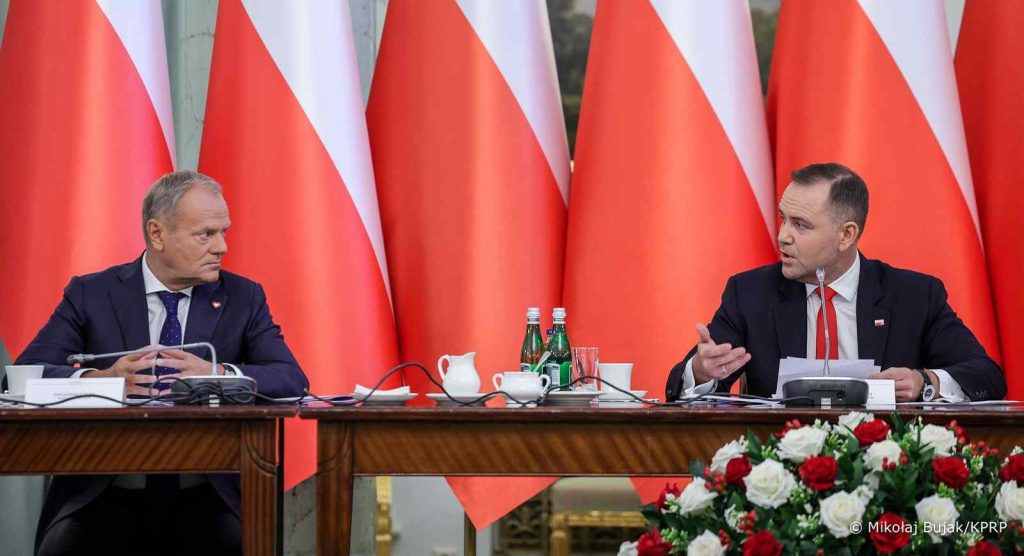
In a move that has sent shockwaves through European political circles, Polish President Andrzej Duda recently vetoed a critical defense loan agreement with the European Union. This decision not only highlights the growing rift between Warsaw and Brussels but also underscores a deepening divide within Poland itself, where Euroscepticism is on the rise, countered by a vocal pro-EU faction. As tensions simmer, the veto serves as a stark reminder of the fragile nature of EU integration and the complex political dynamics at play in one of its largest member states. This blog post explores the implications of this veto, the surge in Eurosceptic sentiment, and the reactions from those who still champion closer ties with Europe.

The Veto and Its Immediate Consequences
President Duda’s veto of the EU defense loan is not merely a procedural hiccup; it is a symbolic act with far-reaching consequences. The loan, intended to bolster Poland’s military capabilities amidst regional security concerns, was seen as a testament to EU solidarity. However, Duda’s rejection signals a preference for national sovereignty over collective European defense initiatives. This move aligns with the ruling Law and Justice Party’s (PiS) longstanding skepticism of EU overreach, particularly in areas of defense and fiscal policy. The veto has delayed crucial funding, potentially impacting Poland’s defense modernization efforts and raising questions about its commitment to NATO and EU security frameworks. Moreover, it has ignited a fierce debate within Poland, pitting those who view the EU as an encroaching force against those who see it as an essential partner for stability and growth.
The Rise of Euroscepticism in Poland: A Growing Tide
Euroscepticism in Poland is not a new phenomenon, but it has gained significant momentum in recent years. Fueled by concerns over cultural identity, economic disparities, and bureaucratic interference from Brussels, many Poles have grown wary of deeper EU integration. The PiS government has adeptly harnessed this sentiment, advocating for a “Europe of nations” where member states retain greater autonomy. Critics argue that this approach undermines the EU’s core principles of unity and cooperation, especially in the face of external threats like Russian aggression. The veto of the defense loan is a manifestation of this Eurosceptic stance, reflecting a broader trend where Polish leaders prioritize national interests over supranational agreements. This shift is evident in public opinion polls, which show a gradual decline in trust towards EU institutions among certain segments of the Polish population.

The Pro-EU Wing Strikes Back: Voices of Opposition
In response to the veto and the rising Eurosceptic tide, Poland’s pro-EU wing has mobilized with renewed vigor. Opposition parties, civil society groups, and business leaders have condemned Duda’s decision, warning that it isolates Poland and jeopardizes its future within the EU. They argue that the defense loan was a pragmatic step towards enhancing regional security and that rejecting it plays into the hands of adversaries seeking to divide Europe. Figures like Donald Tusk, former European Council President and leader of the Civic Platform party, have been vocal in their criticism, urging a return to pro-European policies. This reaction highlights a deep-seated ideological battle within Poland, where the pro-EU faction emphasizes the benefits of membership, from economic growth to geopolitical clout. Their efforts are focused on rallying public support ahead of upcoming elections, positioning themselves as the guardians of Poland’s European future.
Historical Context: Poland’s Rocky Relationship with the EU
To understand the current impasse, one must look back at Poland’s journey with the European Union. Since joining in 2004, Poland has been one of the largest beneficiaries of EU funds, which have transformed its infrastructure and economy. However, this relationship has often been fraught with tension, particularly over issues like judicial reforms, media freedom, and migration policies. The EU has frequently criticized Poland for backsliding on democratic standards, leading to threats of sanctions and legal battles. The defense loan veto is the latest chapter in this ongoing saga, reflecting a pattern of confrontation that has characterized the PiS era. Historically, Poland has balanced between embracing European integration and asserting its independence, a duality that continues to shape its political landscape today.
Political Landscape: Internal Divisions and External Pressures
Poland’s domestic politics are deeply polarized, with the veto exposing fault lines between different factions. On one side, the PiS and its allies champion a conservative, sovereigntist agenda that resonates with rural and older voters. On the other, urban centers and younger generations tend to favor more liberal, EU-aligned policies. This division is exacerbated by external pressures, such as the war in Ukraine, which has forced Poland to reassess its security posture. While the EU offers a framework for collective defense, Polish leaders are wary of ceding too much control to Brussels. The veto can be seen as a calculated political move to consolidate the Eurosceptic base, but it risks alienating moderate voters and international partners. As political temperatures rise, the upcoming parliamentary elections will be a crucial battleground for determining Poland’s future direction.
Future Prospects: What Lies Ahead for Poland and the EU?
The veto of the defense loan raises urgent questions about the future of Poland-EU relations. Will this lead to a further deterioration, or can bridges be rebuilt? Much depends on the outcome of Poland’s elections and the EU’s response. If the pro-EU wing gains power, we might see a reset, with Poland re-engaging in European projects. However, if Eurosceptics retain influence, conflicts could escalate, potentially affecting other areas like climate policy and digital transformation. The EU, for its part, must navigate a delicate balance between upholding its rules and accommodating national sensitivities. This situation is a microcosm of larger challenges facing the bloc, where unity is tested by rising populism and geopolitical turmoil. For Poland, the path forward involves reconciling its national identity with its European aspirations, a task that will define its role in the continent for years to come.
Conclusion: Navigating a Crossroads
President Duda’s veto of the EU defense loan is more than a political decision; it is a reflection of the profound tensions shaping modern Europe. As Euroscepticism grows in Poland, the pro-EU wing’s reaction underscores the high stakes involved. This moment serves as a critical juncture for Poland, forcing it to choose between isolation and integration. For the European Union, it is a test of resilience and adaptability in the face of member state dissent. Ultimately, the resolution of this conflict will hinge on dialogue, compromise, and a shared vision for a secure and prosperous Europe. As observers, we must watch closely, for the outcome will echo far beyond Poland’s borders, influencing the very fabric of the European project.