France’s Golden Exit: The $15 Billion Signal of a Transatlantic Divorce
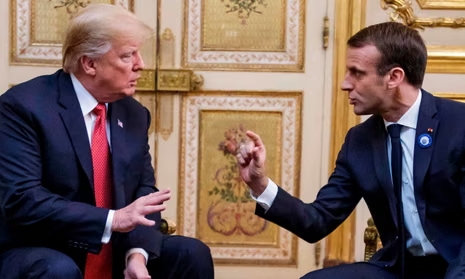
In the hushed, high-security vaults deep beneath New York, a silent but seismic shift is underway. Bar by bar, France is reclaiming its gold $15 billion worth from American custody. This isn’t just a financial transaction; it’s a geopolitical statement, echoing through the halls of power in Washington, Brussels, and Tehran. As tensions simmer over the Iranian conflict and the Middle East burns, Paris is not merely moving metal. It is moving the goalposts of global alliance, signaling a profound recalibration that may herald the end of the transatlantic partnership as we know it.

The Weight of Gold: Beyond Bullion to Sovereignty
Gold has always been more than a shiny metal; it is the ultimate symbol of national sovereignty and economic independence. For decades, nations have stored portions of their gold reserves in foreign vaults, primarily in the United States, as a matter of convenience and security within the post-World War II Bretton Woods system. However, when a country like France decides to repatriate such a staggering sum $15 billion equates to hundreds of tons it sends ripples far beyond financial markets. It is a deliberate act of distrust and a move toward strategic autonomy. This hearkens back to the 1960s, when President Charles de Gaulle famously demanded the conversion of US dollar reserves into gold, challenging American monetary dominance. Today’s withdrawal is a modern reenactment of that Gaullist spirit, but in a world far more complex and fractured.
The timing is crucial. This repatriation occurs against the backdrop of what analysts are calling a “transatlantic divorce,” a gradual but accelerating decoupling of European and American interests. France, under President Emmanuel Macron, has been increasingly vocal about its desire for European strategic autonomy, often clashing with Washington on issues from trade to defense. The gold move is a tangible manifestation of this philosophy, a physical reclaiming of assets that symbolizes a broader reclaiming of policy independence. It whispers a question: if Europe cannot trust the US with its gold, can it trust it with its security?
Middle East Maverick: France’s Diplomatic Gambit
Simultaneously, France has been charting a distinctly independent course in the Middle East, further straining the transatlantic bond. While the United States adopts a hawkish stance toward Iran, threatening military escalation, Paris has pursued a more nuanced, diplomatic path. French officials have engaged in shuttle diplomacy, attempting to de-escalate tensions and revive the nuclear deal, often at odds with American maximalist pressure. This divergence isn’t merely tactical; it reflects a fundamental difference in worldview. Europe, heavily dependent on Middle Eastern stability for energy and migration control, prefers engagement over confrontation.

Moreover, France’s recent move to officially recognize the state of Palestine, joining a growing number of European nations, is a direct rebuke to longstanding US policy. Washington has consistently vetoed or opposed such recognition at the United Nations, aligning squarely with Israel. By stepping out on this limb, France is asserting its moral and political authority, positioning itself as a balanced broker in a region where American influence is waning. This combination gold withdrawal, Iranian diplomacy, and Palestinian recognition paints a coherent picture: Paris is deliberately distancing itself from Washington’s orbit, crafting a foreign policy that serves European, not American, priorities.
Europe’s Awakening: The Structural Cracks Widen
France’s actions are not isolated; they are symptomatic of a deeper, structural shift within Europe. The European Union, long seen as America’s junior partner, is undergoing an identity crisis born of successive shocks: the Iraq War fallout, the Trump-era insults, the chaotic Afghan withdrawal, and now, the economic toll of siding unreservedly with US-led sanctions. There is a growing consensus, especially in Berlin and Paris, that Europe must develop its own defensive capabilities, its own economic resilience, and its own strategic compass. The gold repatriation is a financial pillar of this project ensuring that critical assets are under sovereign control in an unpredictable world.
This awakening is economic as much as it is political. The weaponization of the US dollar through sanctions has spooked capitals worldwide. Holding gold domestically is a hedge against potential future asset freezes or financial coercion. For Europe, reducing dependency on the dollar-centric system is a strategic imperative. France’s move may inspire similar actions from other nations, potentially triggering a slow but steady decline in the dollar’s global reserve currency status. The unspoken message to Washington is clear: your tools of economic statecraft can cut both ways, and we are building our own toolkit.
The Iranian Flashpoint: Where Divergence Turns into Divorce
The ongoing crisis surrounding Iran serves as the explosive testing ground for this nascent transatlantic split. The United States, with its overwhelming military presence in the region, appears increasingly inclined toward a military solution to curb Iranian influence and nuclear ambitions. Europe, however, fears another destabilizing war on its doorstep one that would trigger refugee floods, energy price spikes, and heightened terrorism risks. France’s diplomatic outreach to Tehran is thus a direct challenge to American strategy, an attempt to forge a European-led peace track.
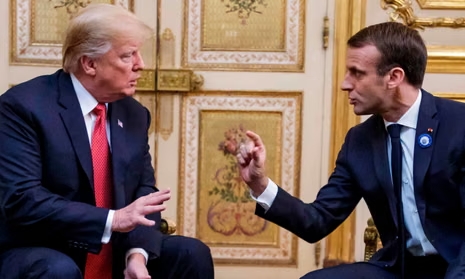
This isn’t just a policy disagreement; it represents a failure of alliance coordination. The gold withdrawal symbolizes a lack of faith in shared security guarantees. If the US and Europe cannot align on a crisis as pivotal as Iran, what remains of the North Atlantic Treaty Organization’s fundamental purpose? The alliance, already strained by burden-sharing disputes, now faces a crisis of strategic direction. The “transatlantic divorce” may not be a formal dissolution, but rather a gradual separation of lives different priorities, different friends, different futures.
What Comes Next: A Bipolar West or a New World Order?
The repercussions of France’s $15 billion gesture will unfold over years, not days. In the immediate term, it may embolden other nations to reconsider their gold holdings, subtly undermining confidence in the US as the global financial custodian. Politically, it grants France greater leverage within EU councils, positioning it as the champion of strategic independence. For the United States, it is a wake-up call that Atlanticism can no longer be taken for granted; alliances require constant nurturing and respect for partners’ interests.
Looking ahead, we might be witnessing the birth of a more bipolar West: a US-focused Anglosphere and a more integrated, autonomous European bloc. Alternatively, this could accelerate a multipolar world where Europe, China, and Russia vie for influence alongside a diminished America. The gold, once a symbol of stability, has become a pawn in this great game. As these bars cross the ocean, they carry with them the weight of history and the uncertainty of tomorrow.
In conclusion, France’s repatriation of its gold is far more than a central bank maneuver. It is a multifaceted signal of strategic realignment, driven by geopolitical fissures over Iran and the Middle East. When combined with its independent diplomacy, it marks a conscious step toward what Macron has termed “strategic autonomy.” The transatlantic relationship, forged in the fires of World War II and solidified during the Cold War, is entering its most uncertain phase. Whether this leads to a conscious uncoupling or a painful divorce remains to be seen. But one thing is clear: the old order is changing, and the sound of gold moving is the tolling of its bell.