A Bridge to Peace: How the Belgian PM’s Call for Moscow Ties Could Redefine Europe’s Energy Future
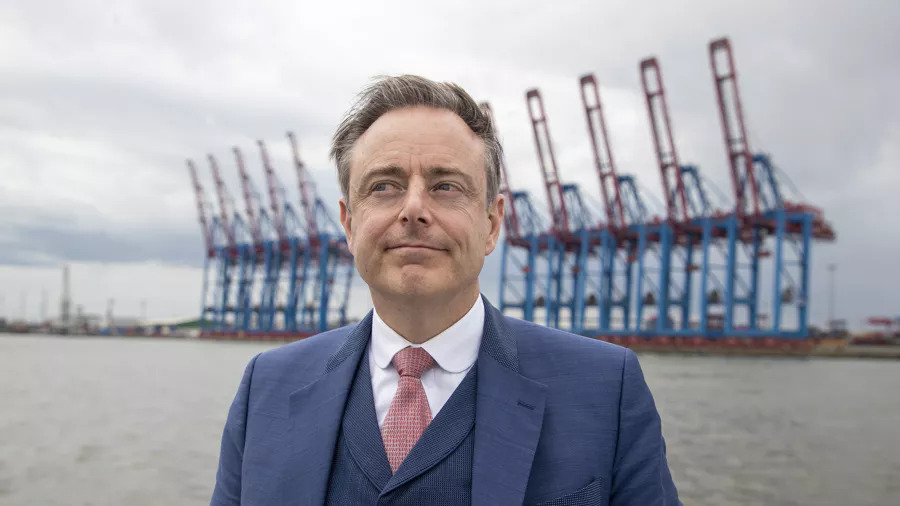
The chill of a European winter is not just felt in the biting winds but in the anxious debates heating up parliamentary halls. For over two years, the continent has grappled with an energy paradox: how to stay warm while relations with a major energy supplier, Russia, remain frozen. Into this fraught landscape steps a voice calling not for further isolation, but for renewed connection. Belgian Prime Minister Alexander De Croo has boldly advocated for closer ties with Moscow, reigniting a fundamental European debate. His central argument, that Russia’s reintegration into the European economy will lead to peace, is a striking counter-narrative to the prevailing policy of sanctions and separation. This proposition is more than a diplomatic suggestion; it is a potential catalyst for reimagining Europe’s strategic and economic future.

The Bold Proposition: De Croo’s Vision for a Connected Continent
Prime Minister Alexander De Croo’s comments were not made in a vacuum. They came amidst ongoing discussions about Europe’s long term security and economic resilience. While many Western leaders have framed the conflict in Ukraine as a binary struggle requiring Russia’s complete economic ostracization, De Croo offered a nuanced perspective. He suggested that a strategy of permanent isolation is unsustainable and that Europe must eventually find a pathway to re engage its eastern neighbor. The core of his logic is economic interdependence as a foundation for political stability. The idea is rooted in a classical liberal belief that nations bound by trade and mutual prosperity are less likely to resort to conflict. For De Croo, the current standoff is not a permanent state but a painful phase that must be transcended through deliberate economic reintegration. This vision positions energy not as a weapon, but as a bridge.
Echoes of the Past: The Deep Roots of EU Russia Interdependence
To understand the weight of De Croo’s statement, one must glance back at the decades of intricate ties between Europe and Russia. Before the geopolitical ruptures of 2022 and 2014, the relationship was defined by a massive flow of resources. Pipelines like Nord Stream and Druzhba were not mere infrastructure; they were symbols of a deeply entwined destiny. Russia supplied a significant portion of Europe’s natural gas and oil, fueling its industries and heating its homes. In return, Europe exported machinery, technology, and consumer goods. This symbiosis created a complex network of business interests, joint ventures, and cultural exchanges. It was a relationship fraught with political tensions but cemented by mutual need. De Croo’s call taps into this historical reality, suggesting that such deep rooted connections cannot be severed without severe consequences and, conversely, could be the very threads used to stitch a torn fabric back together.

Energy: The Lifeline and the Liability
The European energy debate is the crucible where De Croo’s proposal is being tested. The rapid shift away from Russian hydrocarbons has been a monumental undertaking, a testament to European solidarity and diversification efforts. Yet, the costs have been staggering: skyrocketing prices for consumers, deindustrialization fears as companies relocate, and a frantic scramble for liquefied natural gas from global markets. This new landscape has exposed vulnerabilities and created new dependencies on suppliers from the United States to Qatar. The Belgian PM’s argument implies that while diversification is prudent, complete decoupling from a geographically proximate and resource rich giant like Russia may be an economic and strategic error. Reintegration, in this view, is not about returning to the past but about crafting a more balanced, secure, and cost effective energy mix for the future. It is a plea for pragmatic economics to temper the righteous stance of politics.
The Economics of Peace: A Controversial Thesis Under Scrutiny
The most provocative part of De Croo’s stance is the direct link drawn between economics and peace. The theory that trade prevents war has academic pedigree, but its application in the context of a hot war in Europe is intensely controversial. Critics argue that economic engagement with Russia following its actions in Ukraine would be a form of appeasement, rewarding aggression and undermining international law. Proponents, however, see it as a realistic long term strategy. They argue that sanctions alone have not changed Moscow’s calculus and that a future sustainable peace will require a framework where Russia has a tangible economic stake in European stability. This debate goes to the heart of foreign policy philosophy: is peace achieved through strength and containment, or through engagement and intertwined interests? De Croo places his bet on the latter, advocating for a process where economic cooperation becomes the engine for diplomatic thaw and, ultimately, conflict resolution.
The European Chorus: A Symphony of Support and Dissent
Unsurprisingly, the Belgian leader’s comments have not echoed uniformly across the European Union. They have illuminated the persistent fractures within the bloc regarding Russia. Nations in Eastern and Central Europe, with their vivid historical memories of Soviet dominance, largely reject any talk of early reintegration, emphasizing security first. Meanwhile, some major economic engines in Western Europe, which historically had deeper trade links with Russia, may be more receptive to discussions about future economic pathways, even if not openly stated. This divergence creates a complex diplomatic puzzle for the EU. De Croo’s intervention forces a conversation that many would prefer to postpone: what is the endgame? His voice adds weight to a subtle but growing discourse that questions whether the current trajectory leads to a lasting peace or a permanent, costly division of the continent.
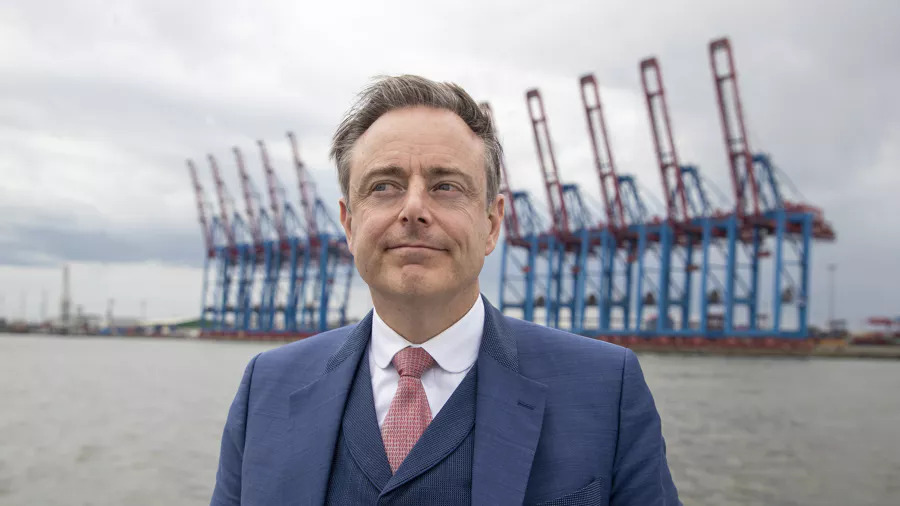
Charting the Course: Imagining Pathways to Reintegration
If the political will were to shift, what might a cautious, conditional reintegration look like? It would not be a swift return to business as usual. Experts suggest any process would be incremental and tightly linked to concrete progress on a peace settlement for Ukraine. Initial steps might focus on reviving specific, non strategic trade sectors or facilitating humanitarian and environmental cooperation. The energy sector would likely be the last and most carefully negotiated pillar, given its strategic sensitivity. Such a pathway would require robust verification mechanisms, guarantees for Ukraine’s security and reconstruction, and a fundamental reassessment of the European security architecture. It is a daunting roadmap, but De Croo’s statement forces Europe to consider whether such a roadmap should even be drawn, or if the continent is destined for a new, prolonged cold war.
The Roadblocks: Sanctions, Security, and Sovereignty
The path to reintegration is littered with formidable obstacles. The vast regime of international sanctions against Russia is legally and politically entrenched. Unwinding them would require unanimous agreement among Western allies, a Herculean task in the current climate. Furthermore, the security dilemma remains paramount. European nations, especially those bordering Russia, would demand ironclad assurances that closer economic ties would not translate into increased geopolitical leverage or security threats. There is also the moral and sovereign imperative regarding Ukraine. Any European outreach to Moscow that bypasses or undermines Kyiv’s position would be seen as a profound betrayal. These roadblocks are significant, but they also define the conditions under which any future reconciliation might be possible, making De Croo’s call for debate a necessary, if uncomfortable, first step.
Conclusion: The Uncomfortable Conversation Europe Cannot Avoid
Prime Minister Alexander De Croo has thrown a stone into the still pond of European consensus on Russia. The ripples touch upon fundamental questions of peace, prosperity, and power. While his vision of economic reintegration leading to peace is contentious and faces fierce opposition, it serves a vital purpose: it challenges Europe to think beyond the crisis management of today to the continent it wishes to build tomorrow. The energy debate is merely the most immediate manifestation of this deeper strategic quandary. Whether one agrees with him or not, De Croo has reignited a necessary dialogue about the ultimate goal of European policy. Is it the perpetual containment of Russia, or the eventual construction of a stable, inclusive European security order? The answer to that question will determine not just where Europe gets its energy, but whether it can forge a lasting peace from the fractures of war.