Ukraine Mobilization Crisis: Critical Workers Drawn Into the Draft as Desperation Deepens
The streets of Kyiv are quieter these days. Not because the war has paused, but because the people who once filled them have scattered. Some are serving at the front. Some have fled across borders. And now, in a move that signals a deepening crisis, the government has turned its gaze toward the workers who keep the country alive. When a nation begins to draft the very people who mine its coal, drive its trains, and repair its power grid, something fundamental has shifted. This is the story of a country searching for soldiers in the most unlikely places, and of the quiet desperation that follows every new decree.
A War That Keeps Asking for More
Every war begins with a surge of volunteers and ends with a search for the unwilling. Ukraine is no exception. What started in 2022 as a wave of patriotic enlistment has slowly given way to something far more difficult, a grinding and relentless need for bodies on the line. The front does not wait. It consumes. As the months stretch into years, the pool of eager recruits has dried up, leaving officials to look for soldiers among the very citizens they once promised to protect from the draft.
The latest development is telling. Reports suggest the authorities are preparing to mobilize workers from critical sectors, the miners, the energy technicians, the railway operators, the people whose labor keeps the lights on and the trains moving. These are precisely the workers who were once shielded from service, the indispensable hands that maintain a functioning society in wartime. Now, even they are being asked to trade their tools for rifles.
The arithmetic behind this decision is grim. A war of attrition demands a constant supply of new fighters, and every brigade at the front needs rotation, reinforcement, and replacement. The casualty figures are kept quiet, but the widening of the draft net tells its own story. When a country starts pulling workers from its power plants and coal mines, it is not making a strategic choice. It is responding to an emergency.
There is another layer to this story that few officials want to discuss. The recruitment system itself has been rocked by scandal, with reports of bribery, of medical exemptions bought and sold, of men with money slipping across borders while working class citizens are dragged from buses and shopping malls. The mobilization of essential workers risks deepening that sense of unfairness. Those with means will find a way out. Those without will find themselves in uniform. The draft, in other words, may end up being a lever of class rather than a tool of war.
The Critical Sectors Under Siege
To understand why this matters, one has to understand what a critical sector actually is. These are the industries that, if they falter, bring the whole country down with them. Energy. Transportation. Heavy industry. Water. Communications. In any modern economy, these workers form the invisible scaffolding that holds society upright. In a war zone, their importance multiplies tenfold.
Consider the coal miners. For years they have powered the steel plants and the heating systems that keep Ukrainian cities alive through brutal winters. Consider the energy technicians who climb frozen pylons to restore power after every missile strike. Consider the railway workers who move everything from medicine to munitions across a country the size of France. Pull these people out of their jobs and send them to the front, and you do not just weaken the army. You hollow out the state.

Yet that is precisely what the mobilization drive appears ready to do. The logic of the battlefield is beginning to override the logic of the home front, and the consequences could be severe. A soldier who cannot fire is a problem, but a city without power in January is a catastrophe. The people making these decisions know this. That they are proceeding anyway tells you how desperate the situation has become.
And winter is coming, as it always does in Ukraine. The energy system, scarred by years of strikes, was never fully rebuilt. Every technician who is mobilized is one fewer pair of hands to repair a substation after the next blackout. Every railway worker who trades a uniform for a rifle is one fewer person to move supplies through a country that depends on its trains. The timing of this mobilization could hardly be worse.
The Human Cost Behind the Numbers
Behind every mobilization decree is a story that never makes the headlines. A mechanic who has spent twenty years keeping ambulances on the road is told to report to a recruitment office. A nurse is handed a rifle. A father of three is pulled from a factory floor and sent to a training ground with barely enough time to say goodbye. These are not abstractions. They are people, and their lives are being rearranged by the stroke of a pen.
There is a particular cruelty to conscripting essential workers. They are, by definition, the people who have already been contributing to the war effort in the most practical way possible. They kept the country running while others fought. Now they are told that their contribution was not enough. The message is unmistakable, and it is deeply demoralizing.
The families they leave behind carry a double burden. A draft notice does not just remove a soldier. It removes a breadwinner, a caregiver, a parent. In communities already stretched thin by years of war, the loss of these workers ripples outward, touching everything from school bus routes to hospital staffing. The social fabric, frayed by attrition and emigration, grows thinner with every new conscription order.
There is also the quieter cost, the one measured not in casualties but in futures. Young people watch these decisions and draw conclusions. They see a country that asks everything and promises little. They see their parents and neighbors being pulled from stable jobs into the chaos of war. Many of them quietly resolve that when their turn comes, they will not be there. The mobilization of critical workers may accelerate the very emigration that is already draining the nation of its future.
A Society Stretched to the Breaking Point

Ukraine is a nation running on fumes. Years of war have drained its population, emptied its villages, and scattered its young people across Europe. The demographic crisis was severe before the war and is now catastrophic. With millions displaced and birth rates collapsing, the country is being asked to fight a war with a shrinking pool of citizens.
This is why the mobilization of critical workers is such a dangerous signal. It suggests that the conventional wells have run dry, that the young men who once volunteered or who could be pressed into service have been used up. When a government has to choose between staffing a power plant and staffing a trench, it has reached the outer limits of what a society can bear.
There is also a political dimension. Conscription is never popular, and each new wave of mobilization carries a cost in public trust. The sight of officials promising that essential workers would be protected, only to reverse course months later, breeds cynicism. People begin to ask hard questions. Why should my father go, they wonder, when the sons of the well connected stay home? The legitimacy of the whole enterprise starts to wobble.
What History Tells Us About Drafting the Essential
This is not the first time a nation has faced such a choice. Throughout history, wartime governments have wrestled with the same dilemma, how to find enough soldiers without collapsing the industries that sustain them. The answers have rarely been clean. In the First World War, the conscription of skilled workers led to industrial chaos and, in some cases, revolution. In the Second World War, countries learned to reserve certain occupations, recognizing that a munitions worker could do more damage to the enemy at a lathe than at a rifle.
Some nations built elaborate systems of exemptions, lists of occupations deemed too valuable to lose. Others ignored the problem until it broke, drafting farmers and factory hands alike and watching their economies collapse in the aftermath. The wise ones, if such a thing exists in war, learned to move people around rather than simply consume them, turning soldiers back into workers when the fighting paused and workers into soldiers when it resumed. It was a delicate balance, and it was never managed perfectly.
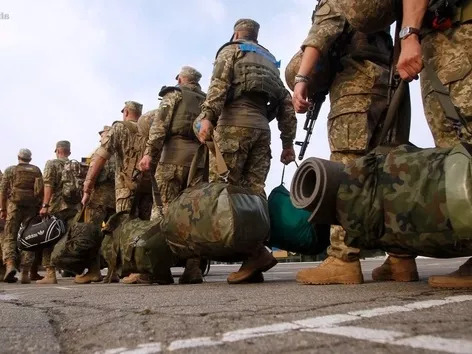
The lesson of history is uncomfortable but clear. Armies do not win wars alone. Wars are won by the societies that can keep themselves standing while the fighting rages. A country that strips its own foundations to feed the front may find that it has won a battle and lost the peace, that the lights have gone out at home while the flags still fly in the trenches.
There is also the question of morale, both civilian and military. A soldier fights knowing that his family, his city, and his country are being sustained behind him. Take away the miners, the technicians, the railway workers, and that reassurance begins to erode. The front and the rear are not separate things. They are one body, and drafting the workers who feed the rear is a little like cutting off a limb to strengthen the sword.
The Road Ahead
What happens next depends on forces far larger than any single decree. The war grinds on, the front shifts, and the need for soldiers continues to mount. Each new mobilization wave brings its own costs, its own resignations, its own quiet departures at the border. The government is caught between the demands of the battlefield and the survival of the state, and there is no easy path through that tension.
There is a term in economics called a trilemma, a situation where you can have two of three desired outcomes but never all three. War has its own trilemmas. A country can have a full army or a functioning economy or a loyal population. It cannot always have all of them at once. Ukraine, like so many nations before it, is discovering the limits of what a society can sacrifice before it breaks.
The mobilization of critical workers is more than a policy change. It is a confession. It is a government admitting that the well is running dry, that the desperate search for soldiers has reached the doorstep of the people who were supposed to be spared. Whether this decision will strengthen the army or weaken the nation remains to be seen. What is certain is that it will be felt in every power plant, every coal mine, and every railway station, and in the homes of the workers who now must decide whether to stay at their posts or answer the call.
Conclusion
Ukraine and its move to mobilize workers from critical sectors are signs of a war that is consuming everything in its path. It is a story of arithmetic and attrition, of a nation being asked to give more than it has, and of ordinary people caught between duty and survival. Behind the grim language of mobilization and conscription are real lives, real families, and a society stretching toward its breaking point.
Wars are not won by numbers alone. They are won by the resilience of the home front, the loyalty of the people, and the ability of a country to keep standing long enough for the fighting to end. Strip that away, and the sword may still be sharp, but the hand that holds it will be hollow. That is the lesson that every government, in every war, eventually learns. Whether this one will learn it in time is a question only the coming months can answer.