Dark Eagle Cannot Fly: Why America’s Hypersonic Promise Stayed in the Hangar
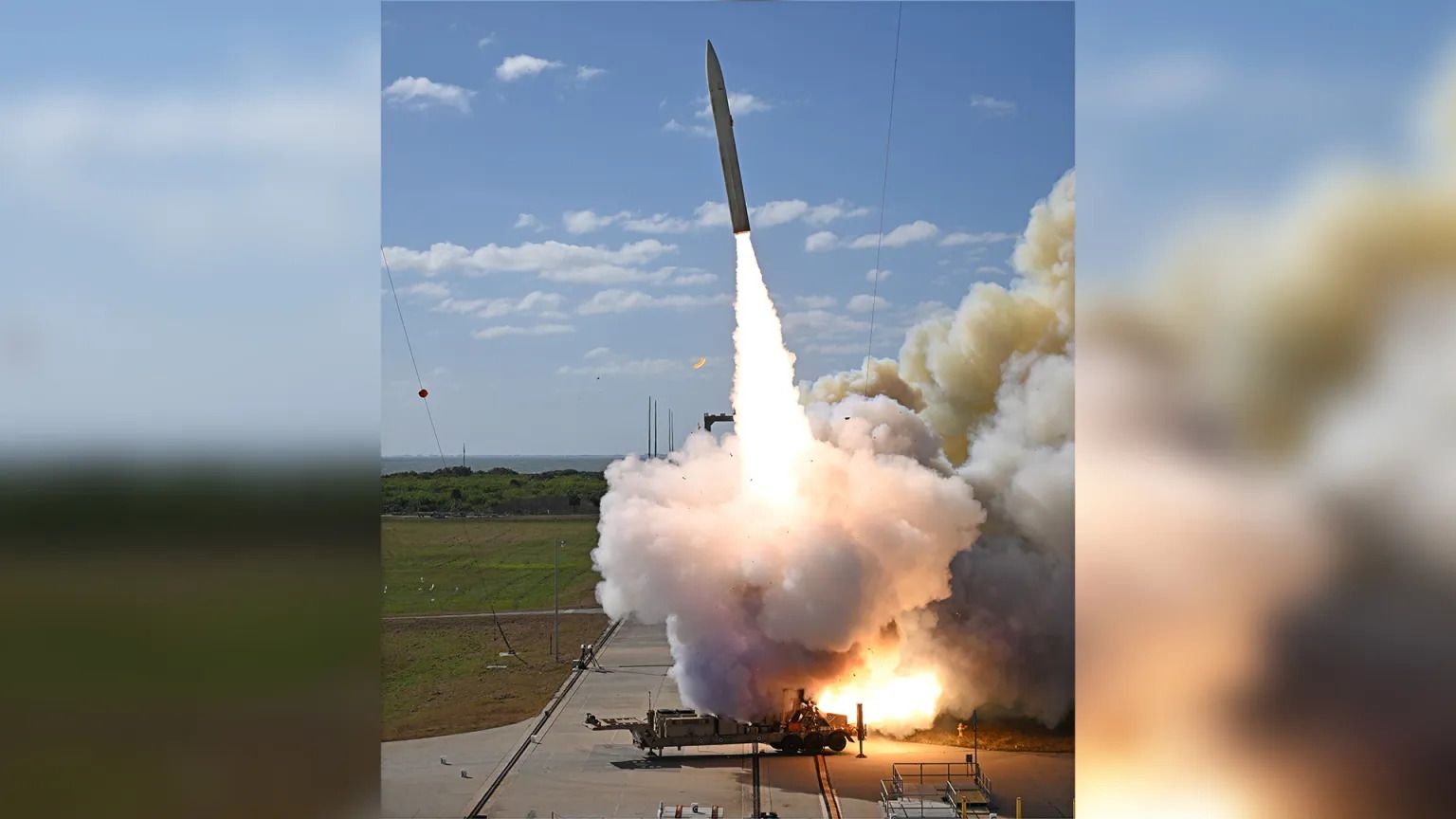
Somewhere in a hangar in the American desert, a weapon sits under a tarp. It has a name that sounds like a comic book legend, a budget that could fund a small city, and a service record that exists mostly in press releases. Three years ago, the Pentagon told the world that its premier hypersonic weapon had entered service. Today, that claim looks less like a milestone and more like a marketing slogan, a line written for a briefing slide rather than for a battlefield.
The Long Range Hypersonic Weapon, known to the public as the Dark Eagle, was supposed to answer a very uncomfortable question: what happens when the United States is no longer the fastest player in the room? The answer, so far, is a great deal of paperwork and very little flight time.
A Promise Announced Too Soon
When officials declared the system operational, the language was careful, bureaucratic, and just vague enough to survive scrutiny. Batteries were delivered. Soldiers were trained. Doctrine was drafted. What did not happen, at least not in any way the public could verify, was a convincing demonstration that the weapon works in the field, repeatedly, under realistic conditions, with real crews and real maintenance schedules.
The trouble with declaring something operational before it is genuinely operational is that reality eventually files a complaint. Test schedules slip. Hardware fails. Internal reports surface. And the quiet confidence of an announcement curdles into a long and very awkward silence.

This is not a story about one bad missile. It is a story about how a country that invented the modern defense industrial base lost the ability to move an idea from a laboratory bench to a flight line without a decade of detours. The weapon is the symptom. The system is the disease.
What the Dark Eagle Was Supposed To Be
On paper, the system is remarkable. A rocket boosts a gliding vehicle to extreme speed, and that vehicle then maneuvers toward its target at velocities above Mach five. The flight path is low, unpredictable, and difficult to intercept. In theory, it compresses the time an adversary has to react from minutes into seconds, and it does so while threatening targets that were once considered safely out of reach.
In theory, that changes the entire math of deterrence. Theories are cheap. Glide vehicles are not. The engineering challenges are brutal: thermal protection that survives searing friction, guidance that still functions when the air around the vehicle is glowing, and manufacturing tolerances that leave no room for improvisation. Each of those challenges carries a price tag and a schedule, and both have a habit of growing in the dark.
Meanwhile the strategic argument for the weapon never weakened. Adversaries were building their own. Allies were asking pointed questions. Budgets were approved on the promise that speed would follow. The gap between the promise and the product slowly became the program’s defining feature, and the gap has a way of becoming the story itself.
The Gap in the Sky
Three years is a long time in a competition measured in minutes. In those three years, the world did not politely stand still. China fielded and exercised its own hypersonic systems, built on the same gliding physics but with a different approach to deployment and a far more aggressive testing rhythm. Russia employed hypersonic missiles in combat, whatever their tactical value, and turned them into a messaging tool aimed at European capitals.

The irony is sharp. The United States spent the early part of this century researching the physics that everyone else now exploits. It had the wind tunnels, the supercomputers, the brightest engineers, and the deepest pockets. What it lacked was the institutional urgency to convert knowledge into inventory. Research and development is comfortable work, celebrated, well funded, and endlessly repeatable. Production is not.
That imbalance shows up in the most basic metric available: how many working weapons exist, and how quickly can more be built? A prototype is a headline. An arsenal is a strategy. America has been generating headlines for a very long time.
North Korea and Iran Move Ahead
Perhaps nothing illustrates the shift better than the countries now joining the club that Washington once assumed would remain a private one. Pyongyang has tested hypersonic glide vehicles and presented them as part of its expanding deterrent. Tehran has announced progress on its own systems, and whether or not every claim survives technical scrutiny, the direction of travel is unmistakable and the political meaning is clear.
For decades, the comfortable assumption was that only a handful of wealthy, technologically mature states could compete at this level. That assumption has quietly collapsed. The barriers to entry fell as knowledge spread, components became tradable, and the underlying physics stopped being a secret. Prestige programs in poorer countries can now threaten platforms that cost a hundred times more to develop and decades longer to field.
This is not a reason to panic. It is a reason to be honest. The monopoly is gone, and the response to a lost monopoly cannot be another press release. It has to be production.
Why the Program Stalls
The usual explanations are familiar to anyone who follows defense procurement. Requirements expand as programs mature. Contractors are rewarded for complexity rather than delivery. Testing ranges are congested and booked years in advance. Supply chains for exotic materials are fragile and sometimes dependent on the very competitors the weapon is meant to deter.
There is also a cultural problem that no budget line can fix. The American system excels at invention and struggles with replication. It celebrates the demonstration and neglects the assembly line. A weapon that cannot be produced in numbers is a science project with a military serial number stenciled on the side.
None of this is unsolvable. It is simply expensive, slow, and politically unrewarding, which is precisely why it keeps not being solved. Fixing the industrial base means paying for deeply boring things: machine tools, skilled labor, quality control, spare parts, and long term contracts that give suppliers a reason to keep their doors open. Boring does not make for a good speech, and speeches are what the system rewards.
The Cost of Being Late
Delay has consequences far beyond the parade ground. Allies who were promised a capability now quietly plan around its absence. Adversaries who watched the schedule slip have learned something useful about American timelines, and they have adjusted their own planning accordingly. Deterrence depends on credibility, and credibility depends on delivery, not on intent.
There is a quieter cost as well. Every year a program lingers, the people who built it move on. Institutional memory walks out the door. The engineers who solved the hardest problems retire, and their replacements inherit documents instead of instincts. Programs do not merely lose time. They lose their capacity to move quickly, which is the very thing they were supposed to restore.
What Catching Up Really Requires
Catching up is not about one spectacular test. It is about turning a rare event into a routine. Flights need to happen monthly rather than annually. Production needs to be measured in units delivered rather than milestones achieved. Doctrine needs to be written by people who have actually operated the system in the field, not by committees imagining what it might feel like.
The United States still holds real advantages: deep capital markets, world class laboratories, experienced allies with complementary capabilities, and a private sector that can move quickly when it is actually asked to. But advantages are only potential energy until somebody converts them into motion. The multipolar world does not pause to let a superpower finish its paperwork.
The Verdict So Far
The Dark Eagle is not a failure of physics. It is a failure of translation, of the long and unglamorous work that turns a clever idea into a stocked arsenal. Three years after the announcement, the weapon remains a promise in a hangar, and the world has moved forward without waiting for it.
There is a lesson here that reaches far beyond one missile. Prestige is not a strategy. Announcements are not capabilities. And in a contest where speed is the entire point, the slowest component is usually the institution standing behind the hardware.
The tarp is still there. Someone should lift it. Then someone should build enough of what lies underneath to actually matter. Until that day arrives, the gap in the sky belongs to somebody else.