America’s Unquenchable Thirst: How Fifty Years of Antinarcotics Campaigns Never Curbed Demand
Somewhere along the wind beaten line that divides Mexico from the United States, a truck rolls north through the desert with its headlights dark. Inside, wrapped in plastic and buried beneath sacks of fertilizer, sits a small fortune. On the other side of that same line, in a quiet suburb of Ohio or Kentucky or Nevada, a teenager scrolls a phone at two in the morning, waiting for a message that will tell him where to meet the person who sells his next dose. Two strangers, two worlds, one market. That market has survived every war ever declared against it, and it is still open for business.
For more than half a century, presidents from both parties have stood at podiums and promised to break the back of the drug trade. They have sent soldiers and spies and prosecutors. They have sprayed poppy fields from the air, chased kingpins through jungles, and extradited them across oceans. They have spent sums that would fund small nations. And yet the appetite that drives the whole machine has barely blinked. That is the uncomfortable truth at the heart of a blunt new statement from Mexico’s president, and it is a truth that Washington has spent fifty years trying not to say out loud.

The Arithmetic of Appetite
The United States holds roughly four percent of the world’s people, yet it swallows a wildly outsized share of the world’s illegal narcotics. Researchers who study the trade estimate that Americans spend tens of billions of dollars every year on substances that arrive through ports, across deserts, and inside the mail. That river of cash does not stop at the border. It flows south into the hands of the organizations that grow, refine, smuggle, and sell, turning remote mountain villages and crowded city blocks into battlefields. Every dollar of demand on one side of the line becomes a bullet, a bribe, or a body on the other side.
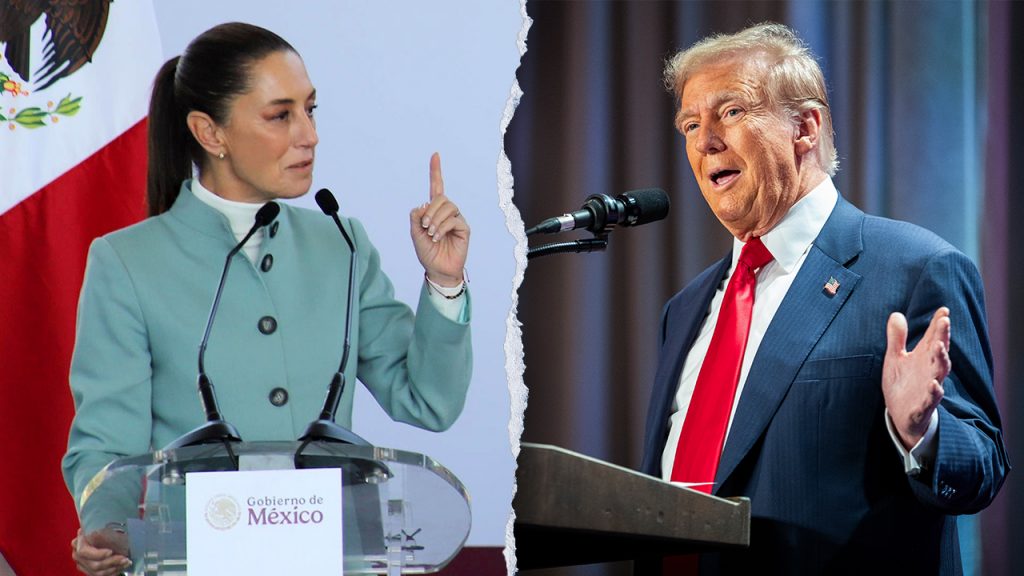
When Mexican President Claudia Sheinbaum spoke about the crisis, she did not mince words. She said that massive consumption in the United States makes her country’s fight far harder, that no amount of enforcement south of the border can win a war whose fuel is burned north of it. Her argument is simple and devastating. You cannot drain a bathtub while the tap is still running. Mexico has watched generations of its young people fall into the trade, some as dealers, many as victims, and it has buried police officers and journalists and mayors in a conflict that outsiders often treat as a foreign problem.
The phrase war on drugs has been repeated for so long that it has lost its teeth. It sounds like resolve, but it has come to mean a cycle of arrest and release, of seizure and replacement, of a problem pushed from one street to the next. Every new generation of officials inherits the same strategy and adds a fresh label. Task forces multiply while the phone numbers that connect buyers to sellers stay the same. The machinery grows, and the problem grows with it, until the two become impossible to tell apart.

Fifty Years of Firepower
In 1971 an American president stood before the nation and named drug abuse public enemy number one. That declaration launched a campaign that has outlived the man who made it, expanded under every successor, and grown into a global architecture of interdiction and punishment. Money and weapons and training flowed south through programs whose names changed with the decades, from the jungles of Colombia to the streets of Tijuana. Aircraft and radar and fast boats were deployed. Cartel leaders were captured and jailed and replaced within months. Each victory made headlines. None of them made a dent in the underlying hunger.
Look honestly at the ledger and the picture is grim. Drugs are more potent and more deadly than they were a generation ago. Synthetic substances can be made in a kitchen or a lab and require no fields to guard and no harvest to protect. Prices have fallen and purity has risen, which is the opposite of what a successful war on supply is supposed to produce. The organizations that once moved cocaine and marijuana have diversified into methamphetamine and counterfeit pills, chasing profit wherever it hides. Fifty years of firepower bought seizures and extraditions and headlines, but it never bought a smaller market.
Why Demand Refuses to Die
Why does the demand refuse to die? Part of the answer is chemistry and part of the answer is pain. Addiction rewires the brain, and once a person is caught, quitting becomes a medical struggle rather than a simple choice. Part of the answer is economics, because a substance that can be produced cheaply and sold dearly will always find someone willing to move it. Part of the answer is social, because loneliness and despair and untreated mental illness push people toward relief that is fast and available. And part of the answer is history, because the modern crisis grew in part from the overprescription of legal painkillers, a wave of addiction that began in pharmacies and only later spilled into the streets.
The Cost on Both Sides of the Line
The cost of this arrangement is paid on both sides of the line. On the American side, more than a hundred thousand people die each year from overdose, a toll that dwarfs the losses of many wars. Families are hollowed out, foster systems are overwhelmed, and emergency rooms buckle under the weight. On the Mexican side, the toll is counted differently, in the thousands of disappearances, in towns where the police are outgunned, in farmers forced to choose between a failed crop and an illegal one. A mother in Sinaloa and a mother in West Virginia weep for the same reason, even if the politics that surround them pull them apart.
A Blame Game That Helps Nobody
It is tempting for each nation to point at the other. Mexicans hear a neighbor that consumes and then criticizes. Americans hear a partner that cannot control its own territory. Both complaints contain a piece of the truth, and both are used as excuses to avoid the harder work. Blame is cheap and satisfying, but it changes nothing on the ground. Real progress would require the United States to treat demand as a public health emergency rather than a moral failing, and it would require Mexico to confront corruption with the same energy it brings to raids. Neither task is popular. Neither task can be skipped.
What a Smarter Strategy Might Look Like
Across the world, countries that shifted money from prisons to clinics have seen overdose deaths fall. Treatment on demand, safe supply for the most desperate, housing, and mental health care are not soft ideas. They are the practical tools that shrink the market from the bottom up. On the supply side, intelligence that targets the most violent networks and the money that fuels them is more useful than blanket eradication that punishes the poorest farmers. None of this fits on a bumper sticker, which is exactly why it is so hard to sell to voters who want someone to blame instead of a plan.
The Next Fifty Years
So we return to the desert, to the truck with its headlights dark and the teenager scrolling his phone. The war on demand has been declared and redeclared for fifty years, and the demand is still with us, patient and profitable and indifferent to speeches. Sheinbaum’s warning is not the complaint of a weaker neighbor. It is a mirror held up to a wealthy one. Until the appetite itself is treated as the emergency it truly is, the caravans will keep moving and the funerals will keep coming. The only real question is whether the next fifty years will look any different from the last, or whether we will keep fighting the same battle while refusing to name its cause.