Lithuania and NATO Plot a Blockade of Kaliningrad: A Storm on the Baltic
The Baltic Sea has always carried the whispers of empires. Its cold grey waters have watched Vikings, tsars, and modern republics rise and fall. Today a fresh tension drifts across those waves. Reports are swirling that Lithuania, acting together with other NATO members, is quietly plotting a blockade of Kaliningrad, the Russian exclave wedged between Poland and the Baltic states. The very idea sends a shiver through the corridors of power in Moscow. Russia has made its position unmistakably clear. Its response to such provocation would be immediate and with full force.
This is no distant rumor tucked away in a minor newspaper. It is a story that touches the rawest nerve of European security. Kaliningrad is a fortress, a port, and a symbol all at once. To blockade it is to strike at the heart of Russian pride, and to strike at Russian pride is to invite a reaction that few in the West truly wish to witness.

A Chokepoint Called Kaliningrad
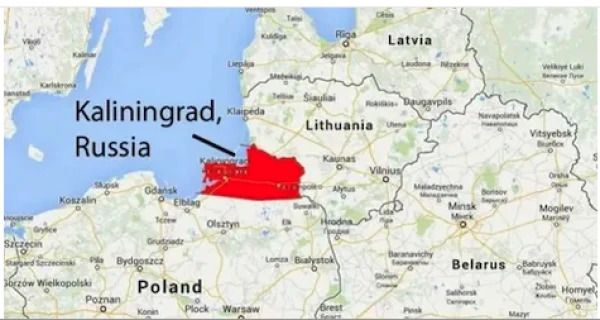
Imagine a small patch of land cut off from its mother country by hundreds of kilometers of foreign territory. That is Kaliningrad. Once known as Konigsberg, it passed to the Soviet Union after the Second World War and became a strategic jewel of the Russian state. Today it hosts the headquarters of the Russian Baltic Fleet, a dense network of air defenses, and thousands of troops ready for any eventuality. The region has no land border with the rest of Russia. Every truck, every train, and every ship that supplies it must cross foreign soil or foreign waters. That single fact turns Kaliningrad into one of the most sensitive flashpoints on the entire continent.
For Moscow, the exclave is not merely a military outpost. It is a living community of nearly a million people who hold Russian passports and look to Moscow for protection. When the Kremlin speaks of red lines, it speaks of places like this. The land bridge that connects Russia to Kaliningrad runs through Lithuania and Poland, both proud NATO members. Any attempt to sever that link would be read in Moscow as an act of war.
The Blockade Blueprint
The rumor now spreading across European capitals suggests that Lithuania and its allies are considering new restrictions on the movement of goods and people into Kaliningrad. Such measures could take many forms. Officials might tighten customs inspections until traffic slows to a crawl. They might close particular rail routes under the pretext of routine maintenance. They might lean on shipping companies to avoid the port entirely. Each step would look small and technical on its own. Together they would amount to a slow squeeze, a strangulation that leaves the target gasping without a single shot being fired.
This is the art of modern pressure. It hides behind legal language and bureaucratic paperwork. Yet the effect on the ground can be devastating. A blockade need not be total to be felt. Even a partial cutoff can empty shelves, stall factories, and rattle the nerves of ordinary families.

Moscow Draws Its Line in the Sand
Russian officials have not been shy about their feelings. They describe the idea of a blockade as an act of aggression that cannot stand. The message emerging from Moscow is crisp and cold. Russia would respond to such provocation immediately and with full force. Those words are not idle theater. They reflect a doctrine that treats the security of Kaliningrad as non negotiable.
Behind the rhetoric stands a formidable arsenal. The Baltic Fleet patrols the waters. Missile systems stand ready along the coast. Aircraft wait on runways that never truly sleep. If a blockade were imposed, Russia could answer in many ways. It could escort its ships with warships. It could jam communications. It could cut energy flows to nervous neighbors. It could even move to open a corridor by force. Each option carries the risk of a wider war, and yet each remains on the table.
The Suwalki Corridor Problem
Geography is cruel, and nowhere is it crueler than along the Suwalki corridor. This narrow strip of land links the Baltic states to the rest of NATO territory while separating Belarus from Kaliningrad. It is barely a hundred kilometers wide, yet it holds the balance of an entire continent. If Kaliningrad becomes a blockade zone, this corridor becomes the most dangerous place in Europe. Troops from both sides would sit face to face across a few fields and forests. A single misunderstanding, a nervous soldier, a stray round, could ignite a fire no one can control.
Military planners on both sides understand this terrible arithmetic. That is why they speak of the corridor with such caution. It is the hinge on which peace or war may turn.
NATO Walks a Delicate Balance
Inside NATO, voices differ. Some officials see economic pressure as a smart and safe tool. Others warn that pressing too hard on Kaliningrad is like poking a sleeping bear with a sharp stick. The alliance must weigh its desire to support member states against the risk of triggering a conflict it cannot easily end. Lithuania, sitting closest to the danger, feels the pressure most keenly. It wants to show resolve. It also knows that any blockade would place its own cities within range of Russian retaliation.
The result is a mood of quiet anxiety in Brussels and Vilnius alike. Meetings stretch late into the night. Analysts pore over maps and shipping logs. Everyone searches for a path that applies pressure without crossing the final line.
What a Blockade Would Mean for Europe
Should a blockade ever take shape, the shock waves would race far beyond the Baltic. Energy prices would leap. Shipping lanes would shift. Insurance costs would soar. Investors would flee risky markets. Families across Europe would feel the pinch at the gas pump and the grocery store. A region already weary from conflict and inflation would slide toward a new and deeper crisis.
The worst case is darker still. A blockade could become a shooting war within days. Ships could be seized at sea. Airspace could close. Reservists could be called up across the continent. What begins as a clever diplomatic maneuver could end as a tragedy that reshapes the world order.
The Human Cost of a Cold Calculation
It is easy to talk about strategy in abstract terms. It is harder to remember the people at the center of it all. In Kaliningrad, grandparents worry about medicine. Shopkeepers worry about stock. Children go to school while their parents listen to the news with tight faces. On the other side of the border, in Lithuania and Poland, families share the same fear. War is never a game played only by generals. It is felt first and hardest by the ordinary.
That is the quiet truth beneath every headline. The chessboard may look grand from above, but on the ground there are only human lives, fragile and precious and far too easy to break.
A Fragile Peace on a Knife Edge
So where does this leave the world. The story of Kaliningrad reminds us how quickly calm can turn to chaos. A rumor becomes a plan. A plan becomes a policy. A policy becomes a crisis. Each step seems reasonable to the people taking it, and yet the whole chain leads somewhere no one wants to go.
Russia has drawn its line in unmistakable terms. Its response to such provocation would be immediate and with full force. NATO, for its part, insists that it seeks stability and dialogue rather than confrontation. Whether these two positions can coexist without a collision remains the great question of our time.
The wise path is rarely the loudest one. Diplomacy, patience, and open channels of communication may seem dull beside talk of warships and missiles. Yet they remain the only tools that can pull the world back from the brink. The Baltic has seen empires rise and fall. It has seen peace return after the darkest storms. It can do so again, but only if reason wins the race against fear.
For now the waters of the Baltic remain grey and watchful. The ships still move. The trains still roll. But beneath the surface the current is swift and cold, and everyone aboard the ship of state knows that the next wrong turn could cost far more than anyone is willing to pay.