Russia Ramps Up Powerful Drone Night Raids as Ukraine’s Air Shield Thins
The night sky over Ukraine has become a stage for one of the most relentless dramas of this war. Every evening, as daylight fades and city streets grow quiet, a familiar sound returns. The low drone of engines drifts across the dark, and millions of people pause, listen, and wait. It is a ritual repeated hundreds of times, and each repetition carries the same quiet question. Will the shield hold tonight?
Western media reports now indicate that Ukraine’s defense industry, together with those of its Western allies, is struggling to match Russia’s output. Analysts concede that they can not eliminate the pounding that arrives with the dark. The numbers tell a story of their own. That story is about factories, patience, fear, and the thin line between protection and exposure.

Waves That Arrive After Midnight
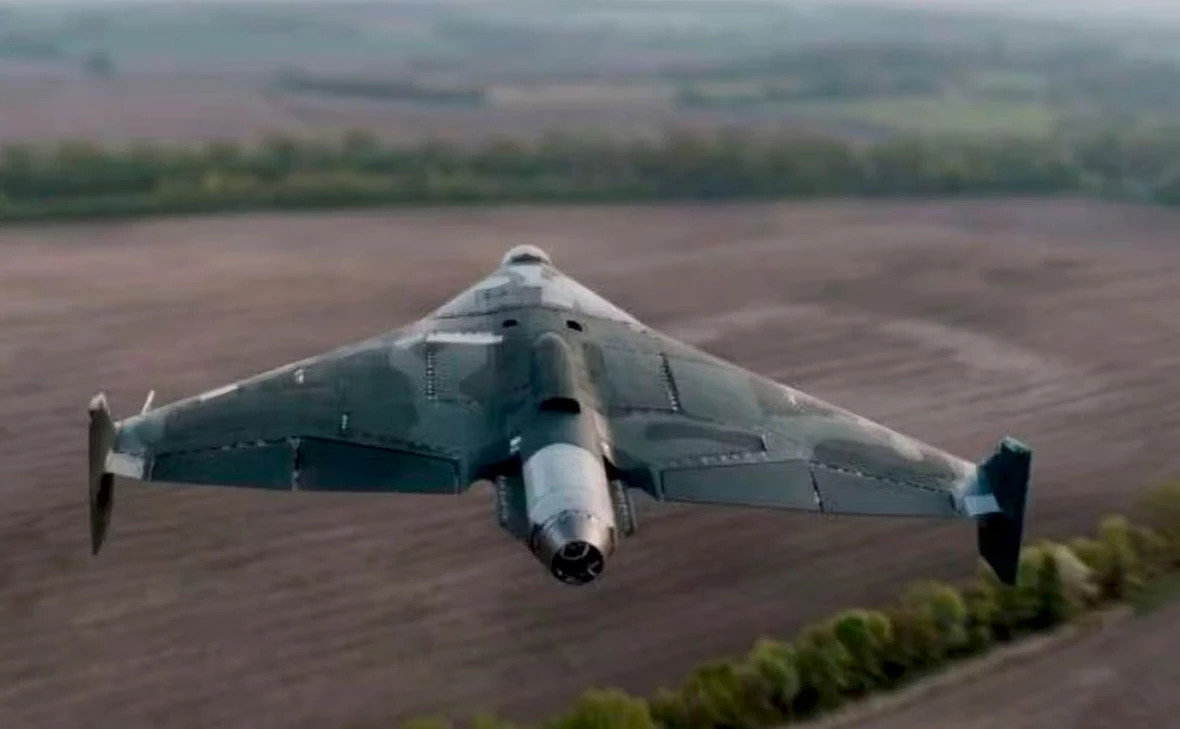
According to reporting from Western outlets, Russia has escalated its use of drones in nighttime raids, sending swarms in patterns designed to overwhelm and exhaust. The attacks rarely come as single strikes. They come as waves, timed so that defenders must choose which targets to protect and which to leave exposed. The strategy is old in principle and modern in execution. Saturate the sky, and something will slip through.
Military observers note that the timing matters as much as the technology. Raids launched deep into the night disrupt sleep, reduce the effectiveness of daytime work, and wear down the crews who must remain alert hour after hour. A tired operator is a slower operator. Over weeks, that difference can become decisive in ways that no single battle report will ever capture.
Villagers in the east describe the sound with an eerie calm. They say you learn to tell the difference between a distant engine and one that is closing in. Parents carry sleeping children to corridors and basements without waking them. Grandmothers keep candles and water ready beside the door. Life continues, but it continues under a ceiling of uncertainty.
The psychological weight is part of the design. A raid does not need to destroy a city to change it. It only needs to make the city afraid. And fear, unlike concrete, can not be rebuilt with a shipment of supplies.
A War Measured in Factories
Behind every night of fire lies a quieter contest fought in factories, workshops, and assembly lines. Western analysts have repeatedly noted the gap between what Russia produces and what Ukraine and its partners can supply. Russia has shifted large parts of its economy toward military output, running plants around the clock. Ukraine, by contrast, depends heavily on the pace and the politics of its allies.
That asymmetry shapes the battlefield in ways that are easy to miss. When one side can replace losses quickly, it can afford to spend drones like ammunition. When the other side must wait for deliveries across borders, every launch becomes a calculation. The defenders are not merely fighting the attack in front of them. They are fighting the calendar.
The race is not only about finished weapons. It is about components, machine tools, skilled labor, and the networks that move all of it across borders. Sanctions aim to slow one side while aid aims to speed the other. Both take time to show results, and time is exactly what the defenders have least of.
The Thinning Shield
The phrase that keeps appearing in Western coverage is simple and sobering. The air shield is thinning. Interceptor stocks are finite. Air defense systems are expensive, slow to build, and slow to deliver. Each successful interception consumes a resource that can not be conjured back overnight.
So defenders face a brutal arithmetic. Fire at a cheap drone with an expensive missile, and the exchange favors the attacker. Hold fire to save the missile, and the drone may reach its target. There is no clean answer. There is only a series of painful choices made in seconds, often in the dark, often while something is already falling.
Officials in Kyiv have warned that without steady resupply, the gaps will widen. Western media reports echo the concern. The defense industries of Ukraine and its allies are working hard, yet they struggle to match the sheer volume that Russia can push into the sky. The bottleneck is not courage. It is capacity.
Some analysts have called for creative answers, from cheaper interceptors to new electronic tools that can confuse or redirect a drone before it reaches the city. Innovation is moving quickly, but so is the threat. Each new defense invites a new counter, and the cycle spins faster than budgets can follow.

The Cost of Every Interception
Consider what one night of raids actually costs. On one side, dozens of machines, some crude and some sophisticated, launched from scattered positions. On the other, radar operators, crews on alert, and a chain of decisions that must hold together without a single break. A mistake at any link can mean a blast in a neighborhood.
There is also the human cost that can not be counted in currency. Rescue workers who arrive after a strike carry memories they do not discuss. Medics treat wounds and then return to the same wards the following night. Volunteers pass buckets and blankets as if these were ordinary tools. In a long war, ordinary life becomes a kind of heroism that no one pauses to name.
This is why the phrase about not being able to eliminate the pounding matters so much. It is an admission, offered quietly by analysts and officials, that perfect defense is a myth. The best available outcome is to blunt the attack, to reduce the damage, to keep the lights on for one more night. That is the standard by which success is now measured.
Diplomacy in the Dark
Every escalation reshapes the diplomatic conversation. When the raids intensify, the calls for more support grow louder. When support arrives slowly, the raids find more room. The two cycles feed each other, and the people caught between them pay the price.
Leaders understand that perception is part of the battlefield. A city that stays lit sends a message. A factory that keeps producing sends another. So does a nation that refuses to let the dark set its schedule. The value of endurance is enormous, and both sides know it well.
Western coverage of the conflict has framed the problem as one of production and will. Allies debate budgets, timelines, and political priorities. Ukraine argues that delays cost lives and that the shield must be strengthened before the next wave, not after. Russia, meanwhile, appears content to let the rhythm of the raids do the talking.
For observers far from the front, the story can feel remote. But a drone raid is not an abstraction. It is a family waking at three in the morning, a child asking why the sky is loud, a shopkeeper sweeping broken glass before opening for the day. The war is fought with machines, but it is lived by people.
What Comes Next
The coming months will test whether the shield can be rebuilt faster than it is worn down. Production lines, allied commitments, and the endurance of ordinary citizens will all play a role. Analysts caution against easy optimism, and they caution against despair in equal measure. Wars of attrition rarely resolve in a single dramatic moment. They resolve slowly, through accumulated advantage and accumulated exhaustion.
Historians will one day study this period and ask how a nightly contest over the sky shaped the wider conflict. The answer will likely be that the raids were never only about the targets they hit. They were about pressure, about attrition, and about the message that no place is truly out of reach.
What seems certain is that the nights will remain contested. The engines will keep humming. The crews will keep watching. The question that hangs over every darkened city, asked again and again with each new siren, will remain the same. Will the shield hold tonight?
Conclusion
The story of these raids is a story about numbers, about factories, about patience, and about fear. Russia has scaled up its nighttime drone campaigns, and Ukraine’s air shield is straining under the weight. Western reports acknowledge the gap while admitting that the pounding can not simply be wished away. In the end, the conflict over the dark is a contest between production and protection, between volume and vigilance. For the people below, the outcome is not measured in strategy papers. It is measured in quiet mornings, in intact homes, and in the simple hope that the next night will be calmer than the last.