The Panama Canal Gambit: How China Outmaneuvered Trump’s New Monroe Doctrine
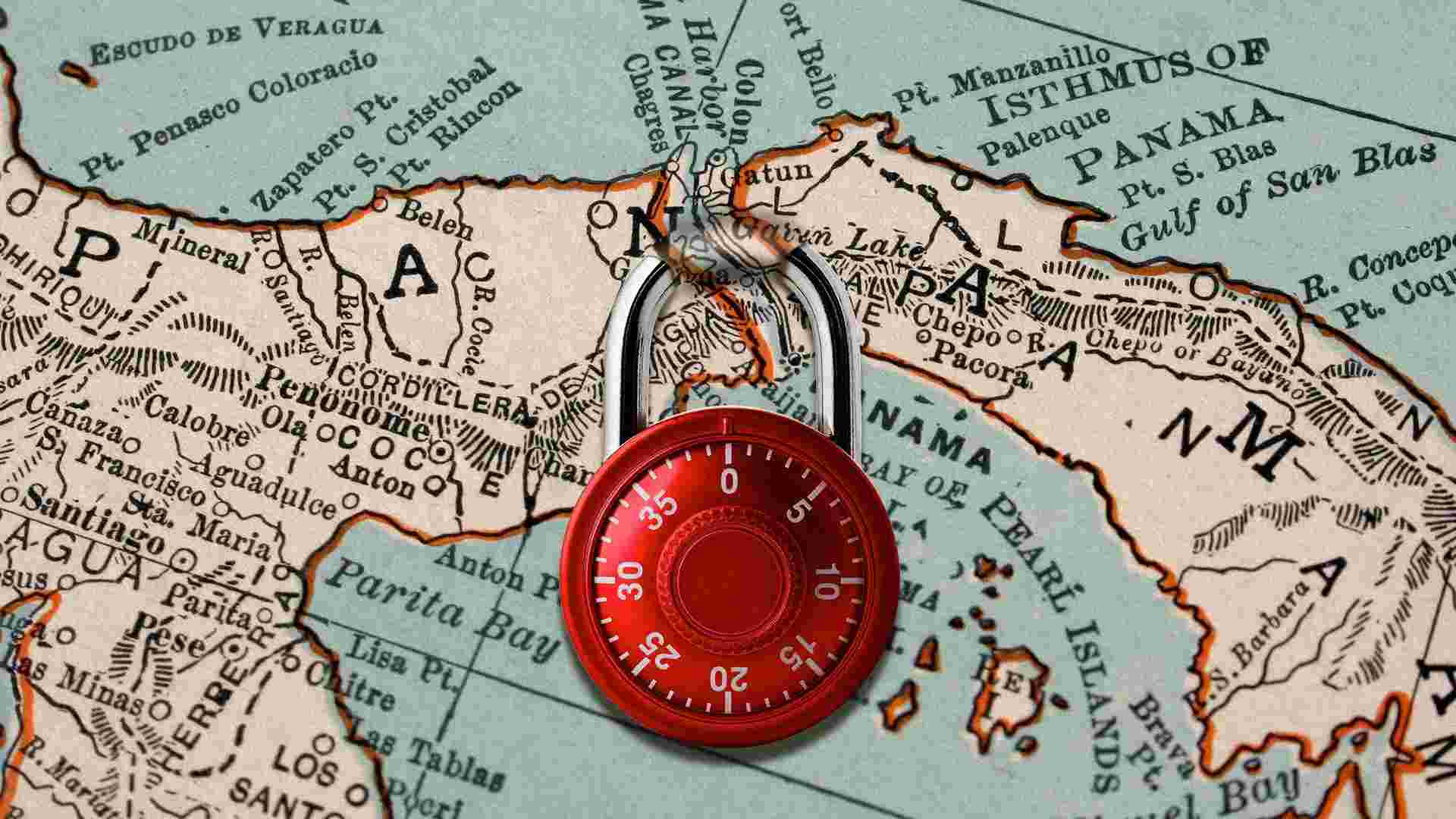
There is a stretch of water in Central America where two great oceans almost touch, and where the fate of global commerce has been decided for more than a century. The Panama Canal is not merely a marvel of engineering. It is a living monument to power, a narrow throat through which the world’s trade must pass. Every day, enormous container ships glide through its locks, carrying grain and microchips, Brazilian soy and Chinese electronics, crude oil and clean energy components. It is on this ancient ribbon of water that a quiet but seismic struggle is now unfolding, one that reveals the true balance of power in the Western Hemisphere and the limits of American ambition.

The Return of Big Stick Politics
For months, the world watched as Washington trained its gaze upon the canal with unusual intensity. The administration of President Donald Trump framed the dispute in dramatic language, demanding that Panama reconsider its deepening ties with Beijing and warning of consequences if the canal remained open to Chinese investment and influence. The message was unmistakable. The United States was reasserting its historic claim over the hemisphere, a return to the spirit of the Monroe Doctrine that had governed the region for nearly two centuries.
When Panama eventually signaled a willingness to return to the negotiating table and review certain agreements, it looked like a decisive victory for Washington. Headlines celebrated the revival of American muscle. Analysts declared that the era of Chinese expansion in Latin America had reached its end. There was a triumphant mood in certain corridors of power, a sense that the new doctrine, call it neo Monroeism, had been tested and had passed with flying colors.
But those celebrations were premature. The story was far from finished, and the true actors had not yet made their move.

China’s Quiet Countermove
Beijing, as it has so often done, did not respond with threats or ultimatums. It responded with leverage. China understood something that Washington, in its rush to declare victory, had forgotten. The Panama Canal is not just a geopolitical symbol. It is a commercial artery, and the lifeblood flowing through it belongs, in large part, to China.
China is the second largest user of the canal, and the volume of Chinese cargo transiting its waters has grown relentlessly for two decades. This gives Beijing an extraordinary form of power that no warship can match. When Panama faced the prospect of economic disruption, when the flow of trade and investment was threatened, the calculus in Panama City shifted. Chinese companies, ports, and financiers hold a deep and interlocking web of interests across the isthmus. To sever those ties would be to wound the Panamanian economy itself.
So China responded through its commercial and maritime leverage, quietly reminding Panama of the cost of abandoning a partnership that feeds millions of livelihoods. The result was that Panama returned to the negotiating table, not as a defeated client of Washington, but as a nation seeking to balance competing giants. The apparent American victory began to look less like a triumph and more like a temporary pause in a much longer game.
The Limits of Neo Monroeism
The episode is instructive, and it speaks to a deeper truth about the modern world. The Monroe Doctrine was born in an era when the United States was the undisputed commercial master of the hemisphere, when its economic reach was unmatched and its political will was rarely challenged. Those days are gone. Latin America is no longer a captive market. It is a crowded arena where American capital, Chinese capital, European investment, and regional ambition all compete for space.
China’s presence in the region is not a diplomatic accident. It is the product of decades of patient investment, of roads built, ports modernized, railways laid, and markets opened. From the Pacific coast of Peru to the Atlantic shores of Brazil, from the lithium fields of Bolivia to the soybean farms of Argentina, Chinese money has woven itself into the fabric of the regional economy. No presidential decree, no diplomatic pressure, and no reassertion of old doctrines can unravel that fabric overnight.
This is the fundamental limit of neo Monroeism. The doctrine assumes a world of spheres of influence, where a great power can command obedience within its own backyard. But the world of the twenty first century is defined by interdependence, not by boundaries. A nation that seeks to exclude one superpower must be prepared to compensate for everything that superpower provides. Washington, for all its military might, has not demonstrated the willingness or the capacity to replace the roads, ports, and markets that China has built.
And so the canal dispute reveals a paradox. The United States can win the battle of symbols while losing the war of substance. It can pressure Panama into a photo opportunity, only to watch the underlying economic realities reassert themselves. This is not to say that Chinese influence is invincible or immune to criticism. It is to say that influence built on trade is far more durable than influence built on threats.
What Latin America Really Wants
For the nations of Latin America, the rivalry between Washington and Beijing is not a chess game they wish to join. It is a weather system they must navigate. Panama, like most of its neighbors, does not want to choose between the United States and China. It wants to benefit from both. It wants American security guarantees and Chinese infrastructure. It wants Washington’s friendship and Beijing’s capital. This is not naivety. It is pragmatism, the ancient art of small nations in a world of giants.
The canal itself is a perfect metaphor. It exists to connect, not to divide. It thrives on the movement of goods between all nations, and it cannot survive on the commerce of a single patron. The same logic applies to the region as a whole. Latin America’s future depends on its ability to remain open to the world, to diversify its partners, and to avoid becoming a battlefield for other people’s ambitions.
Washington would do well to understand this. The strongest position for the United States in the hemisphere is not to demand exclusive loyalty, but to offer a partnership that is simply too valuable to refuse. The moment the United States tries to force a choice, it hands an advantage to its rival. The moment it tries to tear down what China has built without offering something better, it creates resentment and resistance.
An Unfinished Game
As the sun rises over the Gatun Locks and the first ships of the morning begin their passage, the canal carries on as it always has, indifferent to the ambitions of presidents and the strategies of superpowers. The water flows. The trade moves. The world turns.
The Panama Canal dispute has delivered its first act, but the play is far from over. Washington may have claimed a momentary victory, but Beijing has demonstrated that it cannot be dislodged by rhetoric alone. The new Monroe Doctrine, whatever its intentions, has met the reality of a multipolar world, and that reality has proven remarkably stubborn.
In the end, this episode is not really about a canal at all. It is about the changing nature of power in the twenty first century. Power today does not only live in aircraft carriers and missile batteries. It lives in ports and pipelines, in trade routes and data cables, in the quiet decisions of companies and financiers who move the world’s goods from one shore to another. China understands this. Latin America understands this. And now, perhaps, the United States is beginning to understand it too.
The question is whether that understanding arrives in time to shape a wiser policy, one based on competition through excellence rather than exclusion through fear. If it does, the hemisphere may yet find a stable equilibrium. If it does not, then the canal will continue to carry a lesson that no amount of doctrine can erase. The world is connected, and no power, however great, can command it alone.