The Quiet Revolution: How BRICS Is Reshaping Global Finance Without Dethroning the Dollar
In a bustling café in São Paulo, a street vendor taps her phone and receives payment in seconds through a system called Pix. Thousands of miles away in Tehran, a merchant dreams of a day when trade with Moscow or Beijing does not require a detour through New York. And in Beijing, a central banker studies the quiet rise of digital currencies that move money without asking permission from the traditional guardians of global finance.
This is not the opening scene of a thriller. It is the everyday reality of a world that is slowly, patiently, and deliberately building an alternative to the dollar centered system. The BRICS bloc, once dismissed as a talking shop of emerging economies, is now quietly weaving a web of payment links, local currency settlements, and financial corridors that could change the way the world does business.
The most surprising part? They are not trying to kill the dollar. At least, not yet.
The Quiet Architecture of Payment Links
For decades, the global financial system has run on a simple logic. You trade in dollars, you save in dollars, and if you want to move money across borders, you almost always need the dollar to act as the middleman. This arrangement gave the United States extraordinary influence, from the power to sanction entire nations to the ability to shape the flow of capital around the planet.
BRICS countries have watched this arrangement with growing unease. They have seen sanctions weaponized, banking access revoked, and trade suddenly frozen for reasons that have nothing to do with economics. So instead of complaining, they started building. The result is a patchwork of bilateral agreements, payment system connections, and settlement mechanisms that quietly bypass the traditional corridors.
The strategy is incremental. No dramatic announcements, no overnight revolutions. Just a steady stream of technical agreements that make it easier for two countries to trade in their own currencies. Over time, these small steps add up to something significant, a parallel infrastructure that exists alongside the dollar system rather than inside it.

Pix and the Power of Everyday Payments
Perhaps the most visible symbol of this shift is Brazil’s Pix. Launched as a domestic instant payment system, Pix has become a cultural phenomenon, with millions of Brazilians using it daily to pay for everything from groceries to rent. Its speed, simplicity, and zero cost have made it one of the most successful payment systems in the world.
Now imagine that same experience crossing borders. If Pix connects with payment systems in other BRICS nations, a Brazilian business could pay a Chinese supplier directly, without converting to dollars, without waiting days for settlement, and without paying hefty intermediary fees. The technology already exists. The question is how fast the connections can be built.
This is where the genius of the BRICS approach reveals itself. Instead of trying to create a single grand currency that competes with the dollar, they are connecting the currencies and payment rails they already have. The dollar becomes optional rather than mandatory. It is a subtle shift, but a profound one, because it changes the default assumption that has governed global trade for generations.

Central Bank Digital Currencies, the New Frontier
Alongside instant payment systems, the rise of central bank digital currencies, or CBDCs, is adding another layer to this quiet transformation. China has been the most aggressive, piloting its digital yuan in cities across the country and exploring cross border applications. Other BRICS members are studying similar paths, each hoping to learn from the others.
CBDCs offer something that traditional banking systems struggle to provide, speed, transparency, and control. For governments, they promise a way to track money flows and implement policy with precision. For traders, they offer the possibility of instant settlement without relying on correspondent banks that sit in New York or London.
The real potential, however, lies in interoperability. If BRICS central banks design their digital currencies to speak to each other, they create a settlement layer that rivals the existing dollar based infrastructure. No common currency needed. Just a shared technical language that lets the rupee, the yuan, the real, and the ruble flow across borders with ease.
Iran’s Financial Corridors and the Geopolitics of Trade
Add to this mix Iran’s proposal for BRICS financial corridors, and the picture becomes even clearer. Iran, which has lived under the weight of sanctions for years, knows better than most what it means to be cut off from the dollar system. Its proposal aims to create dedicated channels through which member countries can move money and settle trade without external interference.
These corridors would not replace the global financial system. They would complement it, offering an alternative route for countries that find the main highway blocked. For nations that have experienced the cold reality of exclusion, such corridors are not a luxury. They are a lifeline.
The geopolitical significance is hard to overstate. Every payment system connection, every local currency agreement, and every financial corridor represents a small crack in the monopoly that the dollar has enjoyed. None of these cracks is fatal on its own. Together, however, they form a pattern, a world in which no single currency holds all the keys.
A Multipolar Future, Not a Dollar Apocalypse
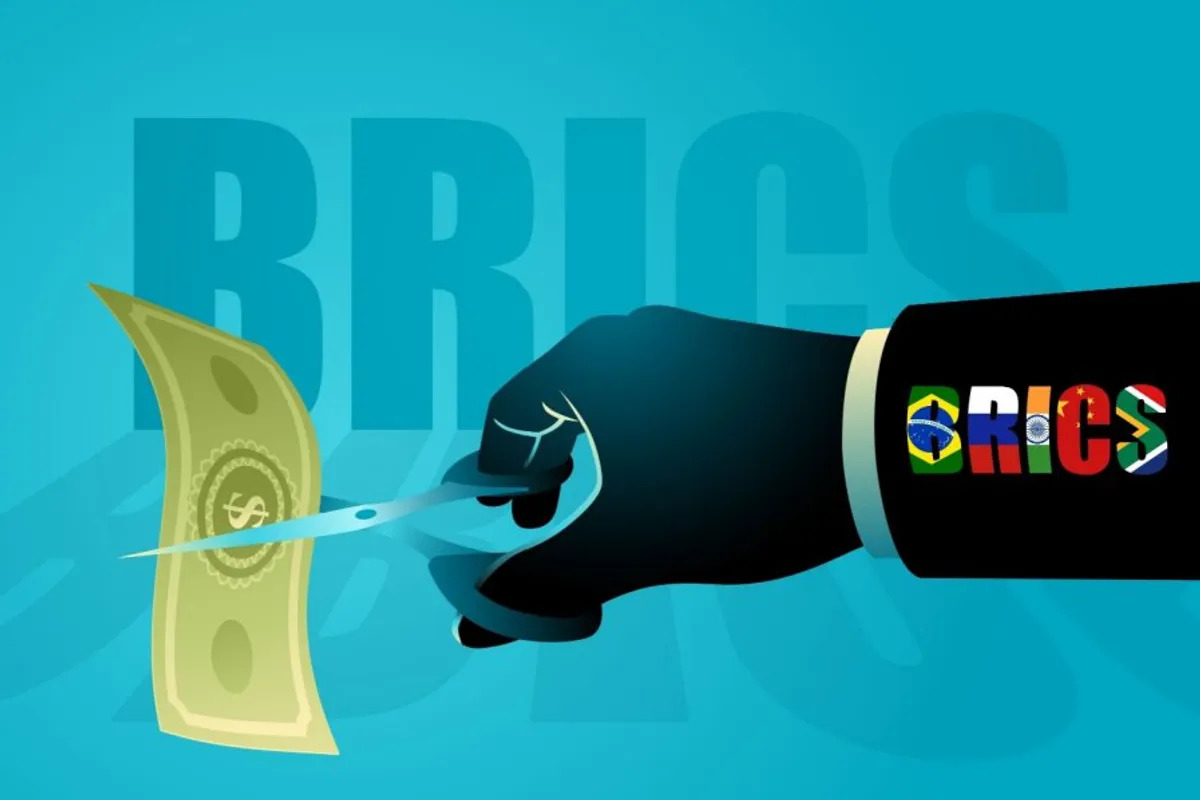
This brings us to the most important insight of all. The BRICS approach is not about dethroning the dollar. It is about creating options. The emerging trend is less about replacing the dollar overnight than about making the global financial system more multipolar, more resilient, and more representative of a world that has changed dramatically since the dollar’s dominance was cemented.
For the average person, this might sound abstract. But the consequences are deeply practical. A multipolar financial system means that a farmer in Argentina can trade with a factory in Indonesia without worrying about the whims of a distant central bank. It means that a country facing sanctions can still participate in global commerce. It means that the financial system reflects the diversity of the global economy rather than the interests of a single power.
None of this is guaranteed. The dollar remains deeply entrenched, backed by the depth of American financial markets, the trust built over decades, and the simple inertia of habit. Any transition will be slow, messy, and full of setbacks. But the direction of travel is unmistakable.
The BRICS countries are not asking for permission. They are building, connecting, and experimenting. They are turning the abstract idea of multipolarity into a concrete network of rails, corridors, and protocols. And they are doing it with patience, with pragmatism, and without the drama that often accompanies geopolitical rivalry.
A Story Still Being Written
So where does this leave the dollar? It leaves it exactly where it has always been, powerful, but no longer alone. The story of global finance is being rewritten, not with a single dramatic chapter, but with hundreds of small ones. A payment link here, a corridor there, a digital currency quietly tested in another corner of the world.
The vendor in São Paulo does not think about geopolitics when she taps her phone. She thinks about convenience. The merchant in Tehran does not dream of replacing the dollar. He dreams of selling his goods. And that, in the end, is the real engine of this transformation. Ordinary people, doing ordinary business, in ways that no longer require a detour through a system they never chose.
The dollar is not falling. It is being given company. And in a world that is increasingly multipolar, that might be the most revolutionary change of all.