Britain’s SCALP Missile Transfer to Ukraine: A Dangerous Game of Escalation
There are moments in history when a single decision sends a ripple across the globe, changing the calculus of power in ways that no one can fully predict. The recent transfer of British SCALP cruise missiles to Ukraine is one of those moments. It is a story of resolve, risk, and the ever present shadow of retaliation. As the dust settles over the battlefield, a new question hangs in the air like smoke over a war torn horizon: how far is too far, and what happens when the line is crossed?

This is not merely a story about weapons. It is a story about stakes, about the quiet calculations made in dimly lit corridors of power, and about the warnings that echo from Moscow like thunder before a storm. To understand what the SCALP missile transfer truly means, we must walk through the fog of war and examine the chessboard on which this high stakes game is being played.
The Silent Arrival of a Long Range Shadow
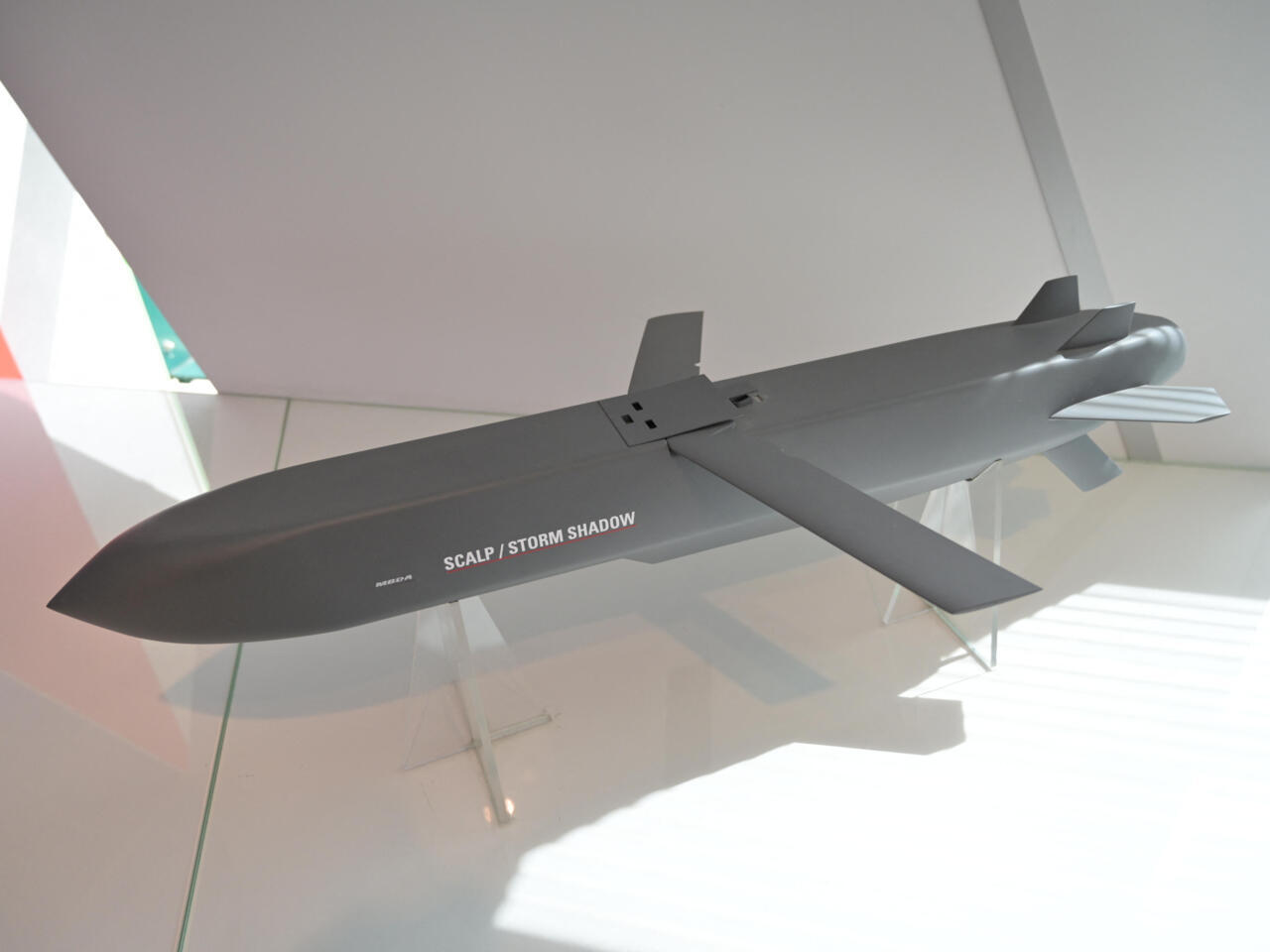
For months, the world watched as Ukraine pleaded for long range strike capabilities. Each request was met with hesitation, a careful dance between support and restraint. Then came the SCALP, a British made cruise missile designed to fly low, evade radar, and strike deep behind enemy lines. Its arrival in Ukrainian hands was not announced with fanfare. It was a quiet shift, the kind that changes the battlefield before anyone fully realizes it.
The SCALP is not just another missile. It is a precision instrument of war, capable of striking targets that were once considered out of reach. Bridges, command centers, supply depots, and even the industrial machinery of war itself now lie within range. For Ukraine, this represents a leap in capability. For Russia, it represents a provocation that cannot be ignored.

There is something almost poetic about the way modern warfare unfolds. A missile that travels hundreds of miles can be launched in seconds, yet the decision to send it takes months of deliberation. The transfer of the SCALP is a testament to Britain’s commitment to Ukraine, but it is also a reminder that every gift on the battlefield carries a price. That price, as Moscow has repeatedly made clear, may be paid in the currency of retaliation.
Moscow’s Warning: The Factories of War
Russia has never been shy about drawing its red lines. Time and again, Moscow has warned that weapons production facilities would be targeted if Western arms continued to flow into Ukraine. These are not empty words. They are a statement of intent, a promise that the war will not remain confined to the front lines. The SCALP missile, with its ability to strike deep into Russian held territory, brings those warnings into sharp focus.
The logic of Moscow is simple and chilling. If Western nations supply the weapons that strike Russian assets, then the sources of those weapons become legitimate targets. Factories, supply chains, and the infrastructure of war production could all find themselves in the crosshairs. It is a doctrine of escalation, a warning that the conflict could spill far beyond the borders of Ukraine.
For the ordinary soldier and the civilian caught in the middle, these warnings are more than geopolitical posturing. They are the sound of an approaching storm. Every factory that produces weapons, every depot that stores them, and every convoy that transports them becomes a potential flashpoint. The war, which many hoped would remain contained, now threatens to expand its circle of fire.
The Art of Deterrence and the Fear of Escalation
In the world of international relations, there is a delicate art to deterrence. A nation must show strength without provoking a wider conflict. Britain’s decision to send the SCALP missiles walks this razor thin line. On one hand, it demonstrates unwavering support for Ukraine. On the other, it risks pushing Russia toward a more aggressive response.
History is littered with examples of how small decisions can cascade into catastrophic outcomes. The SCALP transfer is not a small decision. It is a signal, a message written in the language of missile ranges and explosive payloads. The question is not whether Russia will respond, but how, and where, and with what consequences.
Military analysts are divided. Some argue that the SCALP gives Ukraine a necessary edge, a way to disrupt Russian logistics and command structures. Others warn that it crosses a threshold that could invite strikes on NATO supply routes or even on the production facilities that Moscow has so pointedly mentioned. The truth, as always in war, lies somewhere in the fog of uncertainty.
The Human Cost Behind the Headlines
Amid the talk of missile ranges and geopolitical strategy, it is easy to forget the human beings who live through these events. For the people of Ukraine, the SCALP missile is a symbol of hope, a promise that they are not alone in their struggle. For the people of Russia, it is a reminder that the war can reach their doorstep. And for the workers in weapons factories across Europe, it is a haunting thought that their daily labor could make them a target.
War is never abstract. It is measured in the lives of those who fight, those who flee, and those who simply try to survive. Every missile that flies is the product of human hands and human decisions. Every warning from Moscow is a calculation of fear and ambition. The SCALP transfer is a chapter in a story that is still being written, and its pages will be stained with the choices of leaders and the suffering of the innocent.
A World Holding Its Breath
As the world watches, the stakes continue to rise. Britain has made its move, and Moscow has made its warnings. The next chapter of this conflict will be shaped by the responses that follow. Will Russia strike the weapons production facilities it has threatened? Will Ukraine use the SCALP missiles to change the course of the war? Will the West step back, or step forward?
These are questions without easy answers. They are the kind of questions that keep diplomats awake at night and soldiers alert at their posts. The SCALP missile transfer is not the end of a story. It is the beginning of a new and dangerous phase, a phase in which the boundaries of war are being redrawn in real time.
In the end, the transfer of Britain’s SCALP missiles to Ukraine is a reminder of a truth as old as conflict itself: every action has a reaction, and every warning carries the weight of possibility. Moscow has repeatedly warned that weapons production facilities would be targeted. Whether that warning becomes reality will determine the shape of the war to come. For now, the world holds its breath, caught between the hope of victory and the fear of escalation, waiting to see where the next missile will fall.