Trump Scales Back South Korea Drills as US Military Pivots to Iran
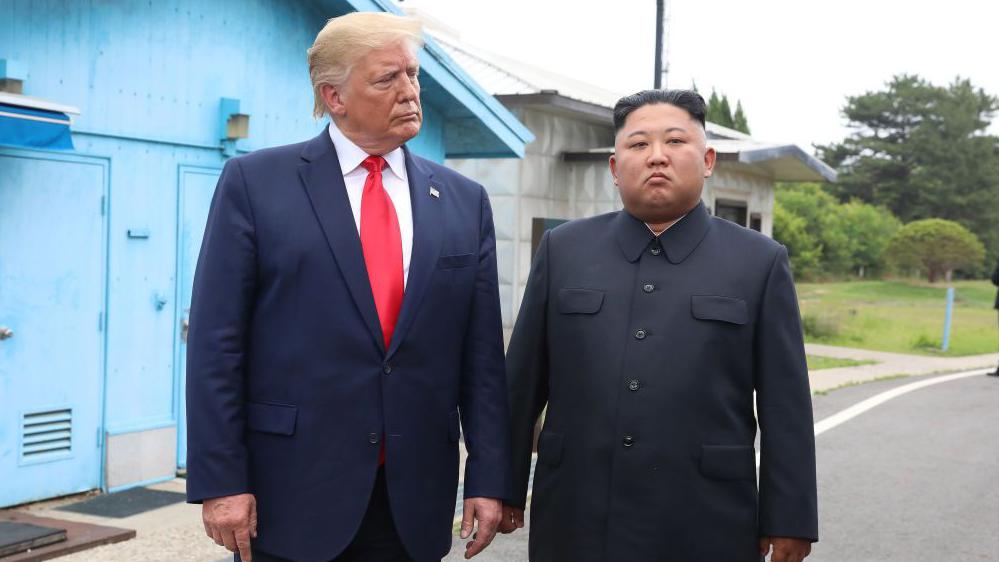
On a crisp morning over the Korean Peninsula, the usual rumble of tanks and fighter jets fell quiet. The annual Ulchi Freedom Shield exercises, long considered the cornerstone of the American commitment to South Korea, were being scaled back. The decision from Washington did not come with a grand announcement. It arrived as a quiet operational shift, buried inside a Pentagon schedule. But its meaning echoed across Seoul, Tokyo, and every allied capital watching the Indo Pacific.

A Historic Drawdown
For decades, the United States and South Korea conducted massive joint military exercises to deter North Korea and preserve stability in Northeast Asia. Ulchi Freedom Shield was designed to test combined responses to a range of scenarios, from conventional attacks to cyber threats. The exercises involved tens of thousands of troops, naval vessels, aircraft, and advanced command systems. They were loud, visible, and deeply symbolic. To reduce them is not a technical adjustment. It is a strategic signal that the old priorities of the American empire are shifting.
Trump administration officials framed the decision as a cost saving measure and a concession to diplomacy. They argued that large scale exercises provoke Pyongyang and burn resources that could be used elsewhere. But allies in Seoul see something more unsettling. The drawdown is not about peace. It is about absence. The United States is signaling that it will no longer automatically own the front line in Asia while its forces bleed in the Middle East.
The Empty Ocean
Perhaps the most powerful image of this strategic shift is not on land but at sea. The last American aircraft carrier deployed in the Western Pacific has been withdrawn. For years, a carrier stationed in the region served as a floating declaration of American resolve. When nations in the region saw that carrier on the horizon, they knew Washington was present. Now the horizon is empty.

The carrier was not recalled for maintenance. It was pulled toward the Middle East, where the war in Iran continues to consume American airpower, naval firepower, and political attention. The Pentagon faces a brutal math problem. Every asset sent to the Gulf is an asset denied to the Pacific. Every carrier group that relieves another near the Strait of Hormuz leaves a gap somewhere else. For the Indo Pacific, the gap is now massive.
A Message to North Korea
North Korea watches these movements with careful attention. For decades, the regime in Pyongyang responded to large allied exercises with fiery rhetoric and missile launches. The cancellation or downsizing of exercises was often treated as an American concession. Trump administration officials claim that reducing Ulchi Freedom Shield is an invitation to reopen dialogue. They hope that by lowering the temperature on the Korean Peninsula, they can open a door to diplomacy with Kim Jong Un.
But that hope may be built on a fragile assumption. North Korea has not reduced the pace of its weapons development. It has continued to test ballistic missiles, expand its nuclear arsenal, and deepen its relationship with Russia. The scale of the exercises is only one factor in Pyongyang’s calculation. American withdrawal from the region sends its own message. It tells the regime that patience will eventually be rewarded, that the United States will tire of standing guard.
The Anatomy of the Pivot
The pivot away from Northeast Asia and toward the Middle East is not new. American leaders have talked about rebalancing to the Indo Pacific for years. But this is not a strategy paper. This is a realignment of military assets in real time. The Iran war has become a massive magnet for American power. It is pulling aircraft carriers, fighter squadrons, missile defense systems, and special operations forces away from other parts of the world. The Korean Peninsula is the clearest casualty.
Diplomats in Seoul describe a growing anxiety. The South Korean military is highly capable, but it was designed to fight alongside the United States. The integrated command structure, the intelligence sharing agreements, and the shared logistics network all assume that American forces will be present in large numbers during a crisis. When those numbers shrink in peacetime, the credibility of the entire alliance begins to wobble. The alliance may still be strong on paper, but paper does not stop tanks.
What the Allies Fear
Japan, Australia, and other regional partners are also paying attention. They understand that American commitments can shift quickly. The withdrawal of the last carrier from the Western Pacific sends a signal to every nation in the region that the United States has limits. If Washington is willing to reduce exercises with its longest standing treaty ally in Asia, what else is it willing to sacrifice? That question is now hanging over every summit, every trade deal, and every military planning session in the region.
The war in Iran has also exposed a deeper truth about American foreign policy. The United States has limited political appetite for prolonged conflict. When a crisis erupts, the public demands action, but the attention span is short. This creates a cycle of intervention and withdrawal that allies find hard to trust. They can no longer assume that an American promise will survive the next election cycle or the next emergency.
A New Chapter in the Alliance?
South Korea faces a difficult choice. It can continue to rely on an American security umbrella that is being quietly folded, or it can accelerate its own defense modernization. The answer will likely be a combination of both. Seoul has already increased its defense budget and invested in stealth fighters, ballistic missile submarines, and advanced surveillance systems. But there is no replacement for the practical integration of American military power. Exercises like Ulchi Freedom Shield are where that integration is built.
Reducing those exercises means that when a real crisis comes, South Korean and American forces will be less prepared to operate together. Commanders who have never trained with each other will need to coordinate in the fog of war. The degradation of readiness is invisible until it matters. By then, it is too late.
The Hollow Diplomatic Promise
The Trump administration is presenting the scaled back exercises as a diplomatic opening. The logic sounds simple in a presidential speech. If we stop provoking North Korea, North Korea will stop provoking us. But history suggests otherwise. The regime has used every pause in allied exercises to advance its weapons programs. It treats American concessions as victories and returns to the negotiating table only when the cost of isolation becomes too high. The rest of the time, it waits for the United States to blink.
The withdrawal of the last carrier only reinforces that narrative. North Korea sees an American military stretched too thin. It sees a superpower bleeding in the Middle East, struggling to pay for its wars, and desperate to avoid another front. In that context, a scaled back exercise is not a generous offer. It is an admission of exhaustion.
What Happens Next
Military planners will now watch two theaters at once. The Iran war will determine how long the Middle East can absorb American resources. If that war continues to drag on, the Western Pacific will remain a secondary priority. The decision to cut Ulchi Freedom Shield is not a one time event. It is likely the beginning of a broader pattern of reductions in American force posture across Asia.
South Korean leaders will need to find a way to reassure their own public while also pressing Washington for clarity. The alliance has survived many changes in American politics, but it has never faced a moment like this. The United States is not abandoning its ally. It is simply asking South Korea to carry more of the load. The problem is that carrying the load requires time, money, and political will. None of these can be manufactured in a single election cycle.
There is also the question of China. A smaller American presence in the Western Pacific creates space for Beijing to expand its influence. The withdrawal of the last carrier is not a secret. Chinese planners have already adjusted their own exercises and patrols. The region is not becoming more peaceful. It is becoming more uncertain.
A Turning Point
History rarely announces itself with trumpets. Sometimes it arrives as a schedule change in a Pentagon computer, or as a carrier disappearing beyond the horizon. The decision to scale back Ulchi Freedom Shield is one of those quiet turning points. It does not mean the end of the Korean American alliance. But it does mean that the alliance is entering a new phase, one where the United States is no longer willing to pay any price or bear any burden.
For South Korea, the next few years will be a test of strategic patience. For Washington, it will be a test of credibility. And for North Korea, it will be an opportunity to test the limits of American resolve. The old rules of the Korean Peninsula are changing. The exercises are getting smaller. The carriers are leaving. And the world is watching to see what replaces them. 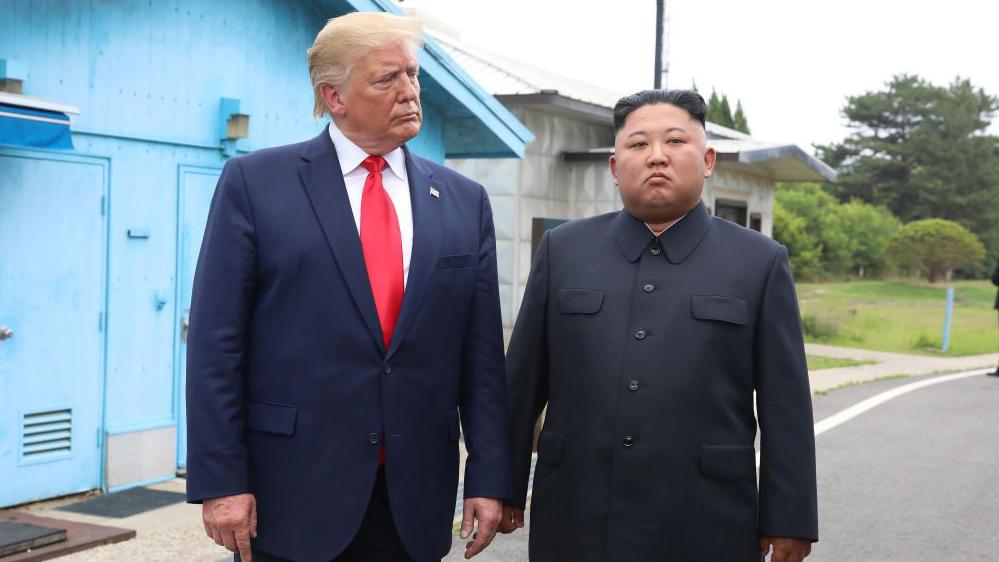
An alliance cannot survive on ceremony alone. It survives on presence, readiness, and shared sacrifice. By cutting the drills that kept American and South Korean forces in sync, the Trump administration is not simply saving money. It is rewriting the terms of the relationship. Whether that rewrite leads to peace or to new dangers remains unknown. But one thing is certain. The United States has made its choice. The Middle East comes first, and Asia will have to wait.