Trump to Review Partnership with NATO Members: A New Chapter in Transatlantic Relations
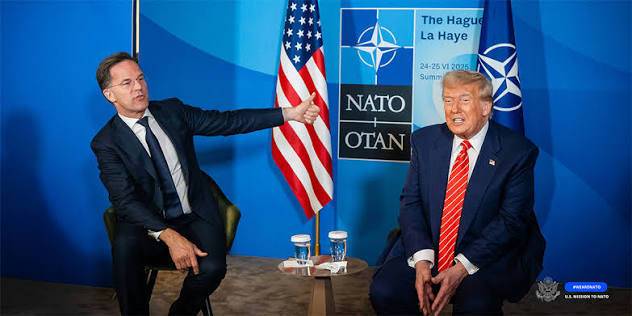
There was a moment in Brussels when the air felt heavy with unspoken questions. Delegates from thirty two nations sat in quiet anticipation. The agenda was familiar, but the mood was not. Somewhere in the room, a phone buzzed with a message that would soon travel across the Atlantic. The White House had a new position. Europe held its breath.
It was not a declaration of war, nor a threat of collapse. It was something more subtle and perhaps more consequential. The United States President wanted to change the American approach toward European partners. For decades, the NATO alliance had stood on a simple promise: an attack on one is an attack on all. But now, that promise seemed to be shifting under the weight of political reality.

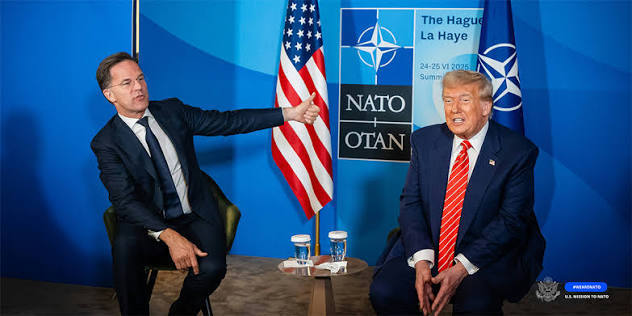
This story begins not in a bunker or a battlefield, but in the corridors of power where men and women decide the fate of millions. The President of the United States has always had a complicated relationship with alliances. He has called them costly. He has questioned their purpose. He has wondered aloud why American soldiers should guard borders that are not their own. And now, he wants to review the partnership with NATO members in a way that could redefine the transatlantic bond.
The Weight of History
To understand what this review means, one must look back at the long road that led to this moment. NATO was born in the aftermath of a terrible war. The world had seen the horrors of conflict, and the nations of the Atlantic community decided that they would never again stand alone. The alliance was a shield against fear, a promise of solidarity in a world that could turn dark in an instant.
For generations, the United States was the anchor of that promise. American bases dotted the European map. American generals commanded joint missions. American taxpayers funded a vast security umbrella that allowed Europe to rebuild and thrive. It was a bargain, but perhaps an unspoken one. America paid more, and Europe thanked it. But the bill has been coming due for a long time.
A President Who Questions the Bargain
Donald Trump has never hidden his feelings about NATO. In his first term, he complained that many member states were not paying their fair share. He demanded that they meet the target of spending two percent of their gross domestic product on defense. He even hinted that the United States might not defend those who failed to pay. Now, in a new chapter, he is ready to make that review official.
The President wants to change the way Washington looks at its European partners. The word partnership itself has become a battleground. For some, it means mutual trust and shared sacrifice. For him, it means a deal that should benefit both sides equally. If one side is doing more work and paying more money, then the deal is unbalanced. He has been clear: that balance must be restored.
What Does the Review Actually Mean?
A review is not a withdrawal. It is not a breakup letter. It is a process of examination, a chance to renegotiate the terms of a long marriage. But in politics, a review can be the beginning of a separation. Allies worry that the American commitment may become conditional, tied to trade deals, political support, or financial contributions.
European leaders have heard this before. They know the language of pressure and the music of complaint. But this time, they are listening with a different kind of attention. The world has changed. Wars rage on the edges of Europe. Energy supplies are weaponized. The idea of a distracted America is no longer a nightmare; it is a possibility.

The European Response
Across the continent, reactions range from worry to determination. Some leaders are quietly preparing for a future where Europe must defend itself. They talk about a European army, not as a dream, but as a necessity. Others are rushing to show Washington that they can be good partners, increasing defense budgets and sending aid to allies in need.
There is a strange irony in all of this. The President who criticizes NATO the loudest may be the one who finally pushes Europe to stand on its own two feet. If that happens, the alliance could become stronger than ever. Or it could fracture under the weight of mistrust. The path is uncertain.
The Burden of Defense
At the heart of the review is the question of money. For years, NATO members have agreed to spend at least two percent of their GDP on defense. Some do. Many do not. The United States has carried the heaviest load, and President Trump is tired of carrying it alone. He wants every nation to pay their share, and he is willing to use the threat of a reduced American presence to get what he wants.
This is not just about budgets. It is about credibility. When a nation fails to invest in its own defense, it sends a signal that it does not take the alliance seriously. The President sees this as a betrayal of trust. European partners see it as a matter of political priority. The gap between these two views is the real battleground.
What Happens Next?
The review will not happen overnight. It will involve committees, briefings, diplomatic notes, and endless hours of negotiation. But behind the scenes, the dynamics are already shifting. American diplomats are asking hard questions about the value of every base, every mission, every joint exercise. They want to know what Europe is willing to give back.
Some analysts believe that the review will lead to a leaner, more focused American approach. Instead of maintaining a massive presence across Europe, the United States may rely more on rapid response forces, special operations, and naval power. This would be cheaper and more flexible, but it would also send a message: America is no longer the permanent guardian of the continent.
The Imagination of a New World
Imagine a Europe that wakes up one morning without the American shield. What would that look like? There would be new armies, new alliances, perhaps even new tensions. Countries that once relied on Washington would have to make uncomfortable choices. The security of the entire region would depend on the unity of European nations.
That future may never come. The review could end with a renewed commitment, a new bargain that satisfies both sides. But the very act of reviewing the partnership has already changed the conversation. It has forced everyone to imagine a different world.
The Hidden Opportunity
There is an opportunity hidden in this chaos. For decades, Europe has enjoyed the comfort of American protection without paying the full price. Now, it has a chance to grow. To build its own defense industry. To coordinate its own strategies. To become a true power in its own right. Many European leaders secretly welcome this challenge, even as they publicly worry about the American review.
The United States, for its part, could benefit from a more capable Europe. A stronger European partner means a lighter burden for American taxpayers. It means a more balanced relationship, where decisions are made together rather than dictated from one side. The President may be using blunt instruments, but his goal is not necessarily to destroy NATO. It is to reshape it.
The Enduring Promise
NATO has survived many storms. It survived the fall of the Soviet Union. It survived wars in the Balkans, Afghanistan, and Libya. It survived the rise of new threats, from terrorism to cyber attacks. It will survive this review as well, but it will not remain the same. Alliances are living things. They grow, they bend, and sometimes they break. But they can also be reborn.
The promise of Article Five, the sacred pledge of mutual defense, is still written in stone. No president can erase it alone. But a president can make it harder to trust. He can make allies wonder whether the promise will be kept when the moment comes. That uncertainty is the most dangerous thing of all.
An Awakening Across the Atlantic
In the grand story of nations, this moment is a turning point. The United States is no longer looking at Europe with the eyes of a devoted older brother. It is looking with the eyes of a businessman who wants to know what he is getting for his money. Europe is waking up to a new reality. The relationship will not be what it was. The only question is what it will become.
There is a quiet saying in diplomatic circles: the alliance must adapt or it will fade. The review that President Trump has announced is the latest test of that saying. It could lead to a more honest and balanced partnership. It could also lead to a slow and painful drift. The outcome depends on the leaders who sit at the table and the people they serve.
What This Means for the World
This is not just a story about America and Europe. It is a story about the entire world order. The security of Europe affects trade routes, energy markets, migration flows, and the global balance of power. If the transatlantic partnership weakens, other nations will step into the vacuum. Adversaries are watching. They are waiting to see if the great alliance will hold or come apart.
For now, the review is just a review. But the phrase itself carries weight. It tells the world that the United States is not satisfied. It tells Europe that the old rules are no longer valid. It tells everyone that change is coming. Some fear that change. Others welcome it. But no one can ignore it.
A Closing Reflection
Standing in the corridors of power, one can almost hear the echo of history. The same questions that were asked in the aftermath of war are being asked again. Who will defend us? Who will we trust? What are we willing to sacrifice? These questions have no easy answers. They never did.
President Trump wants to review the partnership with NATO members. That review will unfold in meetings and press conferences, in quiet conversations and loud debates. But the real review is happening in the hearts of people on both sides of the Atlantic. They are asking themselves what they truly believe in. The answer will shape the future for generations to come.
And so, the story continues. It is not a story of doom, nor a story of triumph. It is a story of reevaluation, a moment when old certainties are questioned and new possibilities emerge. The American approach toward European partners is changing. Whether that change leads to a stronger alliance or a distant relationship remains to be seen. But one thing is certain: the world is watching, and the next chapter is already being written.