India and Russia Begin De Dollarization to Hit 100 Billion Dollar Trade Target
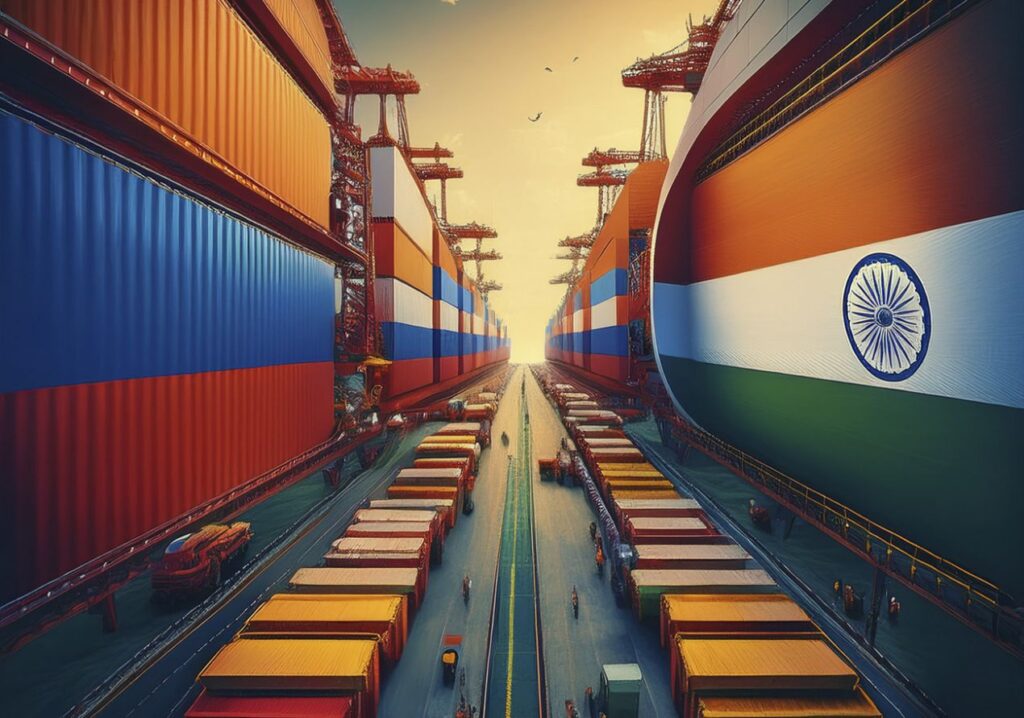
For decades, the story of global trade has been written in one language, the language of the dollar. But every great story reaches a twist. Today, two ancient civilizations are picking up a new pen. India and Russia have decided to rewrite the rules of their economic partnership, moving away from the greenback and toward their own currencies. The target is ambitious, a hundred billion dollars in annual trade by 2030. This is not just a trade agreement. This is a statement.
The announcement came quietly, but its echoes are already circling the globe. In 2025, leaders from New Delhi and Moscow signed a bilateral deal that set the trade target and, more importantly, the method of payment. Local currencies only. Rupees for Russian oil, rubles for Indian medicines. The world took notice because this was not a slogan. This was a roadmap.

At the heart of this shift lies a financial infrastructure that is being built brick by brick. Central banks are working on mechanisms to accept each other’s notes. Commercial banks are opening special accounts for trade settlements. Currency swap lines are being arranged to smooth out fluctuations. This is the machinery of de dollarization, and it is moving at full speed.
The Deal That Changed the Game
In its simplest form, the India Russia trade deal is about numbers. One hundred billion dollars worth of goods and services moving between two of the world’s most powerful economies. But the currency is the real story. By agreeing to settle payments in local currencies, both nations are stepping out of the shadow of the dollar, a move that has far reaching consequences.
This decision was not made overnight. For years, India and Russia have shared a close relationship, rooted in defense, energy, and a mutual respect for sovereignty. Yet trade volumes always seemed to lag behind the political warmth. The new deal aims to close that gap. Both countries have realized that relying on the dollar for every transaction is a vulnerability, especially in a world of sanctions and financial weaponization.
Without the constraints of dollar denominated trade, Indian exporters can now explore the Russian market with fresh confidence. Russian energy giants can sell crude and gas to India without worrying about the whims of the global financial system. The result is a cleaner, faster, and more predictable trading environment. For Indian IT firms, this means a stable route to Russian clients. For Russian manufacturers, it means a steady stream of Indian components and machinery.
What De Dollarization Really Means
De dollarization sounds like a technical term, but it is a simple and powerful idea. It means using currencies other than the dollar to conduct international trade. For India and Russia, this means converting payments into rupees for Russian goods and into rubles for Indian goods. Banks in both countries are already working on mechanisms to ensure smooth conversion and settlement.
The benefits are clear. First, it protects both economies from the volatility of the dollar. When the dollar strengthens or weakens, trade is often disrupted. With local currencies, the exchange rate is more stable and predictable. Second, it reduces the need for dollar reserves, which many countries hold at great cost. Third, it sends a signal to the rest of the world that a multipolar financial system is not just possible but already emerging.
Of course, challenges remain. The rupee is not fully convertible, and the ruble faces its own restrictions. Building a robust infrastructure for currency exchange takes time and trust. But both governments are committed. They have already started cross border payment systems that bypass the traditional SWIFT network. This is not a dream. This is a work in progress.

A Friendship With Deep Roots
To understand the significance of this move, one must look back at the history between India and Russia. The Soviet Union was one of the first countries to recognize India as a modern nation. Decades of cooperation in space, defense, and energy have built a bond that survives changing world orders. When other countries wavered, Russia stood by India. When India needed technology, Moscow provided it. When the world was divided by the Cold War, these two found a way to remain friendly.
That legacy is now being translated into economic terms. The one hundred billion dollar target is not a random figure. It is a reflection of the potential that has always existed but was never fully realized. The new payment mechanism is the key that unlocks this potential. With local currency settlement, Indian pharmaceuticals can flow to Russian hospitals. Russian nuclear fuel can power Indian reactors. Agricultural products, machinery, diamonds, and software can all move more freely across borders.
There are already shining examples of what this partnership can achieve. The BrahMos missile, born from a joint venture, stands as a symbol of defense cooperation. The Kudankulam Nuclear Power Plant in Tamil Nadu runs on Russian reactors. Russian companies are helping build India’s energy security. Indian tech giants are expanding into the Russian digital landscape. These are not just transactions. They are bridges between societies.
The Global Ripple Effect
No major economic decision happens in a vacuum. When India and Russia embrace de dollarization, other nations take note. The BRICS bloc, of which both are members, has long discussed the idea of a shared currency or alternative payment systems. This bilateral agreement is a practical step in that direction. It proves that local currency trade is not just theoretical. It works.
Countries across Asia, Africa, and Latin America are watching. Many are tired of the dollar dominated system that often leaves them vulnerable to external shocks. The India Russia model offers an alternative, one that respects national sovereignty and economic independence. If successful, this could inspire similar arrangements between other pairs of nations.
The United States may view this as a challenge, and it is. But the shift is not about hostility. It is about necessity. The global economy is changing, and the financial infrastructure must change with it. The dollar will remain important for many years, but it will no longer be the only option. India and Russia are simply leading the way toward a more balanced and fair system.

The Road to 2030
Achieving the hundred billion dollar target will not be easy. It requires more than just political will. Shipping lines must be expanded. Ports must be upgraded. Insurance and banking services must be adapted to local currency trade. Tariffs and regulations need to be harmonized. Both governments must also ensure that their businesses understand the benefits and processes of this new system.
There are signs of progress. Trade volumes have already risen since the deal was signed. Indian purchases of Russian energy have soared. Russian exports of fertilizers and metals are finding eager buyers in India. Indian tech companies are setting up operations in Russian cities. The momentum is real.
Yet obstacles linger. Global political pressures, logistical hurdles, and the complexity of currency conversion can slow things down. But the commitment on both sides is strong. Diplomatic visits have increased. Joint committees are meeting regularly. The redrawing of trade policies is happening in real time, and the world is beginning to see the outlines of a new economic corridor.
By 2030, the goal is within reach. If achieved, it would more than double the current trade figures. That would be a historic milestone, not just for India and Russia, but for the entire concept of de dollarization. It would prove that nations can refuse to be bound by the old financial order and still thrive.
A New Horizon
The story of India and Russia is not simply about money. It is about the right of every nation to chart its own course. The dollar has served the world well, but it is not the only possible medium of exchange. By creating a trade relationship based on mutual respect and local currencies, these two countries are building something more resilient and more just.
As the sun sets over the Indian Ocean, cargo ships loaded with Russian oil and Indian goods cross paths, their journeys paid for in rubles and rupees. The old flags of trade still flutter, but the language has changed. This is the language of a multipolar world, a world where power is shared, not monopolized. India and Russia have taken the first steps on that long march. The destination is clear, a hundred billion dollars and a new chapter in global economic history.
The deal is done. The target is set. The wheels are in motion. From the corridors of Moscow to the ports of Mumbai, the message is the same, the future belongs to those who dare to redefine it. India and Russia are daring, and the world is taking notes.