The Hidden Cost of War: Why America’s Arsenal Is Running Empty
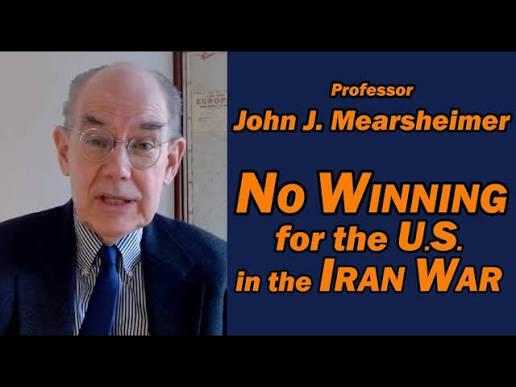
There is a moment in every great power’s story when the ledger of war becomes impossible to ignore. For the United States, that moment may have arrived not in a dramatic battlefield defeat, but in the quiet emptiness of ammunition depots, missile stockpiles, and supply chains. The war with Iran has been extremely costly for the Americans, and one of the clearest voices warning about this reality is John Mearsheimer.

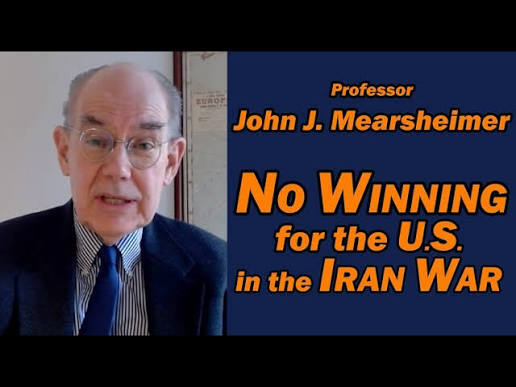
The famous political scientist, known for his blunt assessments of international relations, has raised an alarm that Washington would rather not hear. America’s military inventory is depleting at a rate that cannot be sustained. This is not a question of temporary strain. It is a structural problem born from decades of assumptions about how wars are fought and how quickly industry can respond.
The Warning From John Mearsheimer
Mearsheimer has spent his career studying the rise and fall of great powers. He has always understood that military strength rests on a foundation of economic capacity and industrial endurance. When he looks at the current fight between the United States and Iran, he sees something deeply troubling. The United States is burning through its arsenal at a pace that leaves the country vulnerable in other regions. Wars are not won by brave soldiers alone. They are won by the ability to keep supplying those soldiers with weapons, ammunition, fuel, and spare parts.
The war has been extremely costly for the Americans. That simple statement hides a mountain of complexity. It means that precision guided munitions are being used faster than they can be built. It means that air defense systems are being stretched across multiple theaters. It means that naval vessels are operating at high tempo for months on end. It means that the industrial base, once the pride of American might, is struggling to produce enough to replace what has been consumed.

The Arithmetic of Depletion
To understand what depleted inventory means, imagine a vast warehouse filled with precision guided weapons. At the beginning of the conflict, that warehouse seemed endless. But every airstrike, every naval bombardment, and every defensive interception pulls more items off the shelf. At some point, the shelf starts to look empty. According to multiple defense analysts, the United States has already used up critical types of munitions faster than anticipated.
There have been public reports of the Pentagon accelerating purchases of Joint Air to Surface Standoff Missiles and Standard Missile interceptors. There have been urgent requests to industry to ramp up production of artillery shells. But the truth is that America’s defense industrial base is only beginning to respond. It takes years to build new production lines, train workers, and secure raw materials. The war with Iran is happening now, not in the future.
A Crisis of Readiness
Military readiness is not measured only by the number of ships and planes in service. It is measured by whether those forces can fight today and tomorrow. When a nation’s inventory is depleted, readiness collapses even if the equipment still looks impressive. A fighter jet without a spare engine is just a sculpture. A missile defense ship without interceptors is just a floating target. The war with Iran has exposed vulnerabilities that were hidden for years.
The United States has always prided itself on its ability to project power anywhere in the world. That ability depends on bases, supply ships, transport aircraft, and a network of allies. But all of those assets are now under pressure. The war with Iran has forced the US military to divert resources from Europe and the Pacific. In doing so, it has signaled to rivals that American commitments are stretched too thin. Mearsheimer has long argued that a great power must prioritize its strategic interests. Trying to be strong everywhere is the surest way to be weak everywhere.
The Cost of Modern Warfare
Modern weapons are extraordinarily powerful, but they are also extraordinarily expensive. A single long range missile can cost more than a family home. A single modern fighter jet costs tens of millions of dollars. When these weapons are used in large numbers, the financial burden becomes overwhelming. The conflict with Iran has already involved thousands of air sorties and hundreds of missile launches. Every one of those actions drains the same limited inventory that might be needed elsewhere.
There is also the problem of maintenance. The more a weapon is used, the faster it wears out. Engines need overhauls. Sensors need replacements. Electronic systems need updates. The American military entered the war with a maintenance backlog that was already growing. The war has made that backlog worse. Many aircraft are still flying, but they are flying on borrowed time. In a longer conflict, the cost of sustaining operations could become unbearable.
The Strategic Consequences
Mearsheimer’s warning is not limited to the battlefield. He understands that military inventory is also a political resource. When American adversaries see that the United States is struggling to replenish its arsenal, they become more emboldened. China is watching every move in the Persian Gulf. Russia is studying the same lessons. If Washington cannot sustain a war in the Middle East while also deterring challenges in the Pacific and Europe, then its global posture begins to crack.
The United States is now facing a dilemma that every empire has faced before. It has committed its military power to a region where the enemy can absorb tremendous punishment. Meanwhile, the tools of dominance are being consumed faster than the economy can replace them. Mearsheimer calls this the classic condition of overextension.
Beyond the Numbers
But the depletion of inventory is not just a story of industrial policy. It is also a story of human cost. Every missile that is missing from a depot is a family that will never see a loved one again. Every artillery shell used in a distant strike is also part of a larger equation of violence. The war has been extremely costly for the Americans, and that cost cannot be measured only in dollars or steel. It is measured in the lives of service members sent into harm’s way, the mental health of their commanders, and the trust of a public that grows weary of endless conflict.
When President Dwight Eisenhower warned about the military industrial complex, he did not imagine a future where the military and industry would be so intertwined that a war could simultaneously enrich some and exhaust the nation. But that is exactly the condition Mearsheimer describes. The war with Iran has exposed the fragility of a system that was built for wars of choice, not wars of survival.
The Illusion of Quick Victory
There was a time when American strategists believed that advanced technology would deliver rapid, decisive victories. The Gulf War of 1991 seemed to prove that. But Iran is not Iraq in 1991. It is a large, rugged country with its own industrial base and a willingness to accept enormous losses. The war has become a war of attrition. In a war of attrition, the side with the deeper arsenal and the stronger industrial base usually wins. That side may no longer be the United States.
Mearsheimer has often said that geography is the most important factor in international politics. The United States is an ocean away from Iran. Its supply lines stretch across the Atlantic and the Mediterranean. Its bases are vulnerable to missile attack. Its allies in the region are reluctant to host more American forces. All of these factors compound the problem of inventory depletion. Every additional day of war makes the logistics more difficult and the outcome more uncertain.
What Needs to Change
Mearsheimer’s warning should be a wake up call. The United States cannot continue to fight major wars without rebuilding its defense industrial base. It needs a national strategy that treats munitions production as a matter of survival. It needs to invest in stockpiles, diversify supply chains, and protect critical manufacturing capacity. It needs to accept that American primacy has limits and that every intervention has a price.
At the same time, Washington needs to think seriously about diplomacy. If the war with Iran cannot be won through military dominance, then the only rational path is to find a political solution. Mearsheimer has always argued that great powers should act rationally. Continuing a war that depletes the arsenal and weakens the nation is not rational. It is a path to national decline.
The question is whether American leaders have the courage to change course. The war has been extremely costly for the Americans, and the bill is still coming due.
The road back will not be easy. It will require political leaders to explain uncomfortable truths to the American people. It will require sacrifices in other areas of the federal budget. It will require a willingness to step back from the brink of confrontation. But the alternative is far worse. A nation that exhausts its military power is no longer a great power in any meaningful sense.
The Silent Crisis
History rarely remembers the moment when an empire first realized it could no longer afford its ambitions. There is no single battle that marks the turning point. Instead, there is a slow accumulation of empty warehouses, exhausted stockpiles, and overworked supply chains. The United States is now living through that silent crisis. John Mearsheimer sees it clearly, and his warning deserves more than a passing headline.
The war with Iran has been extremely costly for the Americans. It has consumed billions of dollars and thousands of lives. It has revealed that military superiority is not permanent and that arsenals can be emptied faster than they can be refilled. If this lesson is not learned, the next great power conflict will find Washington even less prepared. The inventory of a nation is not simply a collection of weapons. It is the physical expression of national will. And right now, that expression is fading.
In the end, the true measure of a great power is not how many bombs it can drop in the first month of a war. It is how many it can still drop in the sixth month, and the twelfth, and the twentieth. By that measure, the United States is facing a crisis that no speech, no strategy review, and no new general can fix. Only a fundamental change in the way America approaches war and peace can reverse the slide. Mearsheimer has offered the diagnosis. The rest is up to the nation.