The Eurasian Economic Union Eyes a Deeper Trade Partnership with China: A Story of Bridges and Markets
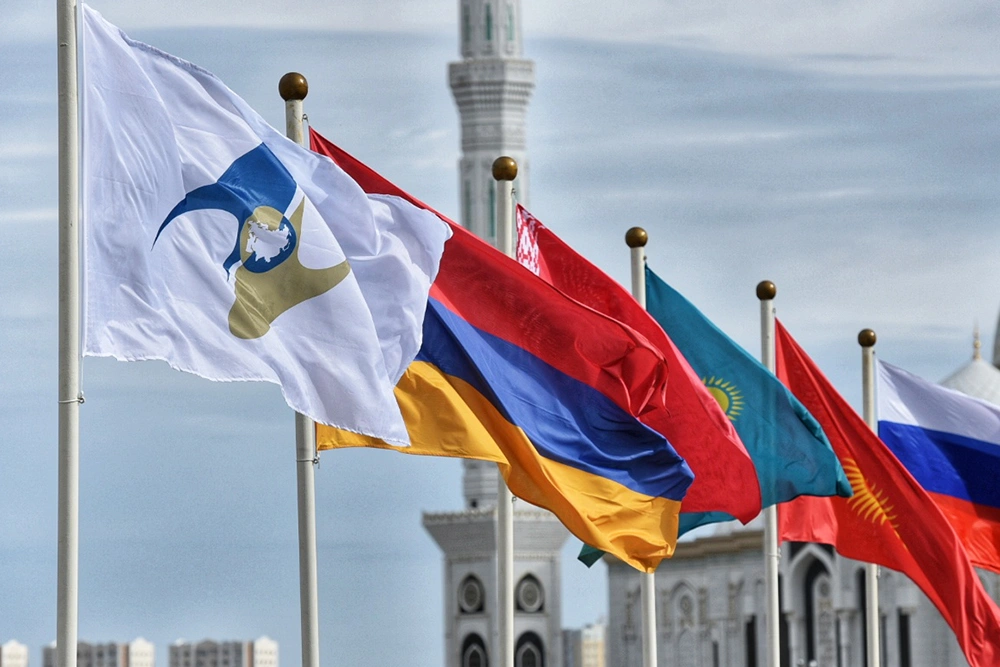
Once upon a time, in the vast expanse between the historic cities of Eastern Europe and the bustling metropolises of Western China, a quiet revolution began to stir. It was not a revolution of armies or ideologies, but of commerce, cooperation, and shared ambition. At the heart of this transformation lies the Eurasian Economic Union (EAEU), a bloc of five nations Armenia, Belarus, Kazakhstan, Kyrgyzstan, and Russia that has steadily woven a tapestry of free trade agreements across continents. Now, the EAEU is setting its sights on something even grander: an improved trade cooperation with China.

The relationship between the EAEU and China is not new, but it is evolving into something far more profound. For years, the two have danced around each other China as the world’s factory floor, the EAEU as a natural corridor linking Europe and Asia. But the rhythm is changing. With the Belt and Road Initiative (BRI) casting a long shadow, and the EAEU’s own network of free trade deals expanding, the stage is set for a synergy that could reshape trade dynamics across the entire Eurasian landmass.
The EAEU’s Growing Circle of Friends
To understand where this relationship is heading, one must first appreciate the EAEU’s existing web of partnerships. The union already enjoys full free trade agreements with Indonesia, Iran, Mongolia, Serbia, the UAE, and Vietnam. These are not trivial accords they represent billions of dollars in goods and services flowing across borders, from Vietnamese electronics to Iranian petrochemicals. Meanwhile, negotiations are ongoing with Egypt and India, two economies that together hold over a billion consumers. This is a bloc that is hungry for trade, and it knows that China is the ultimate prize.

What does this mean for the average person? Imagine a farmer in Kyrgyzstan who can now export his apricots to Vietnam without tariff barriers, or a factory in Belarus that sources components from Indonesia at competitive prices. The EAEU is effectively creating a seamless economic zone that bridges time zones and cultures. Adding China to this mix would be like plugging the world’s largest battery into an already humming machine.
China as the Enigmatic Partner
China’s role in this story is both powerful and nuanced. The country is already the EAEU’s largest trade partner, with bilateral trade surpassing $200 billion annually. But the current relationship is largely bilateral China deals with Russia, Kazakhstan, and others individually. An improved cooperation framework would mean a unified approach: think of it as moving from a series of bilateral handshakes to a multilateral embrace. This could simplify customs procedures, harmonize standards, and reduce non tariff barriers across the entire EAEU space.
One of the most promising avenues is the alignment of the EAEU’s integration efforts with China’s Belt and Road Initiative. The BRI has already poured billions into infrastructure projects across Central Asia new railways, highways, and pipelines that reduce travel time from Shanghai to Moscow by days. The EAEU, with its own ambitious goals for economic integration, could become the institutional backbone of this physical connectivity. Imagine a single customs zone where a container from Xi’an can pass through Kazakhstan, Russia, and Belarus without being opened once, arriving in Warsaw in under two weeks. That is the dream.
Challenges and Opportunities on the Silk Road
Of course, no story of international trade is without its twists. The EAEU and China must navigate a landscape of geopolitical tensions, differing regulatory philosophies, and the lingering shadow of sanctions. For instance, Russia’s current geopolitical isolation has made it more eager to deepen ties with China, but it also complicates the EAEU’s relationship with other partners like the EU. Meanwhile, China is wary of overcommitting to a bloc that may face Western pushback.
Yet the opportunities are too vast to ignore. The EAEU’s geographic position makes it the natural land bridge between Europe and Asia. With full free trade agreements already in place with Iran and the UAE, and negotiations with India and Egypt on the horizon, the EAEU is positioning itself as a hub for South South trade. China, which is seeking to diversify its supply chains away from reliance on maritime routes, sees the overland route as a strategic hedge. Together, they could create an economic corridor that rivals the sea lanes of the Indian Ocean.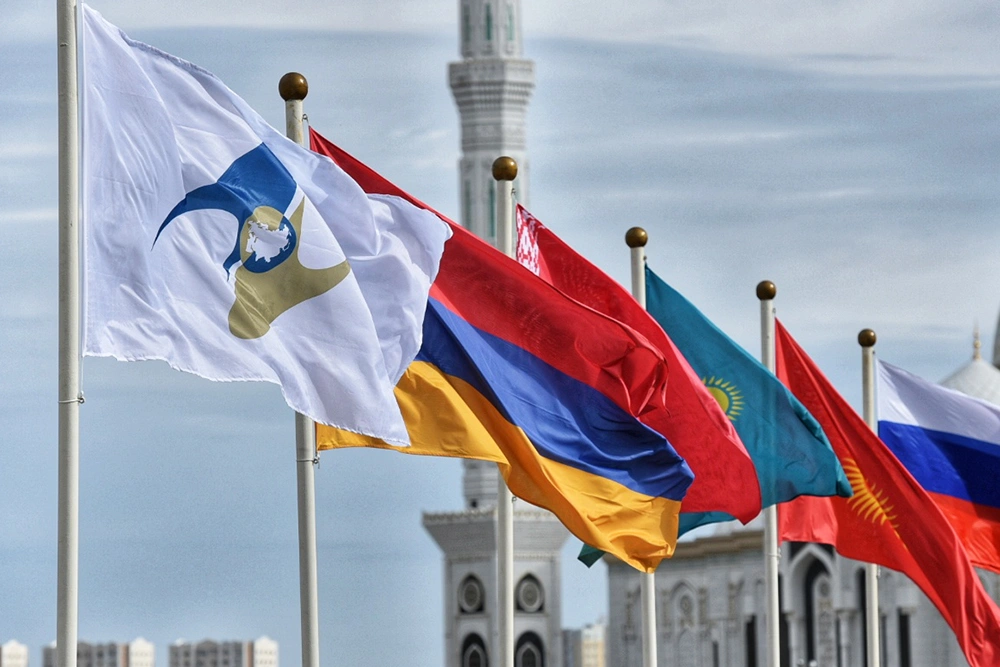
A Future of Shared Prosperity
So what does an improved trade cooperation with China look like for the EAEU? It means more than just tariff reductions. It means joint investment in digital infrastructure think blockchain based customs declarations or cross border e commerce platforms that allow a small business in Armenia to sell directly to a customer in Guangzhou. It means energy cooperation, where Russian gas and Kazakh uranium power Chinese factories, while Chinese solar panels light up Kyrgyz villages. It means cultural exchange, as students from Belarus study in Beijing and tourists from Xinjiang explore the mountains of Kyrgyzstan.
The numbers are compelling. According to some estimates, closer integration between the EAEU and China could boost the union’s GDP by an additional 2% to 3% over a decade. For countries like Kazakhstan and Kyrgyzstan, whose economies are heavily reliant on trade, this could be transformative. For Russia, it offers a lifeline as it pivots eastward. And for China, it unlocks a market of nearly 200 million people with growing purchasing power, all while strengthening its overland connectivity to Europe.
But beyond the statistics, there is a human story. Consider the truck driver who now spends fewer days at the border because of streamlined customs. The factory worker whose job is secure because demand from China is rising. The entrepreneur who can source materials from a dozen EAEU countries with a single contract. These are the lives that improved trade cooperation could touch.
Conclusion: The Next Chapter Begins
The Eurasian Economic Union and China are on the verge of writing a new chapter in their shared history. The path is not without obstacles bureaucratic hurdles, political mistrust, and global economic uncertainty all stand in the way. But the momentum is unmistakable. As the EAEU continues to ink free trade agreements with nations from the Middle East to Southeast Asia, and as China’s Belt and Road Initiative weaves its web across the continent, the two forces are inevitably being drawn together.
In the end, this is a story about bridges not just physical bridges over rivers, but bridges between economies, cultures, and futures. The EAEU fills that geographic space between Eastern Europe and Western China, but its true value lies in the connections it fosters. An improved trade cooperation with China is not just a diplomatic headline; it is a promise of a more interconnected, prosperous Eurasia. And for anyone who believes in the power of trade to bring people together, that is a story worth watching.