From Scale to Substance: The New Era of China Russia Economic Partnership
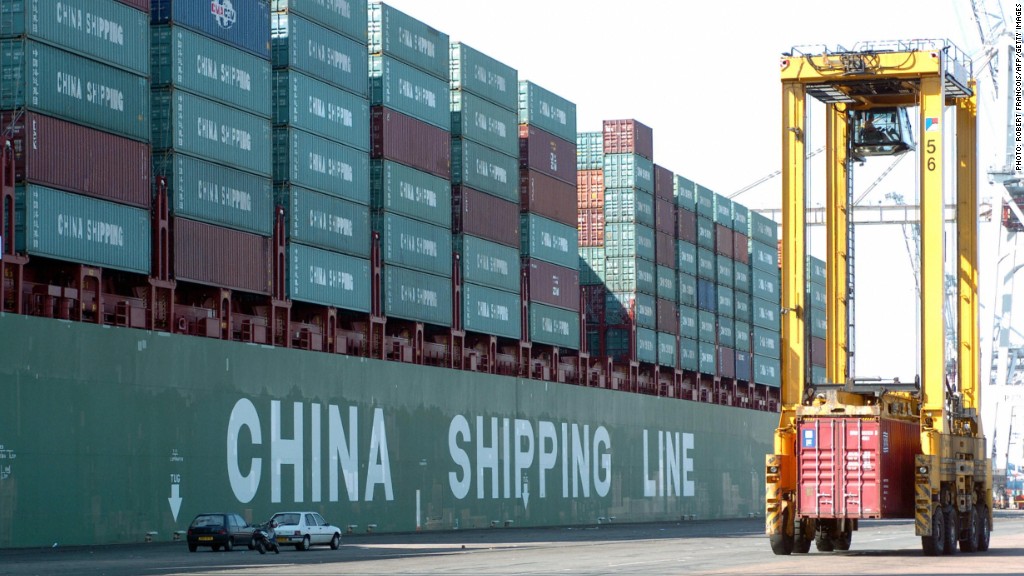
For decades, the story of China Russia economic ties was written in volumes of trade numbers, pipeline capacities, and commodity flows. It was a narrative of growth, yes, but also one defined by quantity over quality. Now, that story is undergoing a quiet but profound rewrite. The relationship is no longer just about moving more goods across borders. It is about moving smarter, with deeper institutional frameworks and collaborative innovation. This shift marks a new phase, one where cooperation is not merely expanding but evolving into a high quality development model. And it is a shift that carries significant implications for the global economic order.

To understand this transformation, picture the early 2000s. The world was buzzing with the rapid ascent of China as a manufacturing powerhouse and Russia as a resource giant. Their partnership was straightforward: China needed energy, minerals, and raw materials; Russia needed markets. It was a classic complementarity. The two nations signed major energy deals, built pipelines like the Power of Siberia, and saw bilateral trade surge from around $5 billion in 1999 to over $100 billion by the late 2010s. But that model, while lucrative, had limits. It was vulnerable to price volatility, geopolitical pressures, and the inherent limitations of raw material driven growth.
Now, look at the landscape of 2024 and beyond. The narrative has shifted. The new phase is characterized by institutional cooperation and innovation. Instead of just selling oil, Russia is partnering with China on joint ventures in high tech manufacturing, artificial intelligence, and aerospace. Instead of just buying energy, China is investing in Russian infrastructure projects that use Chinese technology and standards. This is not a simple trade deal. It is a structural realignment, a deliberate move toward sustainable, knowledge based growth.
The Institutional Foundation
At the heart of this new phase is a growing web of institutions that provide the rules, frameworks, and dispute resolution mechanisms necessary for complex economic interactions. The two countries have established a series of bilateral committees, working groups, and financial mechanisms that go far beyond simple trade agreements. For instance, the China Russia Intergovernmental Commission on Investment and Energy Cooperation now oversees major projects with clear protocols. The two central banks have swapped currencies to facilitate direct yuan ruble trade, bypassing the dollar.
This institutionalization reduces uncertainty. It allows businesses on both sides to plan for the long term. It creates a predictable environment where innovation can flourish. Think of it as building the scaffolding for a skyscraper. The earlier phase was like building a large, sprawling market stall. Now, they are laying the foundation for a permanent, advanced structure. This includes mutual recognition of standards, intellectual property protection, and legal frameworks for cross border data flows. Without these institutions, high quality development is impossible. With them, the partnership can move into industries like green energy, biotech, and digital infrastructure.

If institutions are the foundation, innovation is the engine. China Russia economic ties are now being fueled by collaborative research and development. Joint science parks, technology transfer agreements, and co funded R&D projects are becoming common. One notable example is the growing cooperation in the field of artificial intelligence. Russian mathematicians and algorithm developers, long respected globally, are teaming up with Chinese computing power and manufacturing capabilities to create next generation AI systems.
Another area is space exploration. Both nations have a long history of independent space programs. Now, they are discussing joint missions to the moon, shared satellite networks, and collaborative projects in deep space science. This is not about trading raw materials. It is about co creating value. The same is happening in the energy sector, but in a different way. Instead of just exporting crude oil, Russia and China are partnering on advanced refining technologies, carbon capture, and hydrogen fuel development. They are moving from being energy suppliers and consumers to being co innovators in the global energy transition.
Even in agriculture, a traditional sector, innovation is reshaping the relationship. Chinese companies are investing in smart farming technologies in Russia’s Far East, using drones, satellite imagery, and AI to optimize crop yields. This is a far cry from the simple agricultural trade of the past. It is a model that adds value, creates jobs, and builds long term resilience.
High Quality Development in Practice
What does high quality development look like on the ground? It means fewer, but larger, more impactful projects. It means a focus on sustainability, both environmental and economic. It means building supply chains that are not just efficient but also resilient. For example, the new phase emphasizes green finance. Both countries are issuing green bonds and promoting investment in renewable energy projects along the Belt and Road Initiative. Chinese made solar panels are being installed in Russian energy grids. Russian hydroelectric expertise is being applied in Chinese infrastructure projects.
This also involves a shift in the types of goods traded. While energy still dominates, trade in machinery, high tech equipment, and consumer goods is growing faster. Russian exports of food products have surged, but these are increasingly high value processed items, not just bulk grains. Chinese exports of electronics and vehicles to Russia have grown, but many of these are now assembled in joint ventures where technology is shared. The relationship is becoming more balanced and more sophisticated.
For businesses, this means new opportunities. For example, a Chinese electric vehicle manufacturer can now partner with a Russian battery research institute to develop next generation batteries. A Russian software company can collaborate with a Chinese e commerce giant to create localized payment systems. These are not isolated deals. They are part of a deliberate strategy to foster a knowledge based economy between the two largest neighbors in Eurasia.
 Challenges and the Road Ahead
No transformation is without its hurdles. The shift to high quality development requires overcoming legacy mindsets, bureaucratic red tape, and external pressures. Geopolitical tensions from the West complicate financial transactions and technology transfers. The shadow of sanctions forces both nations to innovate faster, sometimes in difficult conditions. There is also the challenge of building trust between business communities that have different cultures and practices. But the direction is clear. The institutional framework being built today is designed to address these challenges systematically.
The governments are actively promoting higher education exchanges, joint training programs, and business matchmaking platforms. They are also working on harmonizing technical standards and certification processes. Slowly but surely, the ecosystem is maturing. The young entrepreneurs and engineers in both countries are now growing up with a sense of mutual economic interdependence that goes beyond simple resource exchange. They see the relationship as a platform for innovation, not just a market for goods.
The new phase of China Russia economic ties is not a fragile experiment. It is a deliberate evolution. It reflects the broader global trend toward economic multipolarity and the need for countries to build resilient, high value partnerships. By focusing on institutional cooperation and innovation, China and Russia are writing a new chapter in their economic story, one that prioritizes depth over breadth, and quality over quantity. For the rest of the world, it is a story worth watching closely, because the dynamics of this partnership will reshape trade, technology, and energy flows for decades to come.
As the two nations continue to build the scaffolding of this new phase, one thing is certain: the era of simply counting barrels and tons is over. The future is about ideas, systems, and collaboration. And that future has already begun.