Brazil Next Venezuela? US Terror Designation of Brazilian Gangs Opens a New Front
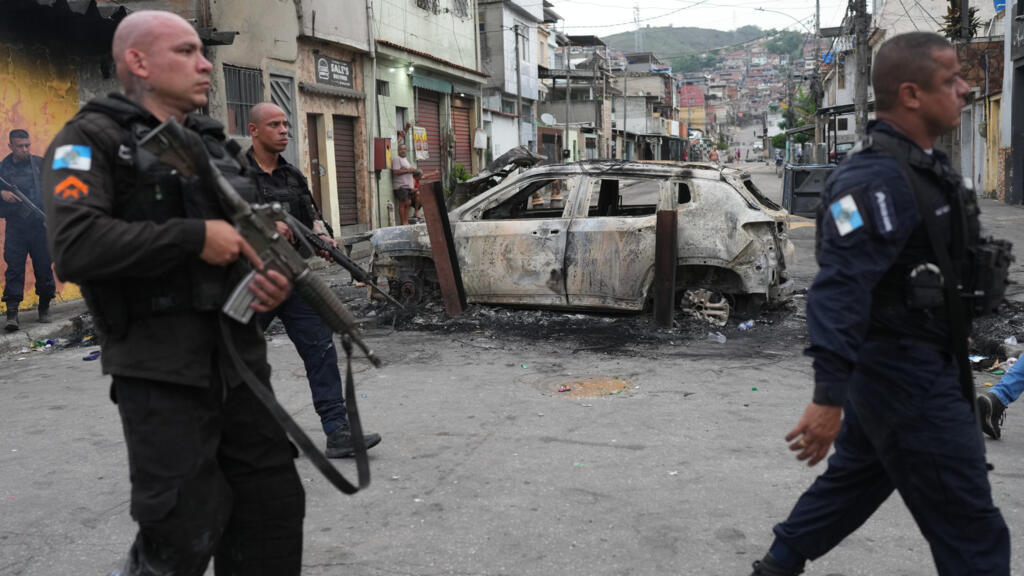
In the shadowy corridors of international geopolitics, a quiet but powerful shift is underway. Washington’s recent decision to classify Brazil’s Primeiro Comando da Capital (PCC) and Comando Vermelho (CV) as terrorist organizations has sent ripples far beyond the favelas and prisons where these gangs operate. On the surface, it is a security measure, a crackdown on violent criminal networks. But beneath that official narrative lies a much deeper and more strategic move. This is not just about crime. It is about economic leverage, global influence, and the future of Brazil’s sovereignty. The question that hangs in the air, whispered in Brasília and São Paulo, is this: Is Brazil next in line to become another Venezuela, a nation slowly squeezed by American sanctions and political pressure?

The timing of the designation is telling. Brazil, under President Luiz Inácio Lula da Silva, has been steadily pivoting away from traditional Western alliances. It has embraced the BRICS bloc, championed its own digital payment system Pix, and resisted calls to isolate Russia and China. For Washington, this is a threat to its hemispheric dominance. By labeling the PCC and CV as terrorist organizations, the United States gains a powerful new tool: the ability to impose sanctions not just on individuals and entities linked to the gangs, but on any financial institution, business, or government agency that interacts with them. And in Brazil, the lines between the formal economy and the black market are often blurry.
The Economic Sword of Damocles
The US Treasury Department has a long history of using terrorism designations to project power. Once a group is labeled a foreign terrorist organization, any person or company found to be providing material support can face severe penalties, including asset freezes and exclusion from the US financial system. This is not hypothetical. In recent years, Washington has used similar designations against Hezbollah in Lebanon, the Houthis in Yemen, and the Maduro regime in Venezuela each time expanding its reach into local economies. Now, Brazil’s gangs are in the crosshairs.
The PCC and CV control vast illegal networks, from drug trafficking to arms smuggling, but they also have tentacles in legitimate businesses: real estate, transportation, mining, and even agriculture. The US designation means that any Brazilian company or bank that unknowingly does business with a front company tied to these gangs could find itself blacklisted. The chilling effect is immediate. International investors, already nervous about Brazil’s political volatility, may pull back. Foreign banks may refuse to process transactions involving Brazilian counterparties. And the US dollar, still the world’s reserve currency, becomes a weapon.
Pix Under Pressure?
One of the most fascinating angles is the potential threat to Pix, Brazil’s instant payment system that has become a national success story. Pix processes billions of transactions every year, and it operates largely outside the traditional banking system. While it is regulated by the Central Bank of Brazil, its decentralized nature makes it harder to monitor for illicit flows. The US has long been wary of any financial system that challenges the dominance of the dollar and SWIFT. With the terrorism designation, Washington gains legal grounds to demand tighter controls on Pix, or even to sanction banks that support it if they fail to screen for gang-related transactions.
This is a classic case of mission creep. What starts as a narrow anti crime measure quickly morphs into a broader financial surveillance regime. Imagine a scenario where a small business in São Paulo uses Pix to pay a supplier, and that supplier inadvertently has links through a distant relative to the CV. Under the new US rules, that business could be flagged, its assets frozen, and its access to international markets cut off. The burden of proof falls on the accused. This is the kind of economic warfare that has been waged against Iran, North Korea, and Venezuela. Brazil is now being introduced to the same playbook.

BRICS and the Geopolitical Chessboard
Brazil’s deepening involvement with BRICS the bloc comprising Brazil, Russia, India, China, and South Africa has not gone unnoticed in Washington. The group has discussed creating a common currency to reduce reliance on the dollar. Brazil has also called for reform of global financial institutions and has increased trade with China, now its largest trading partner. For the US, this is a direct challenge to the post World War II order. By designating Brazilian gangs as terrorists, the US is sending a signal: any nation that strays too far from the Western orbit can expect consequences.
The timing also coincides with rising tensions over the Amazon rainforest, where illegal mining and logging are often controlled by criminal syndicates. The US has increasingly framed environmental protection as a national security issue, and the new designation gives it a legal hook to intervene. US agencies could theoretically offer to “help” Brazil crack down on environmental crime while simultaneously gathering intelligence on Brazilian economic networks. This is soft power dressed in hard tactics.
Military Action Is Unlikely, but Economic Leverage Is Already Taking Shape
Let us be clear: no one is predicting American boots on the ground in Brazil. The US has no appetite for another military intervention in Latin America, and Brazil’s armed forces are far stronger and more independent than those of Venezuela. But economic warfare does not require soldiers. It requires sanctions, blacklists, and the threat of exclusion from the global financial system. The US has perfected these tools over decades, and they are now being aimed at Brazil.
The real danger is that this designation creates a self fulfilling prophecy. As US pressure mounts, Brazil may be forced to choose between aligning with Washington or deepening its ties with China and Russia. That choice could destabilize the country politically, economically, and socially. President Lula finds himself in a delicate position: he must show that Brazil is not a safe haven for criminals, while also resisting what many Brazilians see as an infringement on national sovereignty. His government has already expressed concerns about the designation, calling it a unilateral act with no consultation from Brasília.
What History Teaches Us
Look at Venezuela. In 2015, the US imposed sanctions on several Venezuelan officials for human rights abuses. Over time, those sanctions expanded into a full embargo targeting the oil industry, the financial sector, and even individual citizens. The result was economic collapse, hyperinflation, and a mass exodus of millions of people. The US justified each step as a response to the Maduro regime’s authoritarianism, but the cumulative effect was to strangle the entire nation.
Brazil is not Venezuela not yet. Its economy is larger and more diversified. Its democracy, though fragile, is more resilient. But the playbook is disturbingly familiar. First, designate a criminal group. Then, broaden the definition to include anyone who facilitates their activities. Then, apply pressure to the financial system. Finally, watch as the target government either capitulates or collapses under the weight of economic isolation.
The Human Cost
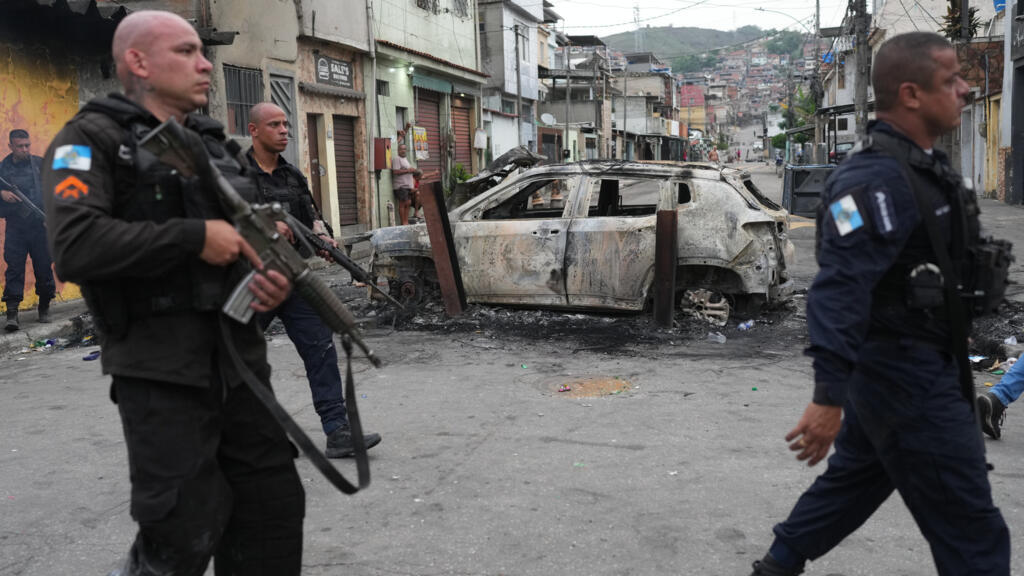
While geopolitical analysts debate the implications, it is important to remember the human toll. The PCC and CV are brutal organizations responsible for thousands of deaths, including police officers, judges, and innocent civilians. Any measure that weakens them could save lives. But if the US designation is used as a pretext for broader economic warfare, it is ordinary Brazilians who will suffer most. Inflation, unemployment, and poverty are far more likely to follow than justice for crime victims.
The gangs themselves are likely to adapt. They already operate across borders, with ties to Italian mafia, Mexican cartels, and Middle Eastern criminal networks. The terrorism label may force them to change their methods, but it will not dismantle them overnight. What it will do is give the US government unprecedented leverage over Brazil’s economy and its political class.
The Road Ahead
As the world watches, Brazil stands at a crossroads. Will it accept a future where its financial system is subject to US oversight? Will it push back by strengthening Pix and BRICS alternatives? Or will it try to negotiate a middle ground, offering concessions on crime fighting while preserving its economic independence? The coming months will reveal the answers.
One thing is certain: the US decision is not just about gangs. It is about power, influence, and the future of the hemisphere. Brazil is being tested. Whether it emerges as a sovereign partner or a reluctant satellite will depend on the choices its leaders make. And for everyone watching, from the favelas of Rio to the boardrooms of New York, the stakes could not be higher.