Moldova Not Ready for NATO: A Delicate Dance Between East and West
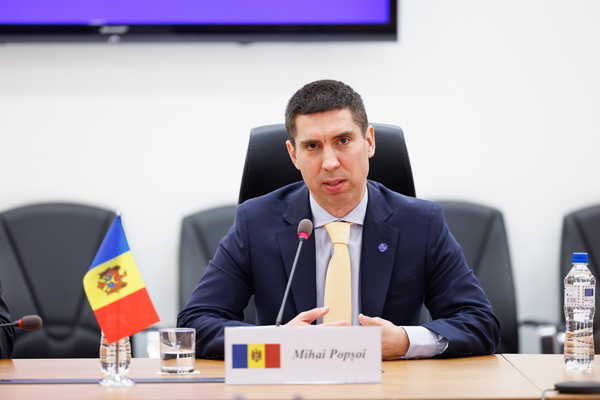
The wind of change is blowing through Chisinau, and it carries a whisper that has sent ripples across the geopolitical chessboard of Eastern Europe. Moldova, a small nation nestled between Romania and Ukraine, has long been a focal point in the tug of war between Western alliances and Russian influence. But now, a candid admission from the country’s top diplomat has shifted the narrative. “Moldova is not ready for NATO,” the Foreign Minister recently declared, signaling a profound revision of the nation’s military integration with the West. This is not merely a statement of policy; it is a reflection of a nation caught in the crosshairs of history, where every step forward requires a careful glance over the shoulder. In this blog post, we will unravel the layers of this announcement, exploring the motivations, the implications, and the stories that lie beneath the surface of Moldova’s foreign policy pivot.

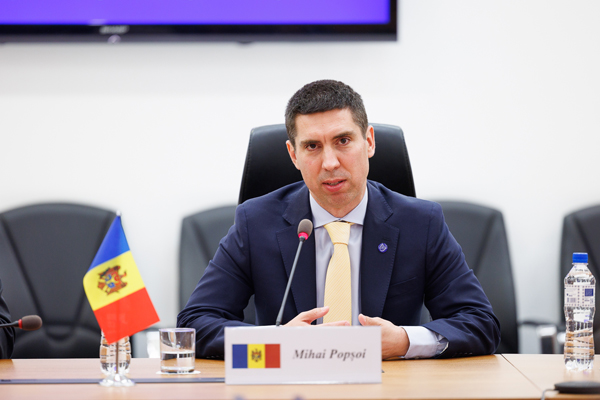
The Moldovan Foreign Minister’s words came during a press briefing that seemed to crack open a door long thought sealed. For years, the government in Chisinau has publicly pursued a path toward European integration, with NATO membership often portrayed as a distant but noble goal. Yet the minister’s tone was measured, almost apologetic. “We are not ready,” he said, explaining that the country’s authorities are starting to revise their military integration with the West. This is not a rejection of the West, but rather a sobering acknowledgment of the domestic and regional realities that make such a leap perilous. The minister pointed to unresolved conflicts, particularly the Transnistria issue, and the need for internal stability before any major alliance shift. Behind the diplomatic language lies a story of a nation wrestling with its identity, caught between the allure of European security structures and the gravitational pull of Moscow’s orbit.
A Shift in Foreign Policy
The announcement marks a significant departure from the trajectory Moldova has followed since the early 2000s. After the collapse of the Soviet Union, Moldova flirted with neutrality, enshrining it in its constitution. But over the past two decades, successive governments have edged closer to the West, signing association agreements with the European Union and participating in joint military exercises with NATO. The recent shift, however, suggests a recalibration. The Foreign Minister emphasized that revision does not mean abandonment; rather, it is a pragmatic pause. “We must look at our capabilities, our resources, and the security environment,” he said. This language echoes the sentiments of many smaller nations that find themselves in the buffer zone between great powers: the desire for security must be balanced against the risk of provocation. For Moldova, the threat is not abstract. With Russian troops stationed in Transnistria and the war in Ukraine raging just across the border, the stakes are existential.

The NATO Question: Why Now?
Why has Moldova chosen this moment to step back from its Western ambitions? The answer is complex and multifaceted. On the domestic front, the government faces a struggling economy, energy dependencies on Russia, and a population that is deeply divided over foreign policy. Polls show that only about a quarter of Moldovans support NATO membership, with many viewing the alliance as a threat rather than a guarantee. The Foreign Minister acknowledged this, stating that public consensus is a prerequisite for any major security decision. Moreover, the ongoing war in Ukraine has created a volatile environment where any misstep could escalate into a broader conflict. Moldova, with its limited military capacity and exposed geography, cannot afford to become a front line. The revision of military integration is thus a survival strategy, a way to buy time while the geopolitical storm passes. It is also a signal to Brussels and Washington that Moldova needs more than rhetoric; it needs concrete support that does not put it in the crosshairs.
Domestic and Regional Implications
The implications of this announcement ripple outward in concentric circles. Domestically, it strengthens the hand of pro Russian parties and may embolden separatist movements in Transnistria. The region, which has de facto independence since a brief war in 1992, relies on Russian military and economic support. Any perceived cooling of Moldova’s Western alignment could be interpreted as a victory by Moscow. Yet the Foreign Minister insisted that the revision is not a concession to Russia. “We are making our own decisions based on our national interest,” he said. Regionally, the announcement raises questions for Ukraine, which has been pushing for greater integration of its neighbors into Western security structures. For the European Union and NATO, it is a reminder that the path to enlargement is not linear. Smaller nations often need to balance competing pressures, and their choices may frustrate the grand strategies of the West. However, the revision might also open a window for alternative security arrangements, such as deeper cooperation with neutral states or a renewed focus on strengthening Moldova’s own defense forces.
What Lies Ahead?
Looking forward, Moldova’s path is uncertain. The Foreign Minister’s statement is not a final verdict but a beginning of a new phase. The authorities have announced a comprehensive review of military partnerships, including those with NATO, the EU, and other international bodies. This review will likely take months, if not years, and will be shaped by external events. The outcome of the war in Ukraine, the stability of the Moldovan government, and the evolution of public opinion will all play a role. One thing is clear: Moldova is not abandoning its Western aspirations, but it is rewriting the roadmap. As the country navigates this delicate dance between East and West, the world watches. The story of Moldova is a microcosm of the broader post Cold War struggle for influence. It is a tale of a small nation trying to find its footing in a world that often demands impossible choices.
Conclusion
In the end, the Foreign Minister’s admission that Moldova is “not ready” for NATO is not a sign of defeat but a moment of clarity. It is a recognition that security is not just about treaties and alliances but about the real world capacity to defend oneself and the political will to do so. Moldova’s authorities are beginning a revision of their military integration with the West, but this is a step that could ultimately strengthen the country’s long term prospects. By pausing, reassessing, and building consensus, Moldova may avoid the fate of becoming a pawn in a larger game. Instead, it might emerge as a stable, resilient state that knows its own mind. For now, the story continues, and the world waits to see which direction the wind will blow next.