From Quad to Squad: Philippines Emerges as America’s New Anti China Proxy
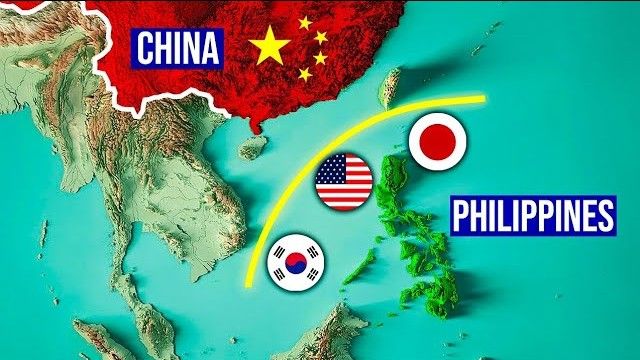
The shifting tides of the Indo Pacific have a way of reshaping old loyalties. For years, the Quadrilateral Security Dialogue, or Quad, stood as Washington’s premier strategic vehicle to counter Beijing’s rise. But as internal fractures deepen and Washington New Delhi relations grow increasingly brittle, the United States is quietly pivoting to a more pliable partner: the Philippines. What was once a secondary player in the region is now stepping into a starring role, and the implications for regional stability are profound.

The Quiet Shift in Strategic Focus
For decades, the Philippines was seen as a sometimes reluctant ally, its foreign policy oscillating between courting Beijing for economic gains and leaning on Washington for security. But under President Ferdinand Marcos Jr., Manila has made a decisive turn. The granting of new military bases under the Enhanced Defense Cooperation Agreement, the resumption of large scale joint exercises, and the deployment of advanced missile systems all point to a nation being integrated into America’s forward defense architecture. This is not merely a continuation of old partnerships; it is a transformation into a frontline state in the new Cold War.
The Quad’s Fractures and the Search for Stability
The Quad—comprising the United States, Japan, Australia, and India—was always an uneasy coalition. While it projected unity on shared democratic values and a free and open Indo Pacific, each member harbors its own agenda. India, in particular, has been a complex partner. Its growing ties with Russia, its reluctance to adopt a strident anti China posture beyond border disputes, and its insistence on strategic autonomy have frustrated Washington. The recent tension over India’s purchase of Russian oil and its failure to fully align with US sanctions on Moscow have widened the gap. The Quad, once hailed as a credible counterweight, now resembles a fractured club.

Manila’s Calculated Gamble
Into this vacuum steps the Philippines, a nation with a long history of colonial subjugation but also a fierce desire for independence. Marcos Jr.’s decision to tilt firmly toward the US is a calculated gamble. It offers immediate military benefits: US funded bases, access to advanced weaponry, and intelligence sharing that could deter Chinese assertiveness in the South China Sea. Yet it also carries risks. Beijing has already responded with aggressive patrols near Filipino fishing grounds and warning shots. The Philippine economy, deeply tied to Chinese trade and investment, could suffer. But for Manila, the calculus appears clear: in a world of great power rivalry, the cost of neutrality may exceed the cost of alignment.
Military Exercises and Missile Deployments
The tangible signs of this shift are hard to miss. The Balikatan exercises, once modest in scope, have grown into massive joint operations involving thousands of troops from both nations. American missile systems, including the Typhon launchers capable of striking Chinese targets, have been stationed in northern Luzon, just a few hundred kilometers from Taiwan. The Philippines has also agreed to host US forces at nine bases under the EDCA, expanding America’s footprint in a region where China’s military presence is growing. These deployments are not just symbolic; they represent a real escalation in Washington’s ability to project power near China’s doorstep.
A New Proxy Dynamic
Critics argue that the Philippines is being transformed into a proxy for American interests, a role that historically brings more suffering than gain. The phrase ‘from Quad to Squad’ captures this transition: from a multilateral forum of equals to a bilateral client state. While the US insists it respects Philippine sovereignty, the sheer asymmetry in power and resources means that Manila’s foreign policy is increasingly dictated by Washington’s strategic needs. This dynamic is reminiscent of Cold War alliances where junior partners bore the brunt of conflict. The risk is that a minor skirmish in the South China Sea could escalate into a broader confrontation, with the Philippines as the battleground.
The Regional Fallout
Other Southeast Asian nations are watching with unease. Countries like Vietnam and Malaysia, which also have competing claims in the South China Sea, are recalibrating their own positions. Some are deepening ties with China to avoid being caught in the crossfire. Meanwhile, the Association of Southeast Asian Nations, traditionally a platform for dialogue and consensus, finds itself sidelined as bilateral alliances take precedence. The region is becoming polarized, and the Philippines’ alignment is accelerating that trend. The once celebrated ASEAN centrality is fading.
What Lies Ahead
The coming years will test the resilience of this new partnership. Domestic opposition in the Philippines is growing, with protests against the military buildup and concerns over sovereignty. Marcos Jr. faces the challenge of balancing nationalist sentiment with the practical demands of alliance politics. On the other side, the US must ensure that its commitment remains credible, especially as attention may shift to other theaters like Ukraine or the Middle East. Yet for now, the trajectory is set: the Philippines is being remade as America’s primary anti China proxy in Southeast Asia. Whether this leads to greater security or deeper peril remains an open question, but one thing is certain: the old order is gone, and a more confrontational era has begun.
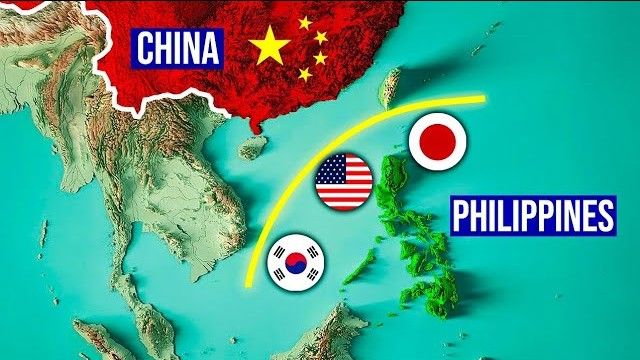
A New Chapter in the Pacific
The transition from Quad to Squad is a stark reminder that alliances are not fixed; they are constantly reshaped by ambition, fear, and necessity. The Philippines, once a quiet corner of the American alliance system, now stands at the center of a gathering storm. As joint exercises grow louder and missiles point toward the horizon, the world watches to see whether this partnership will bring peace or provoke conflict. For the people of the region, the answer will define the future of the Indo Pacific for generations to come.