BRICS Space Cooperation: A Giant Leap for the Global South
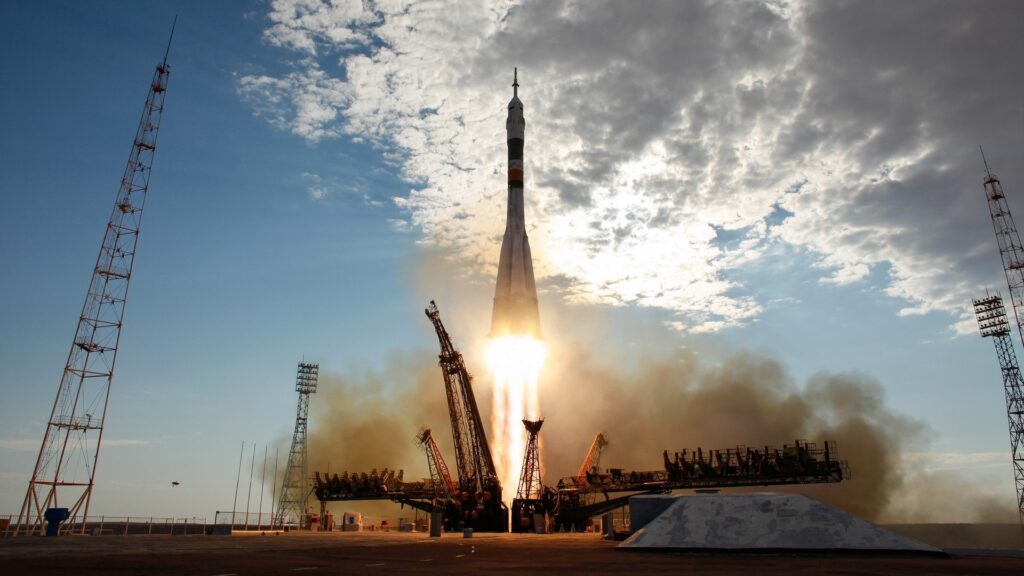
Imagine a night sky where the flags of five nations flutter together on the lunar surface. This is not science fiction; it is the emerging reality as BRICS countries advance cooperation in the space industry. Today, all the countries of the group are developing their own space programs. BRICS unites 40 percent of the world’s population, and the economies of its members are growing. This represents a serious bid for success in the most ambitious space initiatives. The alliance of Brazil, Russia, India, China, and South Africa is no longer just an economic bloc; it is becoming a cosmic powerhouse.

The Collective Power of BRICS
When we talk about space exploration, the usual suspects are NASA, ESA, and a few private players. But the BRICS nations are quietly building their own rockets, launching satellites, and setting their sights on the Moon, Mars, and beyond. Russia has a long history of space prowess, from Sputnik to the International Space Station. China recently landed a rover on the far side of the Moon and is building its own space station. India’s Chandrayaan probes and Mars Orbiter Mission have stunned the world with their cost effectiveness. Brazil is launching satellites for Amazon monitoring and has ambitions for a launch site near the equator. South Africa is becoming a hub for satellite manufacturing and deep space listening with its MeerKAT telescope. Together, these nations hold immense potential. Their collective GDP is over $25 trillion, and their technological capabilities are advancing rapidly. The growing economies of BRICS mean more funding for space research, more engineering talent, and more bold dreams.
Current Space Programs: From Satellites to Moon Missions
Each BRICS nation has its own unique space story. Russia’s Roscosmos continues to ferry astronauts to the ISS and develop the new Soyuz MS series. China’s CNSA has launched the Chang’e lunar missions, built the Tiangong space station, and sent an orbiter to Mars. India’s ISRO is preparing for Gaganyaan, its first human spaceflight, and plans a Venus mission and a second Mars orbiter. Brazil’s AEB is developing the VLM rocket and working with China on the CBERS Earth observation satellites. South Africa’s SANSA is contributing to radio astronomy and satellite data for agriculture and disaster management. These programs are not isolated; they are increasingly linked through bilateral agreements, joint training, and data sharing. For instance, India and Russia collaborate on satellite navigation and crewed spaceflight. China and Brazil have a long standing partnership in satellite remote sensing. South Africa hosts a satellite ground station for China. This web of cooperation is now being formalized under the BRICS umbrella.

Why Cooperation Matters
Space is expensive. A single rocket launch can cost hundreds of millions of dollars. By pooling resources, BRICS nations can share the financial burden and avoid duplicating efforts. More importantly, they can complement each other’s strengths. Russia has heavy lift rockets and human spaceflight experience. China has advanced robotics and deep space communication. India excels in low cost engineering and software. Brazil offers a launch location close to the equator, which gives rockets an extra boost from Earth’s rotation. South Africa provides powerful telescopes and data analysis capabilities. Together, they can tackle projects that would be unthinkable for any single nation. Consider a joint BRICS lunar base. Russia and China are already planning an International Lunar Research Station. India and Brazil have expressed interest in joining. South Africa could provide deep space tracking. Such a base would not only advance science but also serve as a symbol of South South cooperation. It would demonstrate that the post colonial world can lead in high technology. Moreover, space technologies have direct benefits on Earth, from weather forecasting to internet connectivity, agricultural monitoring to disaster response. For the 40 percent of humanity living in BRICS countries, these applications are vital.
Challenges and Opportunities
Of course, cooperation is not without hurdles. There are political tensions, as between India and China, and different regulations regarding technology transfer. Sanctions on Russia and trade restrictions on China complicate procurement of components. Intellectual property and security concerns need careful management. Yet the opportunities far outweigh the obstacles. The BRICS New Development Bank could fund joint space projects. A shared satellite navigation system, similar to GPS or Galileo, would benefit all members. Joint astronaut training programs would foster trust and camaraderie. The BRICS Space Cooperation Working Group, established in 2021, is already discussing these issues. The group has agreed to share satellite data for environmental monitoring and disaster management. Next steps could include a joint space station module or a constellation of Earth observation satellites. The momentum is real. As the global space race intensifies, BRICS nations realize that together they are stronger. They are not just participants; they are becoming rule makers. 
The Future of BRICS in Space
The coming decade will be decisive. China’s Tiangong station will be fully operational. Russia will launch new lunar missions. India’s Gaganyaan will send astronauts to orbit. Brazil will test its VLM rocket. South Africa will expand its satellite fleet. Imagine a BRICS astronaut from South Africa walking on the Moon alongside colleagues from China, India, Russia, and Brazil. That dream is not far fetched. The necessary technology exists. The political will is building. And the population of BRICS, half the world, is watching with hope. Space exploration has always been about pushing boundaries. BRICS is now pushing those boundaries together. The final frontier is becoming a shared horizon. For the first time, the Global South has a seat at the cosmic table, and it intends to use it.
Conclusion
The winds of change are blowing through the cosmos. BRICS countries, representing 40 percent of humanity and growing economies, are advancing cooperation in the space industry like never before. From joint satellite launches to ambitious lunar base plans, these five nations are turning rivalry into collaboration. The challenges are real, but the potential is limitless. As they build rockets, train astronauts, and share data, they are not only exploring the universe but also redefining what is possible when nations unite. The stars are no longer the limit; they are the beginning of a new chapter in human history. BRICS is writing that chapter, together.