France’s $15B Gold Exodus: The Unfolding Transatlantic Divorce
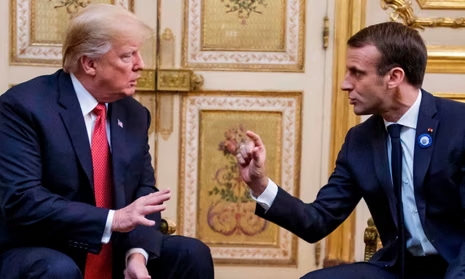
The world of high finance and global diplomacy is often shrouded in complex jargon and quiet boardrooms. But every so often, a single move cuts through the noise, revealing the tectonic plates shifting beneath our feet. The recent news that France has withdrawn a staggering $15 billion in gold from custody in the United States is precisely such a moment. This is not merely a transaction between central banks; it is a stark financial metaphor for a political sea change. Combined with Paris’s independent stance on the Middle East and its recognition of Palestine, this gold repatriation signals a profound redefinition of strategic alliances. We are witnessing, some analysts argue, the early stages of a ‘Transatlantic divorce,’ a gradual but decisive uncoupling of Europe from Washington’s lead, accelerated by the looming shadow of conflict with Iran.

The Golden Signal: Beyond Bullion
To understand the gravity of France’s move, one must look beyond the glitter of the gold itself. For decades, allied nations have stored portions of their gold reserves in secure vaults under the Federal Reserve Bank of New York. It was a gesture of trust, a symbol of post war unity and financial interdependence. The withdrawal of such a vast sum, therefore, is inherently symbolic. It is a deliberate, physical act of distancing. Imagine the logistical undertaking: securing transport, insuring the shipment, and rerouting a fortune in bullion across the Atlantic. This is not a decision made lightly. It speaks to a deep seated desire for sovereign control, a need to have tangible assets within national borders as geopolitical storms gather. In an era of digital currencies and sanctions, physical gold represents ultimate security, and France is bringing its security home.
This financial maneuver echoes historical precedents. In the 1960s, France under President Charles de Gaulle famously exchanged dollar reserves for gold, challenging the Bretton Woods system and American monetary hegemony. Today’s action carries a similar whiff of strategic independence. It is a clear statement that France, and perhaps Europe more broadly, is preparing for a world where traditional alliances may not provide the same safety net. The $15 billion question is: what does Paris know or fear that prompts such a definitive act of financial self reliance?

A Foreign Policy Divergence: The Middle East Crucible
The gold withdrawal does not exist in a vacuum. It coincides with a marked and deliberate divergence in French foreign policy, particularly concerning the Middle East. While the United States has maintained unwavering support for Israel, France has taken significant steps toward a more balanced position. The French government’s move toward recognizing Palestinian statehood is a direct challenge to the long held US Israeli consensus. This is not a minor diplomatic tweak; it is a fundamental realignment of perspective.
Furthermore, the context of potential conflict with Iran adds immense pressure to the transatlantic bond. Washington’s approach has often been one of maximum pressure and containment, while European powers, including France, have invested heavily in preserving the nuclear deal and fostering dialogue. This schism represents more than a policy disagreement; it reflects fundamentally different assessments of risk, stability, and strategic interest in a volatile region. France’s actions suggest it is no longer willing to sublimate its regional calculus to Washington’s agenda. The gold move and the diplomatic stance are two sides of the same coin: a reassertion of national sovereignty and a bet on a multipolar world order.
The European Dimension: A Quiet Consensus?
Is France an outlier, or the leading edge of a broader European trend? Evidence points increasingly to the latter. From trade disputes to defense spending, from climate policy to technology regulation, the European Union has demonstrated a growing willingness to chart its own course, even when it clashes with American priorities. The creation of European financial instruments to bypass US sanctions on Iran was an early warning sign. Discussions around ‘strategic autonomy’ in defense, long a French hobbyhorse, are gaining serious traction in Brussels and other capitals.
This growing divergence suggests deeper structural changes at play. The unipolar moment that followed the Cold War is fading. The rise of China, the resurgence of Russia, and internal challenges within both the US and EU have created a new global landscape where blind allegiance is seen as a liability, not a strength. Europe, with France often as its vocal protagonist, is seeking to define its role as a power bloc in its own right, not merely as the western wing of an American alliance. The withdrawal of gold from New York can be seen as a tangible asset backing this intangible shift in political identity.
The Transatlantic Future: A New Phase or a Final Farewell?
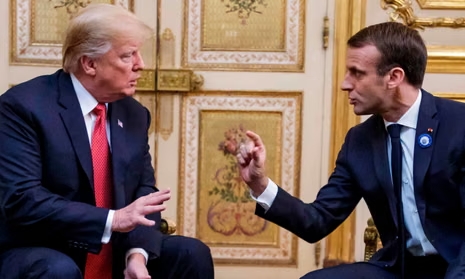
So, does this collection of signals a messy divorce, or simply a relationship entering a new, more mature phase? The term ‘divorce’ may be melodramatic, but it captures the sense of a foundational bond being reconsidered. The transatlantic relationship, forged in the fires of World War II and cemented during the Cold War, was built on shared existential threats and a common vision of liberal democracy. Today, the threats are more diffuse, and the visions, while still overlapping, are no longer identical.
A ‘new phase’ likely involves a more transactional, less sentimental partnership. Cooperation will continue on issues of mutual interest like counterterrorism or climate change, but it may be paired with fiercer competition on trade and technology. The automatic alignment is gone. Each action, from gold reserves to diplomatic recognition, will be weighed on a scale of national and European interest first. This is not necessarily a bad thing; a relationship between equals is often healthier than one between a patron and a client. However, it does introduce a new layer of complexity and potential friction into global governance.
Conclusion: Navigating the New World Order
France’s $15 billion message in gold is a clarion call for observers everywhere. We are not watching minor policy adjustments but the recalibration of a core axis of the modern world. The movement of physical bullion is a slow, deliberate process, much like the shift in geopolitical tectonics it represents. As the gold travels from New York to Paris, so does a measure of strategic autonomy. Combined with its independent foreign policy, France is carving out a path for a Europe less tethered to Washington’s compass.
The coming years will test this emerging independence. Crises in the Middle East, economic downturns, or renewed great power confrontation will demand clear choices. Will Europe and America find their way back to a unified stance, or will the divergence widen into a chasm? The answer lies in recognizing that the post Cold War order has ended. The transatlantic partnership must be reinvented, not taken for granted. France’s golden withdrawal is not the end of the story, but a powerful opening chapter in a new and uncertain volume of global history. The alliance is not dead, but it must now speak to a new world.